Last Updated on August 6, 2026 by Team TBH
Shopify merchants are rethinking how they present products, and the shift is hard to miss.
Instead of listing individual SKUs and hoping customers add more to the cart, store owners now let shoppers build their own product bundles on Shopify using dedicated bundle builder apps.
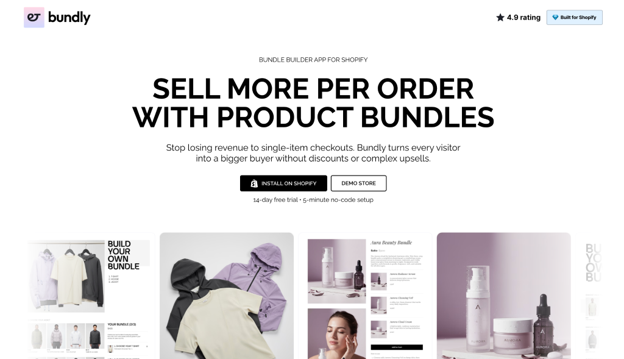
Think mix-and-match skincare sets, custom snack boxes, or “pick any 3” accessory kits.
It sounds simple, but the impact on revenue and customer behavior has been significant enough that stores across nearly every niche are making the switch.
Here are six reasons why.
1. Average Order Value Climbs Without Feeling Pushy
Traditional upselling relies on pop-ups, “frequently bought together” widgets, and checkout add-ons.
They work to a point, but customers increasingly tune them out or find them annoying.
A bundle builder Shopify app flips the dynamic entirely.
Instead of the store pushing products on a shopper, the shopper pulls products into a bundle themselves.
When someone builds a custom bundle of three protein bars, two electrolyte mixes, and a shaker bottle, they choose every item.
There’s no friction, no pressure.
The average order value goes up because the buying experience itself encourages it, not because a modal window guilted someone into adding something they didn’t want.
Stores on both Shopify Plus and standard Shopify plans report AOV increases of 20 to 35 percent within the first few months of adding a bundle builder to their product catalog.
2. Inventory Moves Faster, Especially Slow Sellers
Every merchant has products that sit.
They’re perfectly good items, just not the ones customers search for directly.
A bundle builder solves this in a surprisingly effective way by placing slower-moving items alongside bestsellers inside the same selection interface.
A candle brand, for example, might have a sandalwood scent that doesn’t move well on its own.
But inside a “Build Your Own 4-Pack” experience, that candle gets picked regularly because it rounds out the set.
The customer was already committed to filling the bundle.
They just needed to see it as an option.
This kind of inventory rotation is difficult to achieve with discounts alone.
Marking a product down signals low value, while putting it inside a curated bundle signals variety.
3. The Customer Experience Actually Improves
People enjoy the act of choosing and customizing.
It’s the same psychology that made subscription box companies grow so fast, except with a bundle builder, the customer gets exactly what they want instead of a surprise assortment.
Shoppers who use bundle builders spend more time on the page, engage with more products, and leave with higher purchase satisfaction scores.
Shopify merchants with bundle functionality consistently report lower return rates on bundled orders compared to single-item purchases.
The experience also reduces decision fatigue.
Instead of bouncing between six different product pages trying to figure out what works together, a customer sees all compatible options in one place.
Pick, confirm, checkout.
4. Subscription and Replenishment Bundles Lock In Recurring Revenue
One of the biggest shifts in 2026 is the intersection of bundles and subscriptions.
A bundle builder Shopify integration paired with a subscription app lets customers create a personalized recurring order and modify it each cycle.
Coffee roasters are a good example.
A customer builds a monthly bundle with two bags of single-origin Ethiopian, one decaf, and one cold brew concentrate.
Next month, they swap the decaf for a new seasonal blend.
The subscription stays active, but the contents flex.
That level of control keeps cancellation rates significantly lower than static subscription boxes.
For merchants selling consumables like supplements, pet food, skincare products, or pantry staples, a customizable subscription bundle is quickly becoming the baseline expectation from repeat buyers.
5. Bundle Discounts Convert Better Than Sitewide Sales
Running a 20 percent off sitewide sale trains customers to wait for discounts.
It erodes margin across the board and attracts deal-seekers who rarely return at full price.
A bundle builder offers a smarter lever through tiered bundle pricing.
“Buy 3, save 10 percent. Buy 5, save 20 percent.”
The discount is built into the bundle structure itself, which means the customer earns the savings by buying more rather than waiting for a promotion.
This approach works especially well during peak shopping periods like Black Friday or holiday gifting.
Instead of slashing prices store-wide, merchants offer exclusive bundle deals like “Build a Holiday Gift Box at 25 percent off any 5 items.”
The perceived value is higher, the discount is contained, and the average cart size goes up.
6. Setup Is No Longer a Technical Headache
A couple of years ago, building a custom bundle experience on Shopify required developer hours, custom Liquid code, and a lot of testing.
That barrier kept most small and mid-size stores away from the concept entirely.
Modern bundle builder Shopify apps like Bundly.app handle the heavy lifting without touching your theme code.
Product selection interfaces, dynamic pricing logic, inventory syncing, and cart integration all come built in.
Most merchants can launch a working bundle page within a day.
The apps that have gained traction in 2026 share a few things in common:
- No-code setup with drag-and-drop bundle configuration
- Automatic discount calculation at the cart level
- Full compatibility with Shopify’s native checkout and Shopify Payments
- Built-in analytics showing which bundle combinations sell most
The technical barrier that used to justify skipping bundles simply doesn’t exist anymore.
If your Shopify store sells more than one product, there’s almost no reason not to test a bundle builder.
Where This Is Heading
Bundle builders aren’t a passing trend.
They’re becoming standard infrastructure for Shopify stores that want to grow AOV, move inventory efficiently, and give customers a buying experience that feels personal.
The stores that adopted early are already seeing compounding returns in customer lifetime value and repeat purchase rates.
If you’ve been on the fence, 2026 is the year the cost of not having a bundle builder starts to outweigh the effort of adding one.
To read more content like this, explore The Brand Hopper
Subscribe to our newsletter