Last Updated on July 31, 2026 by Team TBH
Picking the wrong aluminum extrusion supplier can stall a product launch, blow a project budget, or saddle your team with parts that fail quality checks. The stakes are real. The market is crowded enough that differences between suppliers aren’t always obvious at first glance.
This guide breaks down the six most important factors to evaluate before you commit to a supplier. By the end, you’ll have a clear checklist you can apply immediately.
Manufacturing Capabilities and Alloy Range
Start by examining a supplier’s manufacturing depth closely. Some facilities handle only standard alloys and profiles, while others produce custom cross-sections in everything from 6061 to 6063 to 7075. You want to know upfront whether the supplier can handle your specific geometry and alloy requirements, not after a quote has been submitted.
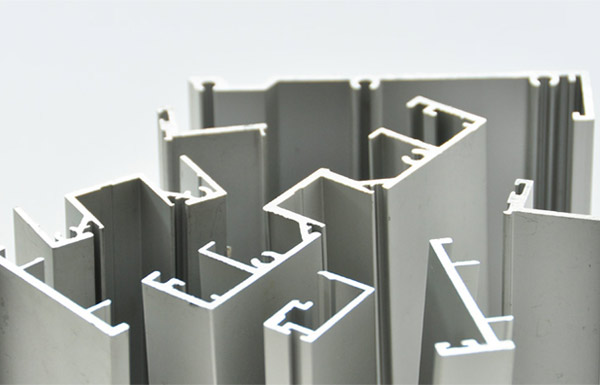
Ask for a full list of die capabilities, press tonnage options, and the alloys they stock or source regularly. You can look into and order custom aluminum profiles here, where the supplier’s technical sheet should tell you exactly what tolerances, wall thicknesses, and minimum order quantities they support.
Beyond that, consider whether they offer secondary operations such as anodizing, cutting, drilling, or powder coating in-house. A supplier who handles those steps under one roof can save you weeks of coordination time and reduce the risk of dimensional variation that creeps in when parts move between facilities. Ask for sample parts from previous runs, and request documentation on the press equipment they use. Suppliers who are transparent about their machinery tend to be more consistent in their output than those who offer vague answers.
And here’s what matters: check whether their capabilities have been updated recently, since older presses and dies can limit profile complexity. The more clearly a supplier describes what their floor can actually produce, the more confident you can be that what you specify is what you’ll receive.
Tolerances, Quality Control, and Certifications
Quality control separates good aluminum extrusion suppliers from those that cost you time and money in rework. Before you place an order, ask the supplier to walk you through their inspection process from die entry to final shipment. A reputable supplier will have documented procedures, not just a verbal assurance that “we check everything.”
Look for ISO 9001 certification, which signals that their quality management system has been independently verified. Some applications, particularly in aerospace, automotive, or structural construction, require tighter certifications such as AS9100 or NADCAP.
Tolerances are equally important. The Aluminum Association publishes standard dimensional tolerances for extruded profiles, and any supplier worth working with should be able to meet or exceed those benchmarks. Ask whether they use coordinate measuring machines (CMM) or optical comparators for final inspection, and request a sample inspection report from a recent production run. That document will show you what they actually measure, at what frequency, and how they handle out-of-spec parts.
Pay attention to their corrective action process as well. Do they track defect rates across batches? Do they maintain traceability records so a problem part can be traced back to a specific die run and alloy lot? Suppliers who keep tight records are far less likely to let a bad batch slip through undetected; when something does go wrong, resolution is faster.
Lead Times and Production Scheduling
Lead time is one of the most common friction points between buyers and aluminum extrusion suppliers. A supplier might quote an attractive price, then reveal a 12-week backlog once the purchase order is signed. Get lead time commitments in writing before you agree to anything. Ask specifically about both standard runs and expedited options.
Find out how their production schedule works: do they batch similar profiles together, or do they run each order independently? Batching can extend your wait if your profile doesn’t match anything already on the press. Also, ask what happens to your order if a die fails mid-run. Do they have backup dies on hand, or does a die failure mean starting the tooling process from scratch? That detail alone can add weeks to a delivery.
For high-volume or repeat orders, ask whether the supplier offers blanket purchase agreements or scheduled releases. These arrangements let you lock in pricing and secure production slots in advance, which smooths out lead time variability over time. If you’re working on a project with a firm deadline, ask for references from other customers who had similar timelines. Ask those references directly whether the supplier delivered on time. Suppliers who’re consistently on schedule will have no hesitation putting you in touch with existing customers.
Here’s the thing: check how they communicate schedule changes. A supplier who proactively flags delays is far more manageable than one you have to chase down for updates.
Pricing Structure and Minimum Order Requirements
Price is never the whole story with aluminum extrusion suppliers. But a clear and honest pricing structure is a good indicator of how a supplier operates overall. Ask for a detailed breakdown that separates raw material costs, die costs, secondary operations, and freight. Some suppliers roll everything into a single per-pound or per-foot figure, which makes it harder to identify where costs are concentrated.
A transparent quote lets you make smarter decisions, such as whether it makes sense to bring a secondary operation in-house or adjust your profile geometry to reduce material use.
Minimum order quantities (MOQs) are another area to clarify early. Some suppliers require minimum run weights of 500 pounds or more per profile, which can be problematic for smaller projects or prototype work. Others offer low-MOQ programs designed for prototyping, though typically at a higher per-unit cost. If you’re in the early stages of product development, a supplier with a flexible MOQ policy will save you money and let you validate your design before committing to a large run.
Also, ask about the ownership. In most cases, you pay for the die upfront, and it belongs to you. But some suppliers charge a die maintenance or storage fee over time. Know what you’re agreeing to before you sign. Finally, ask whether pricing is locked for a set period or subject to aluminum market fluctuations; many suppliers tie pricing to the LME (London Metal Exchange) price of aluminum, so understanding how that affects your quote protects you from unexpected cost increases mid-project.
Technical Support and Engineering Collaboration
A supplier who only accepts your print and makes what’s on it is useful. But a supplier who reviews your design for manufacturability adds genuine value. Strong aluminum extrusion suppliers offer engineering support at the quoting stage; a knowledgeable team member reviews your profile geometry and flags potential issues before a die is cut.
Common problems that come up include walls that’re too thin to extrude consistently, sharp internal corners that cause die stress, or asymmetric profiles that’ll twist after extrusion. Catching these issues before production saves you the cost of a scrapped die and a redesign cycle.
Ask the supplier whether they have in-house engineers or application specialists you can speak with directly, and find out how responsive they are during the design phase. Some suppliers run a formal design-for-manufacturability (DFM) review as part of their standard process; others only do it if you ask. Prefer the former.
Beyond the initial design phase, technical collaboration matters for ongoing production as well. If your product evolves and the profile needs to change, a supplier with strong engineering support can turn around a revised die faster and with fewer surprises. Also consider whether the supplier offers finish selection guidance. Anodize specifications affect both aesthetics and corrosion performance; a knowledgeable supplier can help you choose the right process for your application environment. The relationship you build with a supplier’s technical team often matters as much as the relationship with sales.
Reputation, References, and Long-Term Reliability
A supplier can look excellent on paper. What they’re actually like to work with over time is a different question. Start with references. Ask for two or three customer contacts in industries similar to yours, and prepare specific questions about on-time delivery, quality consistency, responsiveness to problems, and whether pricing stayed in line with initial quotes.
Online reviews and industry forums can supplement direct references, but treat them as a starting point rather than a verdict. A single bad review doesn’t disqualify a supplier; a pattern of the same complaint does. Check how long the supplier has been in operation and whether they’ve had any major ownership changes, relocations, or capacity reductions in recent years. Suppliers who’ve remained stable for a decade or more tend to have mature processes and experienced staff; this translates to fewer surprises in production.
Also consider their financial stability. A supplier who’s struggling financially may cut corners on raw material quality or defer equipment maintenance, both of which eventually show up in your parts. You don’t need audited financials, but a quick search for news about layoffs, facility closures, or ownership changes is reasonable due diligence.
And think about fit. A very large supplier may treat your mid-sized order as low priority, while a smaller shop with the right capabilities may give you far more attention and flexibility. Match the scale of your project to the scale of the supplier’s typical workload for the best experience.
Conclusion
Knowing what to look for in an aluminum extrusion supplier comes down to six things: manufacturing capabilities, quality control, lead time reliability, transparent pricing, engineering support, and long-term reputation. No single factor outweighs the others. Evaluate each one carefully; ask direct questions; use the answers to compare suppliers side by side. A supplier who scores well across all six is worth paying a modest premium for, because the cost of a bad partnership almost always exceeds the cost of a more careful selection process.
To read more content like this, explore The Brand Hopper
Subscribe to our newsletter