Last Updated on September 1, 2026 by Team TBH
Netflix and Amazon Prime Video are the two biggest names in streaming, but they’re built on fundamentally different business models, and that difference explains almost everything about how each service looks, prices, and behaves.
One is a pure-play entertainment company that lives or dies by subscriptions.
The other is a loyalty perk bolted onto the largest e-commerce operation on Earth.
Here’s a complete, deep-dive comparison of both platforms — history, ownership, financials, content strategy, and a practical verdict on which one actually deserves your money.
How Netflix Began: From Mail-Order DVDs to Streaming Giant
Netflix was founded in August 1997 by Marc Randolph and Reed Hastings in Scotts Valley, California, originally as a mail-order DVD rental service — customers browsed titles online, received DVDs by mail, and returned them in prepaid envelopes.
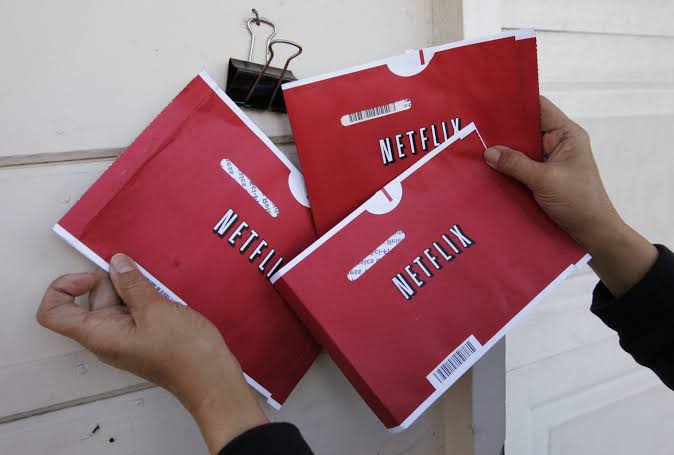
The company’s own origin myth (that Hastings was inspired by a $40 late fee on a rented copy of Apollo 13) has been disputed by Randolph himself, who says the two simply wanted to build “the Amazon.com of something” and landed on DVDs because they were compact and durable enough to mail.
In September 1999, Netflix pivoted to a flat-rate subscription model, eliminating due dates and late fees entirely — a structural innovation that foreshadowed its later streaming pivot.
Netflix launched its streaming service in 2007, initially as a free add-on to DVD subscriptions, and by the early 2010s had fully repositioned itself as a streaming-first company, eventually phasing out DVD-by-mail (which finally shut down completely in 2023) and investing heavily in original content starting with House of Cards in 2013.
How Amazon Prime Video Began: A Shipping Perk That Became a Streaming War
Amazon Prime Video’s story is really the story of Amazon Prime itself. Amazon Prime launched on February 2, 2005, under founder and then-CEO Jeff Bezos, offering unlimited two-day shipping for a flat $79 annual fee — a move many analysts at the time doubted could ever be profitable given shipping costs.
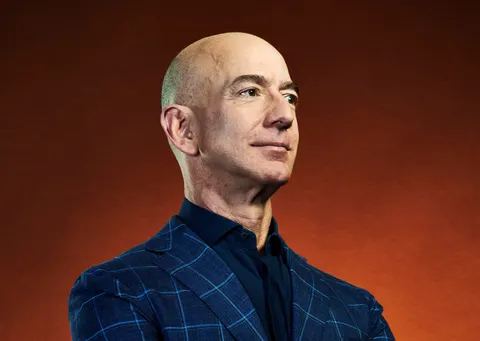
Amazon dipped a toe into video with Amazon Unbox in 2006, but the real turning point came in February 2011, when Amazon folded free, commercial-free streaming of more than 5,000 movies and TV shows directly into existing Prime memberships, instantly making tens of millions of already-paying Amazon customers into video subscribers without them signing up for anything new.
This bundling strategy — video as a retention tool for e-commerce rather than a standalone profit center — remains the defining difference between Amazon’s and Netflix’s approach to streaming to this day.
Who Owns Netflix? A Fully Public, Founder-Light Company
Netflix, Inc. is a publicly traded company listed on NASDAQ under the ticker NFLX, with no single controlling shareholder. Institutional investors dominate the cap table: Vanguard holds roughly 9.2%, BlackRock around 7.5%, and State Street about 4.1%.
Among individuals, co-founder Reed Hastings remains Netflix’s largest individual shareholder, holding a stake of roughly 1.76% valued at well over $4.5 billion, even though he stepped back from the CEO role in 2023 and announced in 2026 that he would not stand for re-election to Netflix’s board — a symbolic final step in Netflix’s transition away from founder-led governance.
The company has operated under a co-CEO structure since January 2023, with Ted Sarandos (Netflix’s longtime content chief) and Greg Peters (formerly Netflix’s product and operations lead) jointly running the company.
Who Owns Amazon Prime Video? A Division, Not a Company
Unlike Netflix, Amazon Prime Video isn’t a standalone company at all — it’s one division inside Amazon.com, Inc., the publicly traded e-commerce and cloud-computing giant (NASDAQ: AMZN).
That means Prime Video has no independent ownership structure, no separate stock ticker, and no dedicated shareholder base; its “ownership” is simply Amazon’s, which is itself broadly held by institutional investors alongside a meaningful founder stake still held by Jeff Bezos, who remains Amazon’s largest individual shareholder even after stepping down as CEO in 2021 (Andy Jassy has led Amazon since).
This structural difference matters enormously for how each service is run: Netflix’s leadership answers directly to Netflix shareholders based purely on streaming performance, while Prime Video’s leadership answers to Amazon’s broader corporate strategy, where video is explicitly valued for its ability to reduce Prime membership churn and increase overall Amazon spending rather than for standalone profitability.
Subscribers and Reach: Netflix vs Prime Video by the Numbers
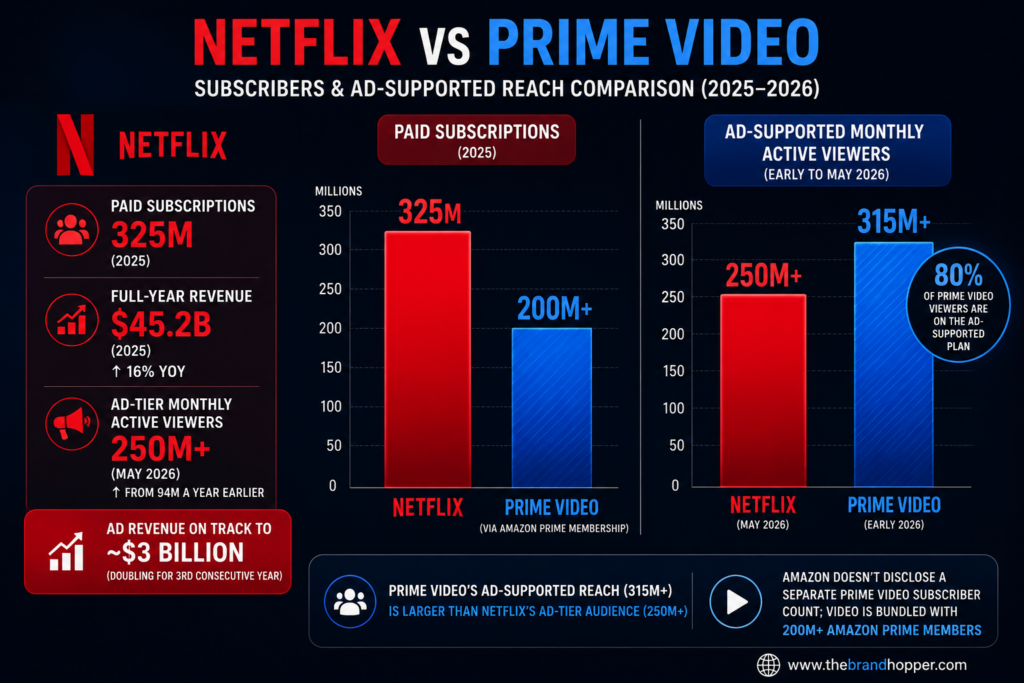
By raw paid-subscriber count, Netflix leads clearly, closing 2025 with 325 million paid subscriptions worldwide and full-year revenue of $45.2 billion, up nearly 16% year-over-year.
Netflix’s ad-supported tier has also become a major growth engine in its own right, reaching over 250 million global monthly active viewers by May 2026 (up from just 94 million a year earlier), with ad revenue on track to roughly double for a third consecutive year to around $3 billion.
Amazon doesn’t report a directly comparable “Prime Video subscriber” number, since video access is bundled into the roughly 200-million-plus global Amazon Prime membership base, but Prime Video’s ad-supported average audience reached more than 315 million viewers globally in early 2026 — larger than Netflix’s ad-tier audience — with roughly 80% of Prime Video viewers remaining on the ad-supported plan since ads were introduced in early 2025.
Pricing: Subscription vs Bundled Perk
Pricing is where the two services diverge most sharply in how they’re actually sold to consumers. Netflix charges directly for access, with multiple tiers ranging from a cheaper ad-supported plan up to premium 4K options, and it has steadily raised prices across every tier in recent years as its content library and production budgets have grown.
Amazon Prime Video, by contrast, isn’t really “priced” as a standalone product for most users — it comes bundled inside a standard Amazon Prime membership, which costs $14.99 per month or $139 annually as of 2026 and includes free shipping, Grubhub+, Whole Foods perks, and Prime Day access alongside video.
Amazon does now charge separately for an ad-free experience: in April 2026, Amazon rebranded its ad-free tier as “Prime Video Ultra,” priced at $4.99 per month on top of a Prime membership, while also expanding its perks to five concurrent streams and 100 offline downloads.
In practice, this means most Prime Video viewers are paying for shipping and getting video “free,” while every Netflix subscriber is paying specifically and only for video.
Content Strategy: Original Prestige vs Broad-Spectrum Volume
Netflix has built its brand almost entirely around prestige original programming — series like Stranger Things, Wednesday, and Squid Game function as global cultural events and remain Netflix’s single biggest subscriber-retention lever, with the company spending roughly $18 billion on content in 2025 alone.

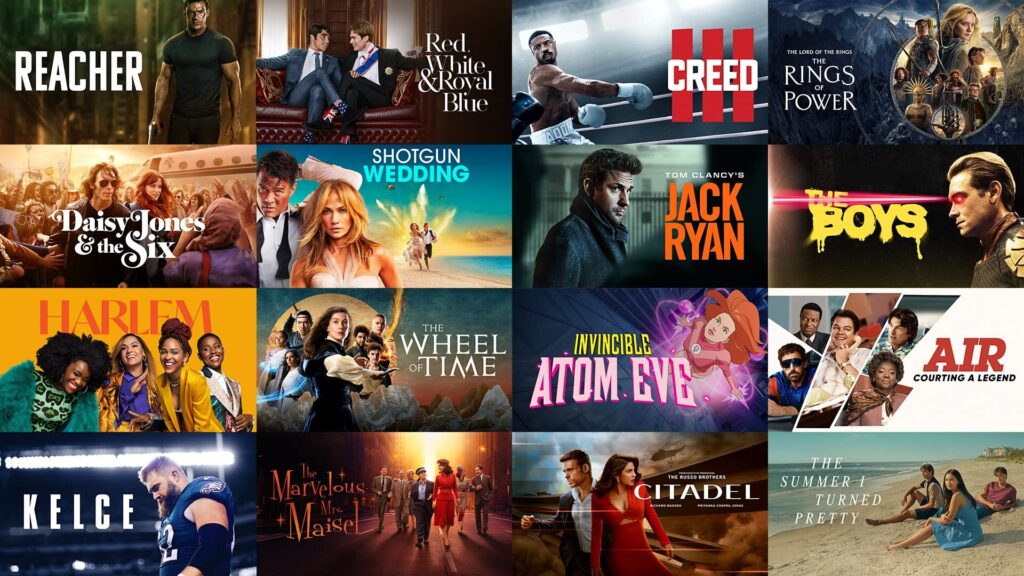
Amazon, however, actually outspent Netflix on content in 2025, disclosing a combined video-and-music content budget of $22.4 billion, roughly 25% more than Netflix’s spend, funding a mix of prestige originals (The Lord of the Rings: The Rings of Power, Reacher), live sports (Thursday Night Football), and a growing library available through Prime Video Channels, which lets subscribers add on channels like Max, Paramount+, or Apple TV+ directly through Amazon’s billing rather than juggling separate apps and subscriptions.
Which Is Better for Live Sports?
This is one category where Amazon has pulled clearly ahead.
Prime Video has held exclusive U.S. streaming rights to Thursday Night Football since 2022, giving Amazon a weekly, appointment-viewing live-sports draw that Netflix largely lacks, though Netflix has begun dipping into live sports and events (including WWE programming and select boxing and NFL Christmas Day games) as part of its own diversification strategy.
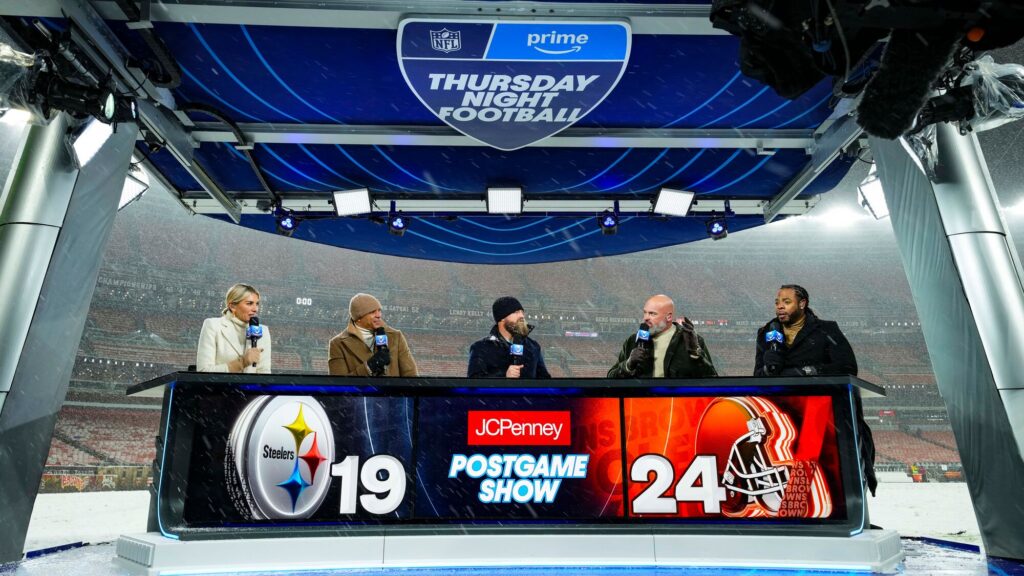
For sports fans specifically, Prime Video currently offers more consistent, recurring live programming than Netflix.
Which Brand Is Best for You? A Practical Breakdown
If you want the single best library of prestige original series and don’t mind paying for streaming as a standalone expense, Netflix remains the more content-focused, streaming-native choice, and its willingness to keep raising prices reflects genuine confidence in that content’s pull.
If you’re already an Amazon Prime member for shipping and shopping, Prime Video is effectively a “free” bonus that now rivals or exceeds Netflix in total content investment, live sports, and ad-supported reach, making it the better value purely on a cost-per-benefit basis.
If you’re a cord-cutter trying to consolidate subscriptions, Amazon’s Channels add-on model gives it a structural advantage for centralizing billing, while Netflix’s tightly curated, single-app experience remains simpler for viewers who just want one great app rather than a hub for many.
And if live sports matter to you, Prime Video’s NFL rights currently give it a real edge Netflix hasn’t yet matched at the same scale.
Netflix vs Amazon Prime Video at a Glance
| Fact | Netflix | Amazon Prime Video |
| Founded | 1997 (as mail-order DVD rental) | 2005 (Prime); 2011 (streaming video added) |
| Founders | Marc Randolph & Reed Hastings | Jeff Bezos (as part of Amazon Prime) |
| Company structure | Independent, publicly traded | Division of Amazon.com, Inc. |
| Stock listing | NASDAQ: NFLX | NASDAQ: AMZN (parent Amazon) |
| Largest shareholders | Vanguard (~9.2%), BlackRock (~7.5%), State Street (~4.1%) | Institutional investors + Jeff Bezos (founder stake) |
| CEO(s) | Co-CEOs Ted Sarandos & Greg Peters | Andy Jassy (Amazon CEO; no dedicated Prime Video CEO) |
| 2025 paid subscribers | 325 million | Bundled into ~200M+ global Prime members |
| 2025 revenue | $45.2 billion (Netflix total) | Not broken out separately from Amazon |
| 2025 content spend | ~$18 billion | ~$22.4 billion (video + music) |
| Ad-tier audience (2026) | 250M+ monthly active viewers | 315M+ average ad-supported viewers |
| Pricing model | Direct subscription, tiered pricing | Bundled with Prime membership ($14.99/mo) |
| Live sports | Limited (WWE, select NFL games) | Thursday Night Football (exclusive) |
Key Takeaways
Netflix and Amazon Prime Video represent two fundamentally different bets on how streaming should make money: Netflix as a standalone subscription business living or dying by its content slate, and Prime Video as a retention tool inside Amazon’s much larger e-commerce ecosystem.
Netflix still leads on raw subscriber count and original-series prestige, but Amazon now outspends it on total content and reaches a larger ad-supported audience, while also holding a genuine edge in live sports through Thursday Night Football.
Neither model is objectively “better” — the right choice mostly comes down to whether you value a dedicated, ad-optional entertainment app or a bundled perk that comes essentially free with a service you’re already paying for.
Frequently Asked Questions
Q: Is Netflix or Amazon Prime Video better?
A: It depends on your priorities. Netflix offers the stronger standalone original-content library and a more focused streaming experience, while Amazon Prime Video offers greater overall value if you’re already an Amazon Prime member, plus live NFL football and a larger 2025 content budget.
Q: Who owns Netflix?
A: Netflix, Inc. is a publicly traded company (NASDAQ: NFLX) with no controlling shareholder. The largest holders are institutional investors like Vanguard (~9.2%) and BlackRock (~7.5%), while co-founder Reed Hastings remains the largest individual shareholder at roughly 1.76%.
Q: Who owns Amazon Prime Video?
A: Amazon Prime Video isn’t an independently owned company — it’s a division of Amazon.com, Inc. (NASDAQ: AMZN), the publicly traded e-commerce and cloud company led by CEO Andy Jassy, with founder Jeff Bezos remaining Amazon’s largest individual shareholder.
Q: How many subscribers does Netflix have compared to Amazon Prime Video?
A: Netflix reported 325 million paid subscribers at the end of 2025. Amazon doesn’t disclose a separate Prime Video subscriber count, since it’s bundled into Amazon’s roughly 200-million-plus global Prime membership base.
Q: Does Amazon Prime Video cost extra on top of Amazon Prime?
A: Basic Prime Video access is included with a standard Amazon Prime membership ($14.99/month or $139/year). Amazon does charge an additional $4.99/month for its ad-free “Prime Video Ultra” tier, launched in April 2026.
Q: Who spends more on content, Netflix or Amazon?
A: Amazon spent more in 2025, disclosing a combined video-and-music content budget of $22.4 billion, compared to Netflix’s roughly $18 billion, though Netflix’s spending is concentrated more heavily on scripted originals.
Q: Does Netflix or Amazon Prime Video have live sports?
A: Amazon Prime Video has the stronger live-sports presence, holding exclusive U.S. streaming rights to Thursday Night Football since 2022. Netflix has entered the space more selectively, including WWE programming and select NFL Christmas Day games.
Q: Who runs Netflix and Amazon Prime Video?
A: Netflix is run by co-CEOs Ted Sarandos and Greg Peters. Amazon Prime Video falls under Amazon.com’s overall leadership, currently led by CEO Andy Jassy, with no dedicated standalone CEO for the video division.
Also Read:
- GoPro vs DJI: Best Action Camera Brand?
- Intel vs AMD: Which CPU Brand Is Better?
- PayPal vs Stripe: Which Payment Processor Wins in 2026?
To read more content like this, subscribe to our newsletter