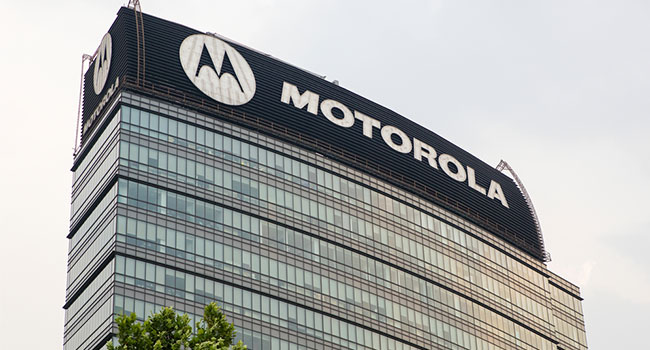
Motorola, a name synonymous with pioneering advancements in communication technology, has a rich history that dates back to its founding in 1928. Motorola was established by Paul V. Galvin and his brother Joseph Galvin in Chicago, Illinois. Originally named Galvin Manufacturing Corporation, the company’s initial foray into the electronics market began with the introduction of the first commercially successful car radio, the Motorola, in 1930. This product’s success was so profound that the company adopted the name Motorola as its brand.
Paul V. Galvin and Joseph Galvin – Founders of Motorola
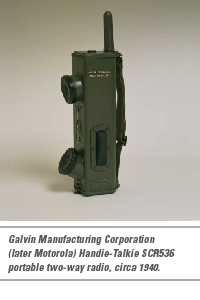
In the early years, Motorola was at the forefront of innovation, introducing numerous groundbreaking products that revolutionized communication. One of its early successes was the Handie-Talkie SCR536, an AM-band, handheld, two-way radio developed for the U.S. military during World War II. This invention played a crucial role in the war, establishing Motorola’s reputation for reliability and innovation.
Handie-Talkie SCR536
Post-war, Motorola continued to expand its product range, venturing into television manufacturing in 1947. By the 1950s, Motorola had become a household name in consumer electronics. The company’s foray into semiconductor products in 1952 marked another significant milestone. Motorola’s transistors and integrated circuits became essential components in the burgeoning electronics industry, further solidifying its technological prowess.
The Cellular Revolution
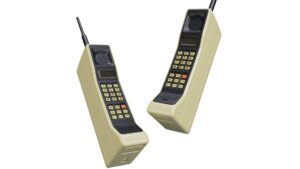
Perhaps Motorola’s most iconic contribution to technology was the development of the world’s first handheld cellular phone. In 1973, Martin Cooper, a Motorola researcher and executive, made the first mobile phone call on a Motorola DynaTAC. This groundbreaking event heralded the beginning of the mobile communications revolution. The DynaTAC, albeit large and expensive by today’s standards, was a marvel of its time, setting the stage for the future of mobile telephony.
Motorola DynaTAC 8000X Old Mobile. World first mobile phone. Vintage classic mobile phone. 3D Rendered Illustration.
The commercial launch of the Motorola DynaTAC 8000X in 1983 marked the advent of mobile phones for the general public. This was followed by the introduction of the MicroTAC in 1989, which was significantly more compact and portable, and the StarTAC in 1996, which was one of the first clamshell mobile phones and a precursor to modern flip phones. These innovations not only cemented Motorola’s leadership in mobile communication but also influenced the design and functionality of future mobile devices.
Challenges and Restructuring
Despite its pioneering spirit and initial dominance, Motorola faced significant challenges in the late 1990s and early 2000s. The rapid advancement of mobile technology and the emergence of strong competitors such as Nokia, Samsung, and later Apple, began to erode Motorola’s market share. The company struggled to keep up with the pace of innovation and the shift towards smartphones, leading to financial difficulties and strategic missteps.
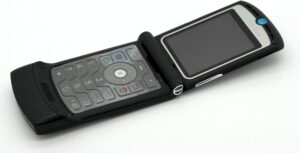
In 2004, Motorola attempted a resurgence with the introduction of the RAZR V3, a sleek and stylish flip phone that became an iconic device of its era. The RAZR V3 was a commercial success, selling over 130 million units and briefly restoring Motorola’s prominence in the mobile phone market. However, the transition to smartphones proved challenging for Motorola. The company’s smartphone efforts, including the Moto Q and the initial Droid series, met with mixed success, unable to fully compete with the iPhone and Android-powered devices from other manufacturers.
Under Lenovo’s stewardship, Motorola has focused on refining its product lineup and expanding its presence in emerging markets. The Moto G series, in particular, has been well-received for offering high-quality smartphones at affordable prices, appealing to budget-conscious consumers. Lenovo’s investment in 5G technology and the development of the foldable Razr series have also been part of Motorola’s strategy to reclaim its position as an innovator in the mobile industry.
Current Focus and Future Prospects
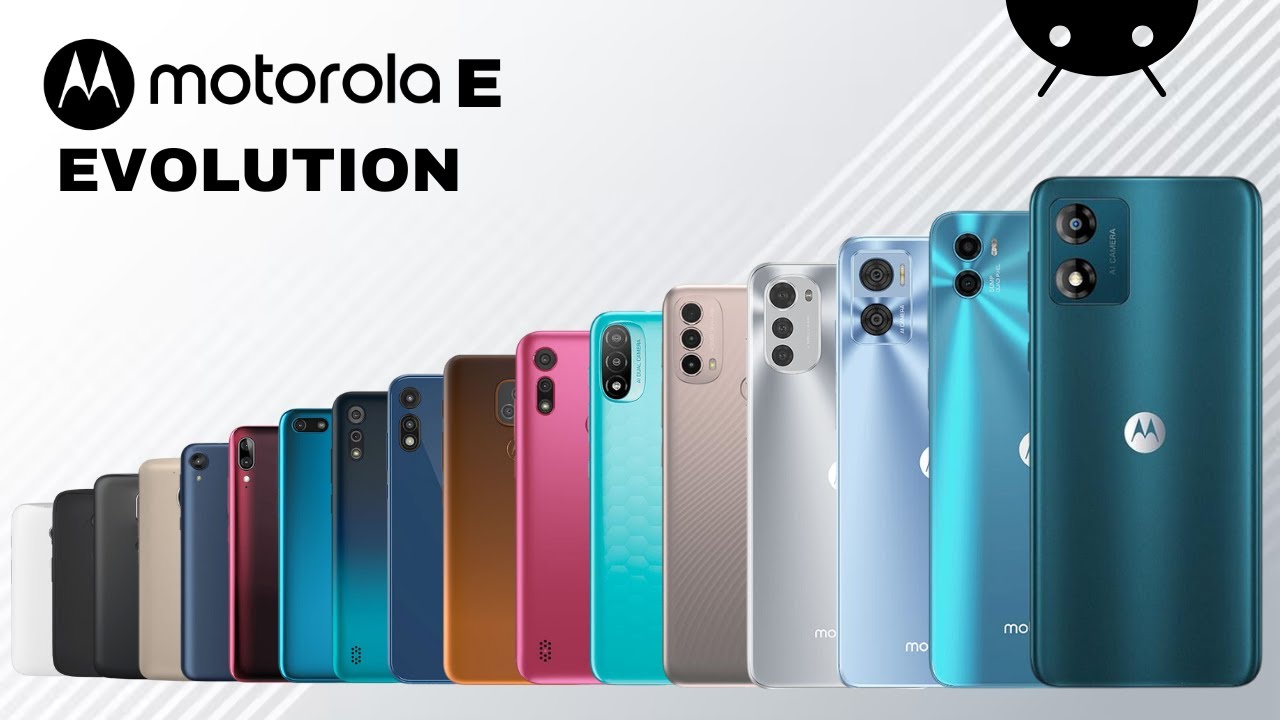
Today, Motorola continues to leverage its rich legacy and expertise in communication technology. The company remains committed to innovation, focusing on areas such as 5G connectivity, AI integration, and enhancing user experiences through software and hardware synergies. Motorola’s current product portfolio includes a range of smartphones that cater to different market segments, from the budget-friendly Moto E and G series to the premium Edge series.
Motorola’s emphasis on clean Android experiences, timely updates, and robust build quality has helped it maintain a loyal customer base. The company’s strategy of blending advanced technology with practical features and competitive pricing positions it well in the highly competitive smartphone market. As Motorola navigates the future, its ability to innovate and adapt will be crucial in sustaining its legacy as a leader in communication technology.
Motorola’s journey from its inception as a car radio manufacturer to its current status as a global player in the smartphone industry is a testament to its enduring spirit of innovation. With a history marked by numerous firsts and groundbreaking products, Motorola has indelibly shaped the landscape of communication technology. As it continues to evolve under Lenovo’s ownership, Motorola’s commitment to delivering high-quality, innovative products remains steadfast, ensuring its place as a significant and influential player in the tech industry for years to come.
Motorola has employed a variety of marketing strategies over the decades to maintain its relevance and competitive edge. Here’s an in-depth look at the marketing strategies that have shaped Motorola’s journey:
1. Brand Heritage and Innovation
Motorola’s marketing strategy heavily leverages its rich heritage and consistent innovation, establishing a unique brand identity that resonates deeply with consumers. Founded in 1928, Motorola has a long history of groundbreaking achievements, including the creation of the world’s first handheld mobile phone in 1973. This legacy of innovation is a cornerstone of Motorola’s brand narrative, showcasing its role as a pioneer in the telecommunications industry. By continuously highlighting these historic milestones, Motorola reinforces its reputation as a trusted and reliable brand, capable of leading technological advancements.
One of the key aspects of Motorola’s marketing strategy is the integration of its storied past with modern innovation. For instance, the reimagining of the iconic RAZR V3 into a modern foldable smartphone demonstrates how Motorola blends nostalgia with cutting-edge technology. This approach not only appeals to long-time fans who remember the original RAZR but also attracts new customers drawn to innovative design. By merging past successes with current trends, Motorola effectively maintains brand relevance across different generations of consumers.
Motorola Razr showdown – Original V3 vs. the new foldable screen one
Motorola’s commitment to innovation is evident in its continuous investment in research and development, ensuring that its products meet contemporary technological standards. The company’s near-stock Android experience, for instance, offers users a clean, intuitive interface with timely updates, enhancing user satisfaction and loyalty. This focus on delivering advanced, user-friendly products solidifies Motorola’s position as a forward-thinking brand. By consistently pushing the boundaries of what is technologically possible, Motorola not only honors its legacy but also sets the stage for future advancements, reinforcing its image as a leader in the ever-evolving telecommunications industry.
2. Product Differentiation and Design
Motorola’s marketing strategy heavily emphasizes product differentiation and innovative design, which have become critical in setting the brand apart in the highly competitive smartphone market. Motorola’s history of distinctive design is highlighted by the iconic RAZR V3, which combined sleek aesthetics with functional innovation, and more recently, by the modernized foldable Razr. This latest iteration not only rekindles nostalgia but also introduces advanced foldable screen technology, illustrating Motorola’s commitment to pioneering unique and stylish devices. By focusing on standout design elements, Motorola attracts both long-time loyal customers and new users who value cutting-edge technology and sophistication in their devices.
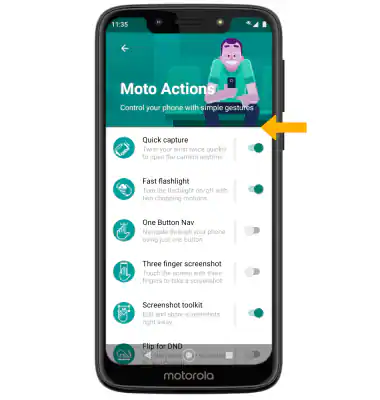
The emphasis on user experience is another cornerstone of Motorola’s product differentiation strategy. Motorola smartphones often feature a near-stock Android experience, which is celebrated for its clean, intuitive interface and lack of bloatware. This approach ensures that users receive timely software updates and security patches, significantly enhancing the overall user experience. Additionally, Motorola incorporates practical features like Moto Actions, which allow users to perform simple gestures to access functions quickly, and Moto Display, which provides quick access to notifications and updates without fully waking the phone. These user-friendly innovations cater to consumer demands for simplicity and efficiency in their mobile devices.
Moto Actions
In recent years, Motorola has continued to refine its product lineup to cater to various market segments, ensuring a balance between affordability and advanced features. The Moto G and Moto E series are tailored for budget-conscious consumers, offering robust performance and reliability at competitive prices. On the other hand, the Moto Edge series targets premium users with advanced features such as high-refresh-rate displays, powerful processors, and enhanced camera systems. By maintaining a diverse product range with distinct design and user experience elements, Motorola successfully appeals to a wide spectrum of consumers, reinforcing its position as a versatile and innovative brand in the smartphone industry.
3. Targeted Pricing Strategy
Motorola’s targeted pricing strategy is a pivotal element of its marketing approach, enabling the brand to cater to a broad range of consumers by offering products that deliver affordability and value. Recognizing the diverse financial capabilities and needs of its global customer base, Motorola has strategically positioned its devices across various price points. The Moto G and Moto E series exemplify this approach by providing high-quality smartphones at competitive prices, making advanced technology accessible to budget-conscious consumers. These models are particularly popular in emerging markets, where affordability is a crucial factor, helping Motorola gain substantial market share in regions such as Latin America, India, and Southeast Asia.
A key aspect of Motorola’s pricing strategy is its tiered product lineup, which ensures that there is a Motorola device to meet every budget and preference. The entry-level Moto E series offers essential smartphone features at the lowest price points, targeting first-time smartphone users and those with basic mobile needs. The mid-range Moto G series balances affordability with enhanced functionality, appealing to consumers who seek better performance and additional features without a premium price tag. For those looking for high-end specifications and cutting-edge technology, the Moto Edge series provides flagship-level experiences with advanced cameras, powerful processors, and superior display technology, albeit at a higher cost. This tiered structure allows Motorola to attract a wide array of customers, from budget buyers to tech enthusiasts.
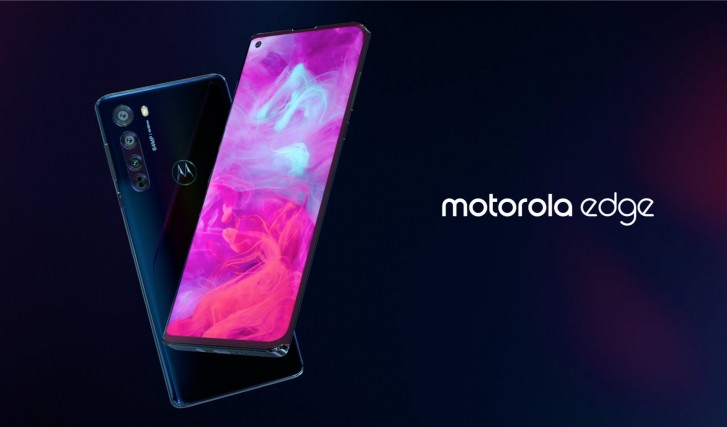
Moto Edge series is one of the most successful flagship series of Motorola
In addition to offering a range of price points, Motorola also emphasizes value in each segment by ensuring that even its most affordable devices do not compromise on essential features and build quality. For example, the recent Moto G Power and Moto G Stylus models offer impressive battery life and unique functionalities at mid-range prices, demonstrating Motorola’s commitment to delivering more for less. This value-centric approach not only helps Motorola stand out in a crowded market but also fosters brand loyalty among consumers who feel they are getting excellent performance and features for their money. By strategically pricing its diverse product lineup, Motorola successfully meets the needs of a varied customer base while maintaining its reputation for quality and innovation.
4. Strategic Partnerships and Alliances
Strategic partnerships and alliances play a crucial role in Motorola’s marketing strategy, enabling the brand to expand its reach, enhance product offerings, and maintain competitive advantage. Carrier partnerships are a cornerstone of Motorola’s approach, facilitating widespread distribution and strong market presence. By collaborating with major carriers such as Verizon, AT&T, and T-Mobile, Motorola ensures its devices are readily available to a vast customer base through attractive contract plans and promotional deals. These partnerships not only enhance visibility but also provide customers with convenient purchasing options, often including financing and bundled services that make Motorola devices more accessible.
Tech collaborations are another key aspect of Motorola’s strategic partnerships. Under Google’s ownership, Motorola benefited significantly from close integration with the Android ecosystem, resulting in the development of highly regarded devices like the Moto X, Moto G, and Moto E series. These collaborations ensured that Motorola’s smartphones offered a clean, near-stock Android experience, timely updates, and seamless integration with Google’s services. After being acquired by Lenovo in 2014, Motorola continued to innovate by leveraging Lenovo’s expertise in hardware manufacturing and global distribution networks. This alliance has enabled Motorola to introduce advanced features such as foldable displays in the Razr series and robust 5G capabilities in its recent models, keeping the brand at the forefront of technological advancements.
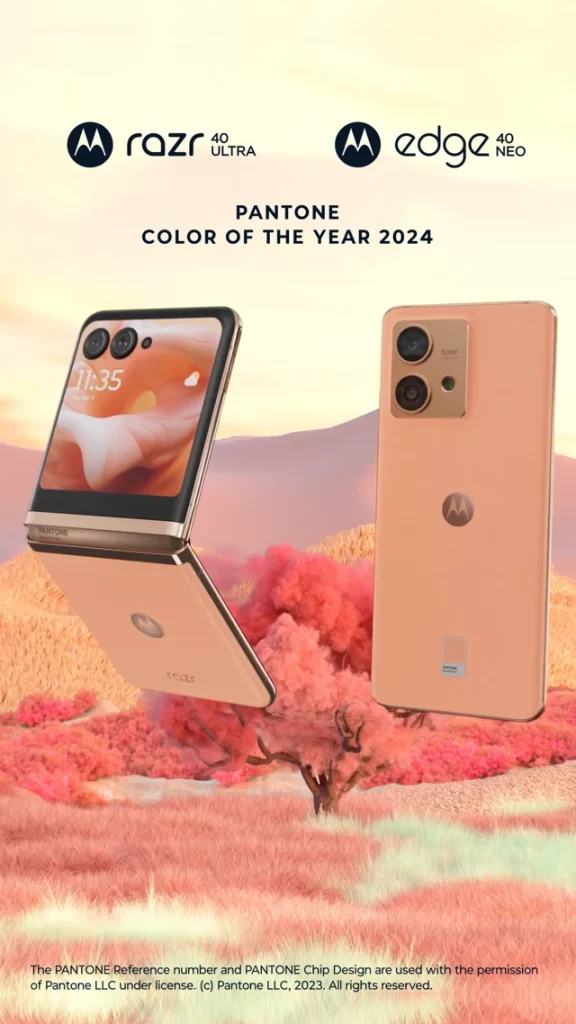
In addition to these core partnerships, Motorola has forged several other strategic alliances that enhance its market positioning and product appeal. A notable collaboration is with Pantone, a multi-year partnership that gives Motorola access to color trend forecasting and display calibration, ensuring its devices stay ahead in design aesthetics. Another significant partnership is with Google Cloud, where a multi-year agreement leverages sensors, data, and AI to develop cloud solutions for Motorola’s safety and security technologies. Motorola India’s creative agency, Dentsu Creative India, manages the brand’s digital and mainline duties, further strengthening its market presence in India.
Pantone x Motorola Collab
Additionally, Motorola collaborates with a variety of companies such as Esri, Rockwell Automation, CompassCom Software, SeQent, Continental Wireless, HCI, United Radio, McIntosh Communications, and Elcom Systems. These alliances span various industries, enhancing Motorola’s technological capabilities and market reach. By aligning with key industry players and leveraging their strengths, Motorola delivers comprehensive and appealing products that cater to the evolving needs and preferences of its diverse customer base. These strategic partnerships and alliances not only bolster Motorola’s product offerings but also reinforce its reputation as a dynamic and innovative brand in the highly competitive smartphone market.
5. Digital Marketing and Social Media Engagement
Digital marketing and social media engagement are critical components of Motorola’s comprehensive marketing strategy, allowing the brand to effectively reach and interact with its target audience in the digital age. Motorola maintains a robust digital presence through strategic use of online advertising, search engine optimization (SEO), and content marketing. By leveraging platforms such as Google Ads, YouTube, and various display networks, Motorola ensures its products are visible to potential customers across the internet. This online visibility is crucial for driving brand awareness and attracting new customers, particularly in an era where consumers increasingly rely on digital channels for information and shopping.
Interactive social media campaigns are another cornerstone of Motorola’s digital marketing strategy. The brand actively engages with its audience on platforms like Facebook (15 Million Followers), Twitter (162K Followers), Instagram (241K Followers), and YouTube (356K Followers), creating a dynamic and interactive online community. Motorola’s social media strategy includes user-generated content, influencer partnerships, and live events, which not only enhance engagement but also build a sense of community among users. For example, Motorola often runs hashtag campaigns and photo contests, encouraging users to share their experiences with Motorola devices. Collaborations with tech influencers and content creators further amplify Motorola’s reach, providing authentic endorsements that resonate with tech-savvy consumers.
Beyond social media, Motorola invests in personalized email marketing and targeted digital content to nurture relationships with existing customers and prospects. Personalized email campaigns, informed by data analytics and user behavior, offer tailored promotions, product recommendations, and updates, enhancing the overall customer experience. Motorola’s focus on providing valuable, relevant content through blogs, tutorials, and how-to videos ensures that users can maximize the benefits of their devices. This educational approach not only fosters customer loyalty but also positions Motorola as a trusted authority in the tech industry. By combining a robust digital presence with interactive social media campaigns and personalized content, Motorola effectively engages with its audience, drives brand loyalty, and maintains its competitive edge in the rapidly evolving digital landscape.
6. Innovative Marketing Campaigns
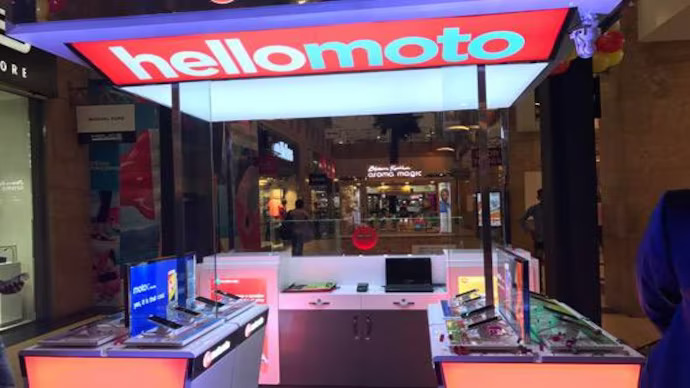
Motorola’s innovative marketing campaigns are a vital component of its strategy to connect with consumers on a deeper level and differentiate itself in the competitive smartphone market. Experiential marketing, which includes events, pop-up stores, and product demonstrations, is a key element of Motorola’s approach. For example, Motorola has hosted interactive pop-up events in cities like New York, London, and Mumbai to launch new products such as the Moto Razr. These events allow potential customers to engage with the latest devices in a hands-on environment, offering personalized demonstrations that showcase unique features like the foldable screen and Moto Actions. Such events generate buzz and excitement, foster direct connections between the brand and its audience, and enhance brand loyalty and trust. Additionally, Motorola’s presence at major tech expos like CES and Mobile World Congress ensures that it remains at the forefront of industry innovation and consumer interest.
Motorola opened offline exclusive MotoHub Pop-up stores in India
Storytelling and emotional appeal are also central to Motorola’s marketing campaigns. The brand often crafts narratives that highlight the impact of its technology on everyday lives, creating a strong emotional resonance with consumers. A recent example is the “Hello Moto” campaign, which featured real-life stories of people using Motorola devices to stay connected with loved ones, achieve their goals, or capture special moments. These stories were shared through various media channels, including television ads, social media posts, and YouTube videos, effectively humanizing the brand and making it more relatable. This strategy is particularly powerful in fostering an emotional connection with the audience, making them more likely to develop a lasting affinity for Motorola. For instance, the campaign highlighted a story of a young entrepreneur using the Moto G series to manage her startup business effectively, resonating with a broader audience and showcasing the practical benefits of Motorola’s technology.
In addition to experiential marketing and storytelling, Motorola employs a variety of other innovative tactics to capture consumer attention and drive engagement. The brand has recently leveraged augmented reality (AR) features in its marketing efforts, such as the AR-enabled brochures and apps that allow users to visualize Motorola products in their own environment before making a purchase. For example, during the launch of the Moto Edge series, Motorola introduced an AR experience that enabled users to see a 3D model of the phone, explore its features, and even place it virtually in their hand through their smartphone camera. These cutting-edge techniques not only enhance the shopping experience but also position Motorola as a forward-thinking and technologically advanced brand.
By continually pushing the boundaries of traditional marketing and exploring new and creative ways to engage with consumers, Motorola maintains its relevance and appeal in the fast-paced world of consumer electronics. Through a combination of experiential marketing, compelling storytelling, and innovative digital tactics, Motorola effectively communicates its brand values and keeps its audience engaged and excited about its products.
7. Market Expansion and Localization
Market expansion and localization are integral components of Motorola’s strategic marketing approach, enabling the brand to effectively penetrate diverse global markets while adapting to local preferences and needs. Motorola combines its global reach with local adaptation strategies to resonate with consumers in different regions. For instance, in markets like India and Brazil, where affordability and value are paramount, Motorola has successfully launched budget-friendly models like the Moto G and Moto E series. These smartphones offer competitive features at accessible price points, catering to the mass market and gaining significant market share against local and international competitors.
Emerging markets represent a key focus area for Motorola’s expansion strategy. Recognizing the growth potential in regions such as Southeast Asia, Latin America, and parts of Africa, Motorola has tailored its product offerings and marketing efforts to suit the specific needs of these markets. In India, for example, Motorola has implemented localized marketing campaigns that emphasize features like long battery life, durability, and camera quality, which are highly valued by Indian consumers. By understanding and responding to regional preferences, Motorola enhances its appeal and competitiveness in rapidly expanding economies where smartphone adoption continues to rise.
In addition to targeting emerging markets, Motorola maintains a strategic approach to global expansion through partnerships with local distributors, retailers, and carriers. These collaborations not only facilitate wider distribution but also ensure that Motorola’s products are readily available and supported locally. Furthermore, Motorola’s commitment to localized customer service, including multilingual support and region-specific warranty programs, enhances customer satisfaction and loyalty. By establishing a strong local presence and adapting its strategies to fit diverse market dynamics, Motorola strengthens its position as a trusted and preferred brand in the global smartphone industry. Through effective market expansion and localization strategies, Motorola navigates cultural, economic, and technological nuances to successfully grow its presence and meet the evolving demands of consumers worldwide.
Motorola’s multifaceted marketing strategies have played a crucial role in maintaining its relevance and competitive edge in the telecommunications industry. By leveraging its rich heritage, focusing on innovative design, adopting a tiered pricing strategy, and engaging with consumers through digital and experiential marketing, Motorola continues to navigate the challenges of a highly competitive market. As the company moves forward, its ability to innovate, adapt, and connect with consumers will be key to sustaining its legacy and driving future growth.
The Brand Hopper and The Art of Start are owned and operated by the same company. Explore practical startup and side-hustle how-to guides at The Art of Start.