Last Updated on August 12, 2026 by Team TBH
Comcast Corporation — operating primarily as Xfinity for its consumer services and NBCUniversal for its media assets — is the largest cable operator and home internet provider in the United States. With revenue of $123.7 billion in its most recent fiscal year, Comcast spans broadband, cable television, wireless, streaming, film, theme parks, and international pay-TV through Sky. Yet despite this scale, it faces fierce competition on multiple fronts: from telecom giants that have built nationwide fiber and wireless networks, from cable rivals offering comparable broadband at competitive prices, and from streaming platforms that have fundamentally disrupted the pay-TV model that was once Comcast’s core business. This article examines all 18 of Comcast’s most significant competitors and alternatives — with verified revenue figures and a clear assessment of where each one competes.
Comcast at a Glance
Before examining its rivals, it helps to understand the full scope of what Comcast has built.
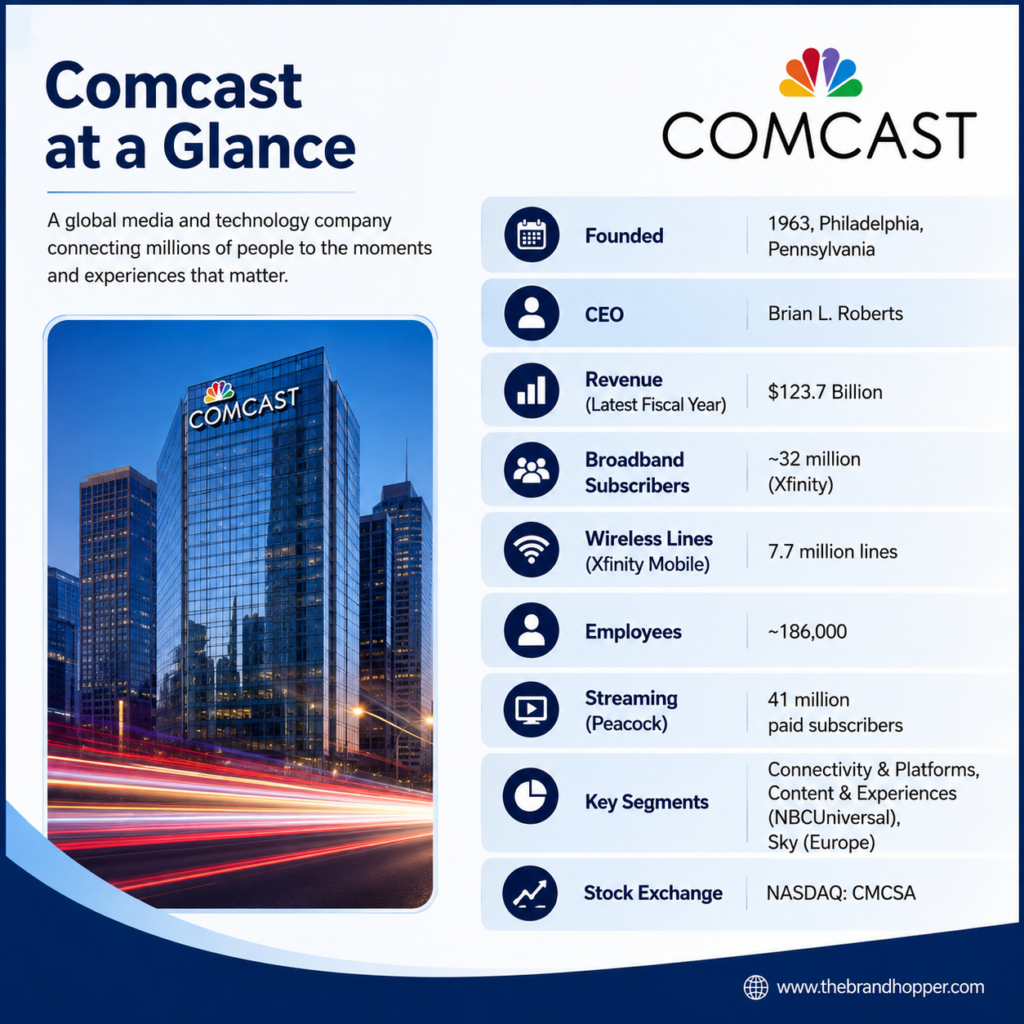
Comcast’s competitive landscape breaks into three distinct arenas: telecom and cable rivals (companies competing for broadband and pay-TV customers), streaming and content giants (platforms eroding Comcast’s cable TV subscriber base), and satellite TV providers (legacy alternatives for video delivery). Here are the 18 companies that keep Comcast’s leadership team up at night.
Top Competitors of Comcast
1. AT&T
Official Website: att.com
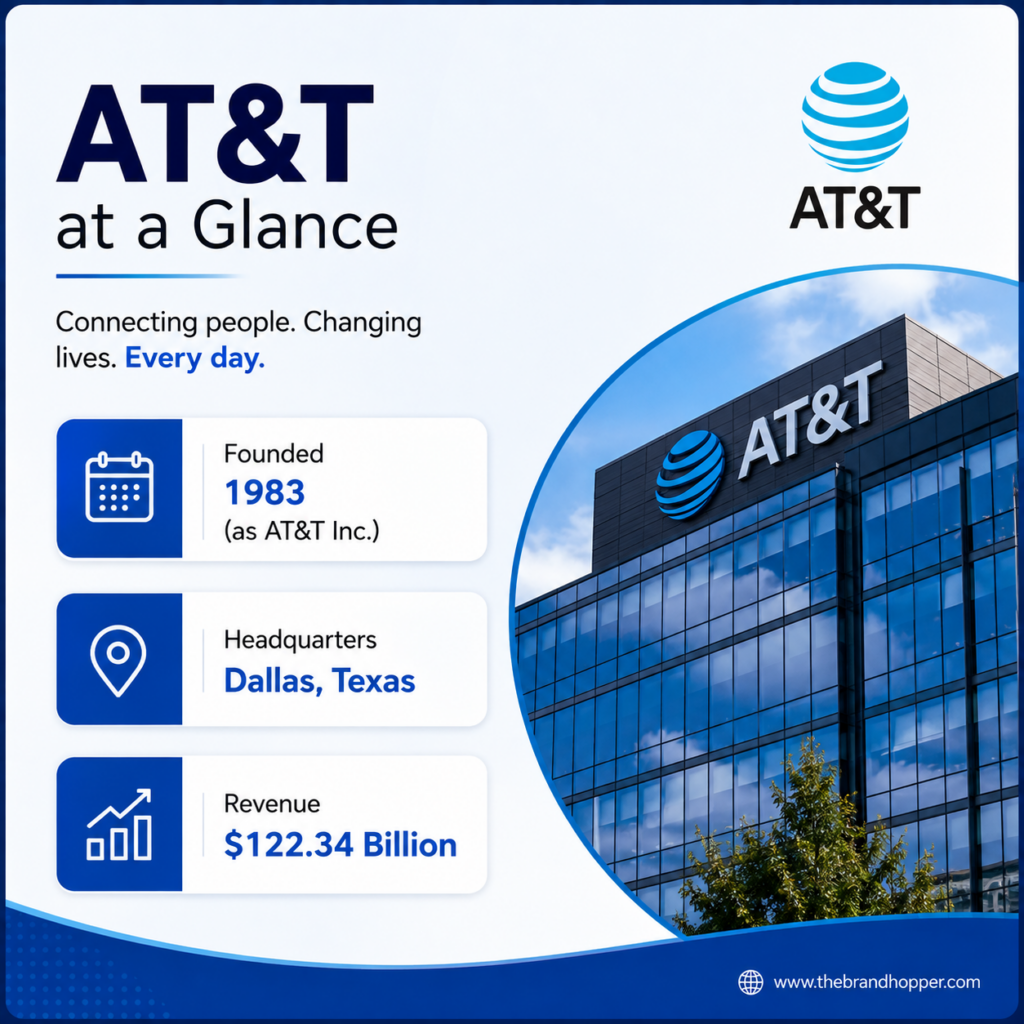
AT&T is Comcast’s single most direct competitor, challenging it simultaneously on broadband, wireless, and streaming. AT&T reported total revenues of $122.34 billion in its most recent fiscal year, making it the only company that rivals Comcast’s scale dollar-for-dollar. Its AT&T Fiber network — now passing more than 28 million locations — delivers gigabit and multi-gig broadband at speeds that match or exceed Comcast’s Xfinity service, and AT&T has consistently been adding fiber subscribers at a pace that outpaces the broader market.
On wireless, AT&T’s three primary brands (AT&T, Cricket, and FirstNet) give it a robust consumer and enterprise mobile base, which increasingly overlaps with Comcast’s Xfinity Mobile MVNO. In streaming, AT&T retained HBO and Max after spinning off WarnerMedia (now Warner Bros. Discovery) in 2022, but it continues to push bundles that combine AT&T Fiber with Max subscriptions — a direct threat to Comcast’s Xfinity-Peacock bundle strategy. AT&T’s FirstNet network, built exclusively for first responders, also reinforces its enterprise and government credentials.
Perhaps most significantly, AT&T’s fiber expansion into markets where Comcast historically had no fixed-line competition is a structural threat: once fiber passes a home, cable’s HFC network advantage largely disappears. AT&T has set a target of passing 50 million locations with fiber by the end of the decade.
| Why AT&T Is Comcast’s Most Formidable Rival
AT&T competes with Comcast on every major front — broadband (fiber vs. cable), wireless (FirstNet/AT&T vs. Xfinity Mobile), and streaming bundles — with comparable revenue scale and a rapidly expanding fiber footprint in Comcast’s core service territory. |
2. Verizon Communications
Official Website: verizon.com
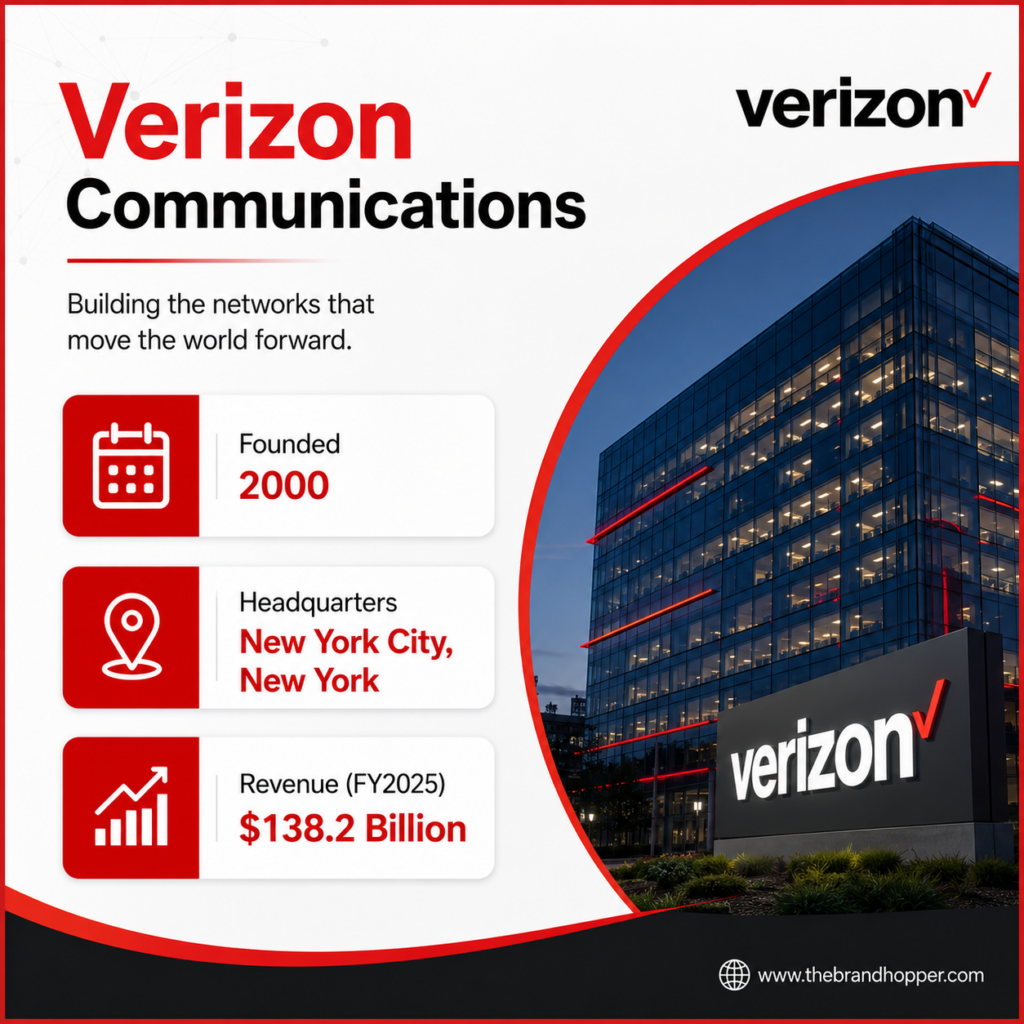
Verizon Communications is the largest U.S. telecommunications company by revenue, reporting $138.2 billion in its most recent fiscal year — higher than Comcast’s $123.7 billion. Verizon’s competitive positioning against Comcast has intensified significantly with the rapid growth of its Fixed Wireless Access (FWA) home internet product, which uses Verizon’s C-Band 5G and LTE networks to deliver broadband to homes without needing to lay fiber or coaxial cable.
Verizon’s FWA service — offered under the Verizon Home Internet brand — had surpassed 4.5 million subscribers and was adding over 300,000 per quarter, making it one of the fastest-growing broadband providers in the U.S. While FWA speeds and consistency still trail cable’s DOCSIS 3.1 and fiber networks in peak performance, Verizon’s pricing (often $35–$50 per month for wireless customers) is meaningfully lower than comparable Comcast Xfinity plans.
In wireline fiber, Verizon’s Fios network covers parts of the Northeast — New York, New Jersey, Pennsylvania, and Virginia — and offers symmetrical gigabit speeds. Verizon also acquired Frontier Communications in a deal completed in early 2025, adding Frontier’s 7 million fiber passings primarily in the South and Midwest, which directly expands Verizon’s competitive footprint into territory where Comcast has operated with minimal fixed-line competition.
| Why Verizon Is a Critical Comcast Threat
Verizon’s fixed wireless home internet is the most cost-competitive alternative to Comcast broadband at scale, and its Frontier acquisition materially expands Verizon’s fiber coverage into former Comcast strongholds. |
3. Charter Communications (Spectrum)
Official Website: corporate.charter.com
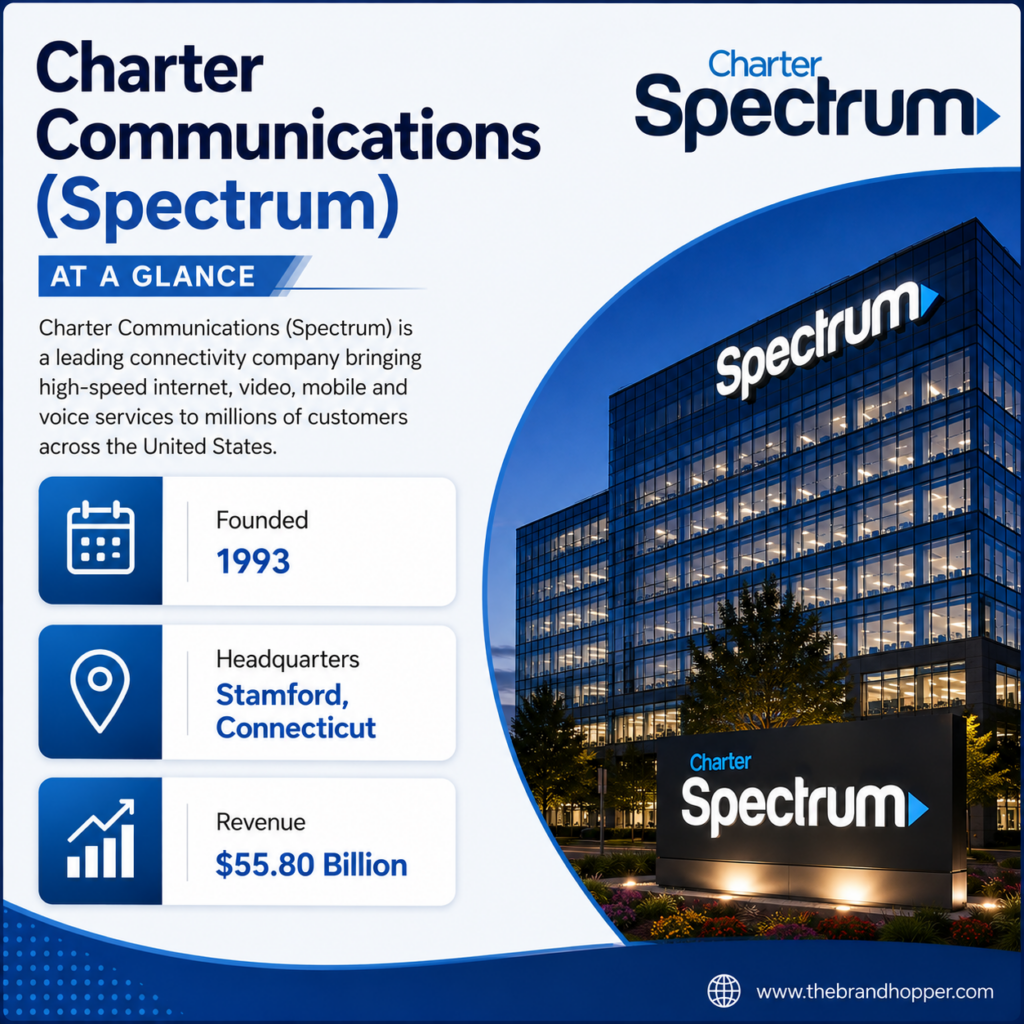
Charter Communications, operating under the Spectrum brand, is the second-largest cable operator in the United States and Comcast’s closest peer in the cable industry. Charter reported revenues of $54.8 billion in its most recent fiscal year. The company serves approximately 32 million customer relationships across 41 states — though its geographic footprint largely does not overlap with Comcast’s, meaning the two companies compete mainly for national advertising dollars, programming contracts, and talent rather than for the same customers street by street.
That said, Charter’s strategic moves set industry benchmarks that Comcast must respond to. Charter was the first major cable operator to launch a widely successful MVNO (Spectrum Mobile), which surpassed 9.5 million lines and provided a blueprint that Comcast’s Xfinity Mobile follows. Charter is also aggressively upgrading its HFC network to DOCSIS 4.0 — which will enable symmetrical multi-gigabit speeds — and rolling out fiber-to-the-home in rural areas through its Rural Digital Opportunity Fund (RDOF) commitments.
In video, Charter’s Spectrum TV app has transitioned from legacy cable toward a streaming-first model, partnering with Disney, Amazon, and others to bundle streaming services directly into its TV platform. This cable-to-streaming pivot mirrors Comcast’s own strategy with its X1 platform and reflects the industry-wide recognition that linear pay-TV is in structural decline.
| Why Charter Matters to Comcast
Charter is Comcast’s closest strategic mirror — both operate large cable systems, run wireless MVNOs, and are executing similar broadband and streaming pivots. Charter’s moves (on pricing, packaging, and network upgrades) directly influence how Comcast positions itself. |
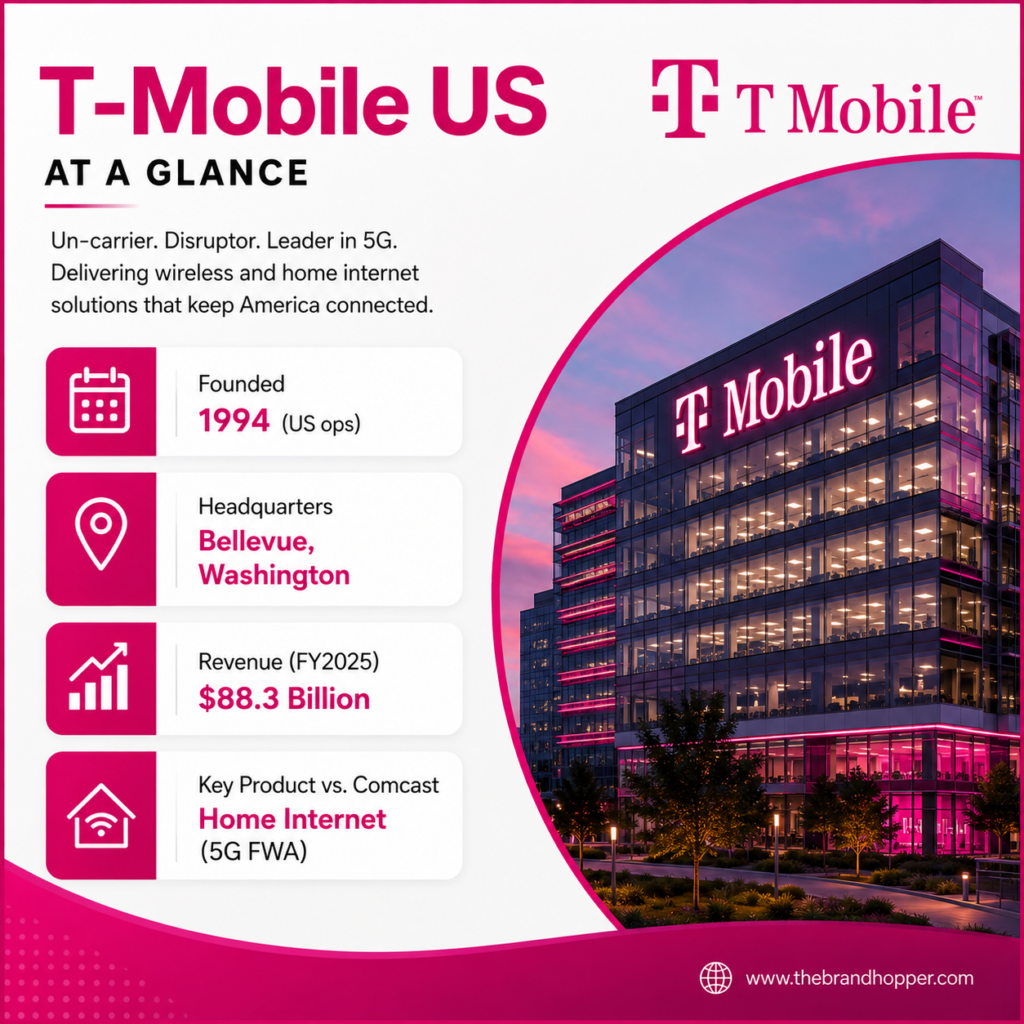
4. T-Mobile US
Official Website: t-mobile.com
T-Mobile US is the United States’ largest wireless carrier by subscriber count and has become one of Comcast’s most disruptive competitors through its explosive growth in home internet via Fixed Wireless Access. T-Mobile reported revenues of $88.3 billion — up 5% year-over-year — and has positioned its 5G Home Internet product as a direct, no-contract alternative to Comcast’s Xfinity broadband.
T-Mobile Home Internet had surpassed 6 million subscribers as of its most recent reporting period — making it one of the largest home broadband providers in the U.S. by subscriber growth — and it was adding approximately 500,000–600,000 net new subscribers per quarter. The product markets itself aggressively on simplicity: no annual contracts, no equipment fees, and consistent pricing, all of which contrast with Comcast’s promotional pricing structures.
T-Mobile’s competitive advantage is network density. After its 2020 merger with Sprint, T-Mobile assembled the nation’s largest mid-band 5G network, covering over 310 million people with 5G. This mid-band spectrum is the sweet spot for FWA: fast enough for household broadband use while penetrating buildings effectively. T-Mobile has announced it expects to pass over 12 million FWA subscribers in the medium term — a trajectory that, if maintained, would represent a meaningful dent in Comcast’s addressable broadband market.
| Why T-Mobile Is a Fast-Rising Broadband Threat
T-Mobile Home Internet is adding broadband subscribers at a pace that rivals Comcast’s entire net add figure, using its 5G network to enter the home internet market without digging a single trench. It targets Comcast customers directly with simpler pricing. |
5. Cox Communications
Official Website: cox.com
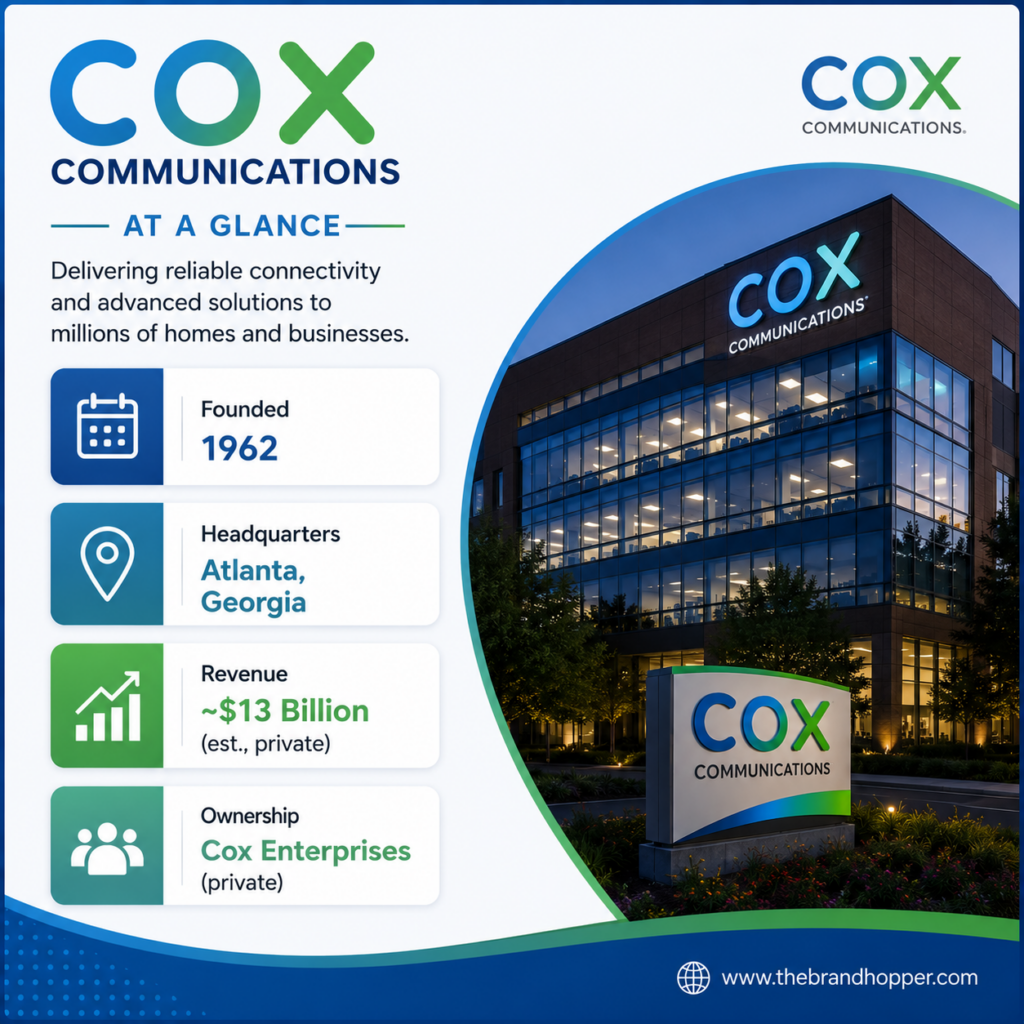
Cox Communications is the third-largest cable operator in the United States, serving approximately 6.5 million customers across 18 states — primarily in the South and Southwest — under the Cox brand. As a privately held subsidiary of Cox Enterprises, Cox does not disclose detailed financials, but industry estimates place its annual revenues at approximately $13 billion, making it a significant if less visible player compared to Comcast and Charter.
Cox operates entirely in geographic markets separate from Comcast’s service territory, so direct head-to-head customer competition is limited. However, Cox’s moves on pricing, packaging, and network upgrades create competitive pressure on Comcast’s broader industry positioning. Cox has invested substantially in its fiber-to-the-home initiative (Cox Fiber / Contour) and in expanding its Cox Mobile wireless MVNO — which it launched later than Comcast’s Xfinity Mobile and Charter’s Spectrum Mobile, but which follows the same strategic logic of leveraging a cable network to offer bundled wireless.
Cox’s customer service reputation has historically ranked higher than Comcast’s in independent surveys, which the company uses as a differentiator in retention and new subscriber acquisition. In markets where Cox operates, it typically competes against AT&T Fiber or Lumen Technologies for fiber subscribers and against T-Mobile and Verizon for home internet.
| Why Cox Matters
Cox sets pricing and bundling benchmarks within the cable industry that influence how Comcast packages its Xfinity products. Its customer-satisfaction focus also highlights an area where Comcast has historically been vulnerable. |
6. Altice USA (Optimum)
Official Website: optimum.com
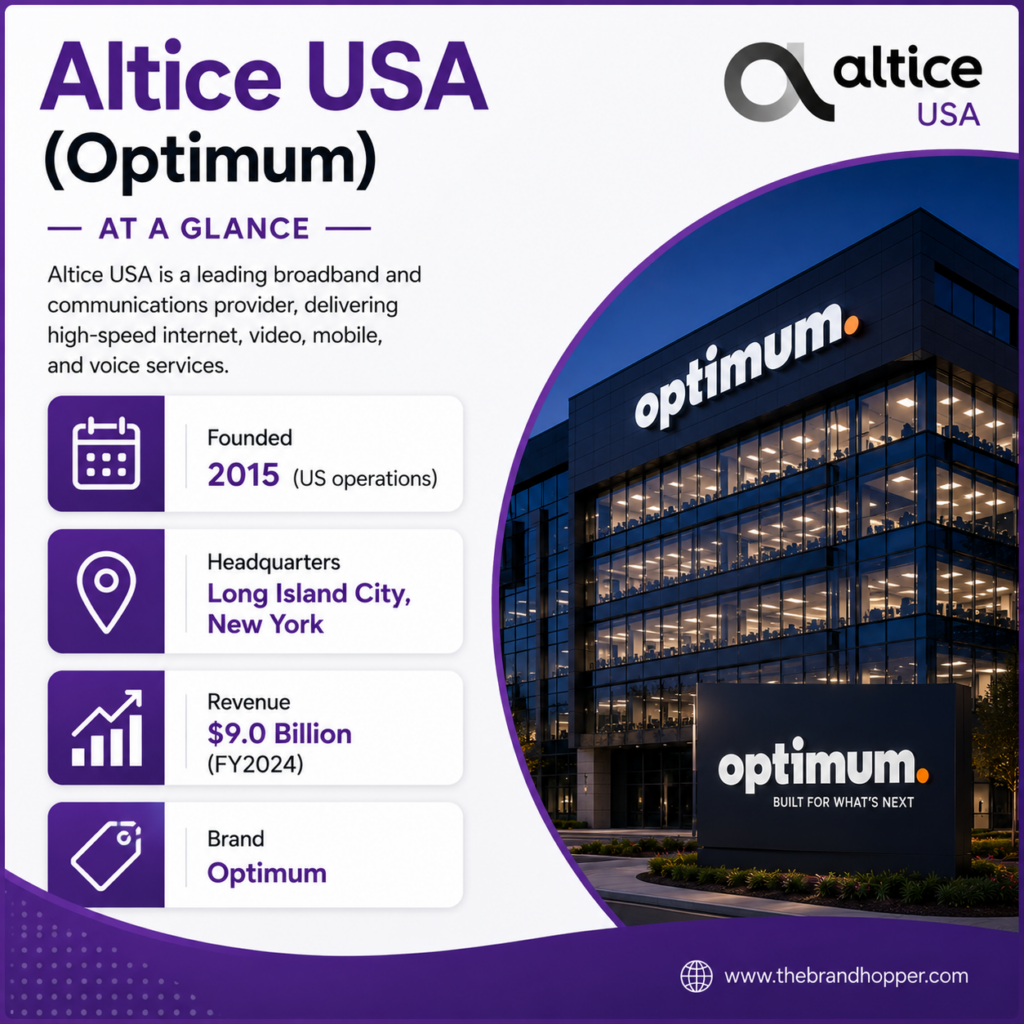
Altice USA — which rebranded its consumer services under the Optimum name — is the fourth-largest cable operator in the United States, with revenues of $9.0 billion. Optimum serves approximately 4.5 million customers primarily in the New York tri-state area (New York, New Jersey, Connecticut) and in parts of New Jersey, Texas, North Carolina, and New Mexico.
Altice USA has faced significant financial challenges in recent years — carrying heavy debt loads from its aggressive acquisition strategy — and has been losing broadband subscribers to AT&T Fiber and wireless FWA competitors in its core markets. Despite this, Optimum competes directly with Comcast’s Xfinity in the broadband and cable TV market and serves as a direct alternative for customers in overlapping regions.
The company has been investing in a fiber upgrade of its existing HFC plant, constructing a new all-fiber network in certain markets, and restructuring its balance sheet. Altice USA’s parent company, Altice International, has divested several European assets to reduce debt, and Altice USA itself underwent leadership changes, signalling a focus on operational stabilization. For Comcast, Altice’s struggles are a reminder of how capital-intensive cable infrastructure can be — and the risks of over-leveraging.
| Why Altice/Optimum Matters
Optimum competes with Xfinity directly in the New York metro area — one of the most valuable cable markets in the U.S. Even a financially stressed Altice provides a competitive alternative that keeps Comcast honest on pricing and service quality in the region. |
7. Frontier Communications
Official Website: frontier.com
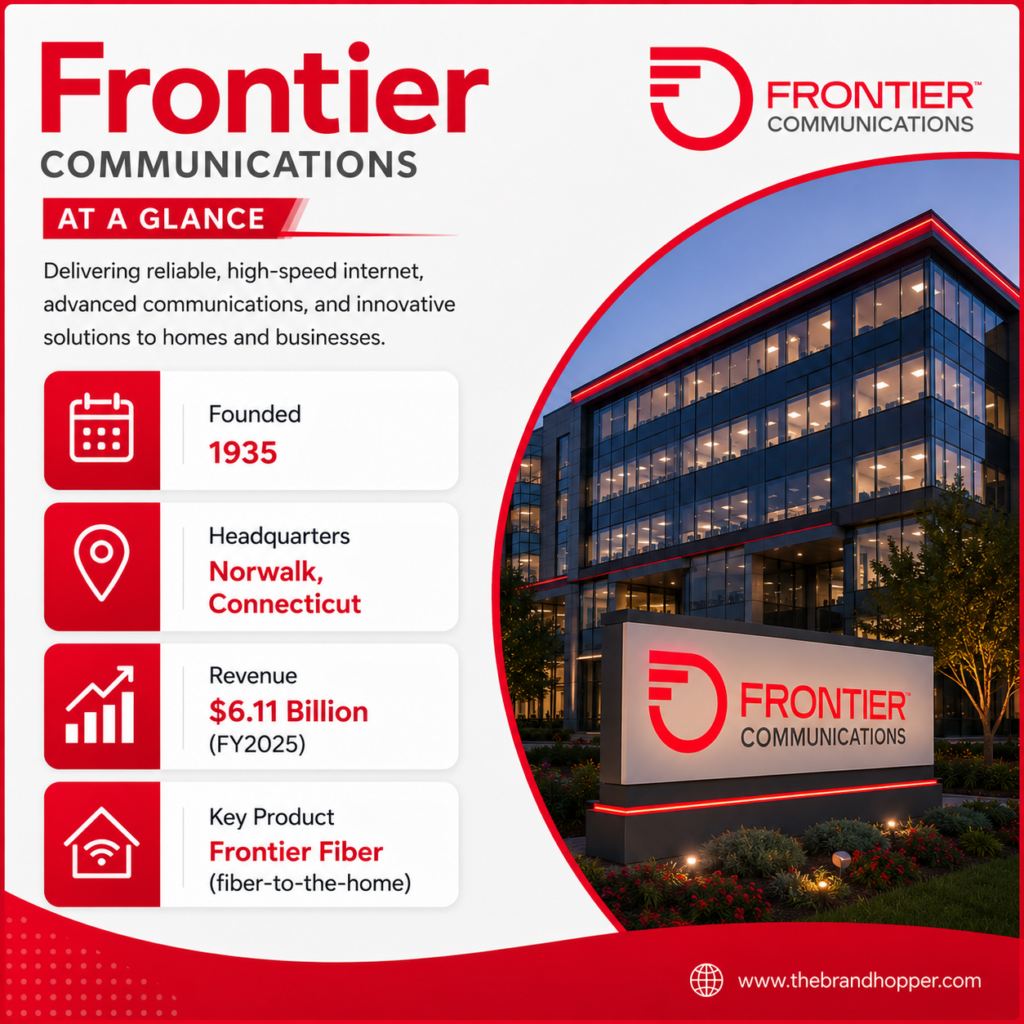
Frontier Communications — acquired by Verizon in early 2025 — had revenues of $5.94 billion and was in the midst of the most ambitious fiber build-out of any regional U.S. provider. Frontier had committed to passing 10 million fiber locations by the end of its build program, focusing on markets across the South, Midwest, and parts of the West, where it had historically operated legacy DSL infrastructure.
Frontier’s fiber product delivered symmetrical gigabit speeds starting at competitive price points, and the company saw meaningful subscriber growth as it lit up new fiber passings. Its geographic footprint — states like Texas, California, Indiana, Connecticut, and others — overlapped with some Comcast markets, creating direct competition for broadband customers in those areas.
Now as part of Verizon, Frontier’s fiber assets will be integrated into Verizon’s broader network strategy, giving Verizon coverage in markets it previously could not serve with its own infrastructure. This effectively means Verizon-Frontier is now the combined competitor with a much larger fiber footprint competing with Comcast across a broader range of geographic markets.
| Why Frontier/Verizon Matters
The Verizon-Frontier combination creates a much larger fiber competitor in markets where Comcast previously enjoyed limited wireline competition. Frontier’s fiber build — now under Verizon’s ownership — will continue pressing Comcast on broadband pricing and speeds. |
8. DirecTV
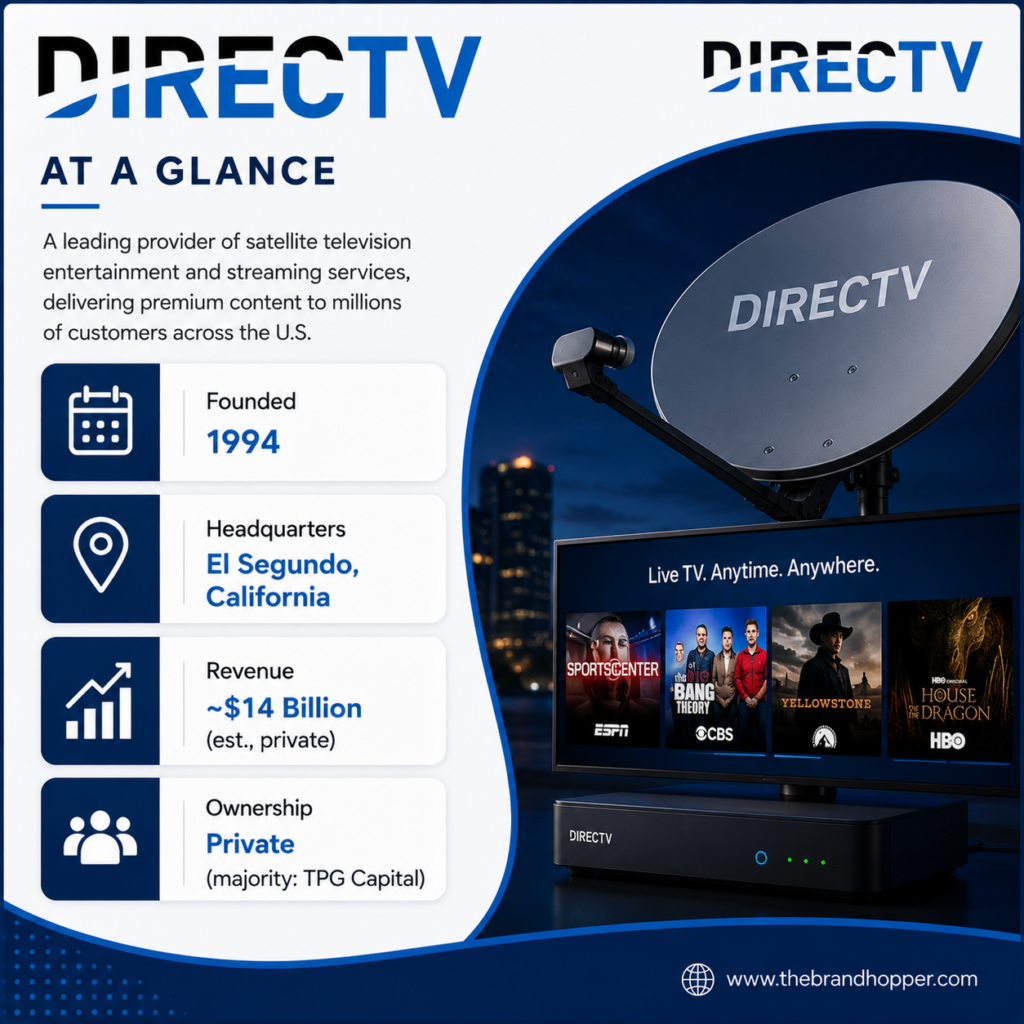
Official Website: directv.com
DirecTV is the largest satellite television provider in the United States, and despite its well-documented subscriber losses, it remains a meaningful alternative to Comcast’s cable TV service for the tens of millions of Americans who either cannot receive cable broadband or who prefer satellite delivery. DirecTV became a standalone private company after AT&T divested the majority of its stake to TPG Capital, and later completed the acquisition of DISH’s pay-TV subscriber base, consolidating the U.S. satellite TV market under one roof.
DirecTV’s primary competitive relevance to Comcast is in the pay-TV market: it provides a national alternative to cable TV packages, including NFL Sunday Ticket (though rights shifted to YouTube in 2023) and strong sports carriage agreements. DirecTV Stream — its OTT streaming service — also competes with Comcast’s Xfinity streaming platform for cord-cutters who still want a live TV bundle without a satellite dish.
The satellite TV market has been shrinking for years as streaming alternatives proliferate and broadband-enabled skinny bundles grow. DirecTV has responded by pivoting toward its streaming product and exploring potential mergers (including talks with Dish/EchoStar). While no longer the existential threat it was a decade ago, DirecTV’s estimated 13–15 million subscribers still represent a large pool of households that have chosen an alternative to Comcast’s cable TV offering.
| Why DirecTV Matters
DirecTV is the primary non-cable, non-streaming alternative for live TV — particularly in rural and suburban markets. Its subscriber base of 13–15 million households represents customers who have actively chosen not to subscribe to Comcast’s video service. |
9. DISH Network / EchoStar
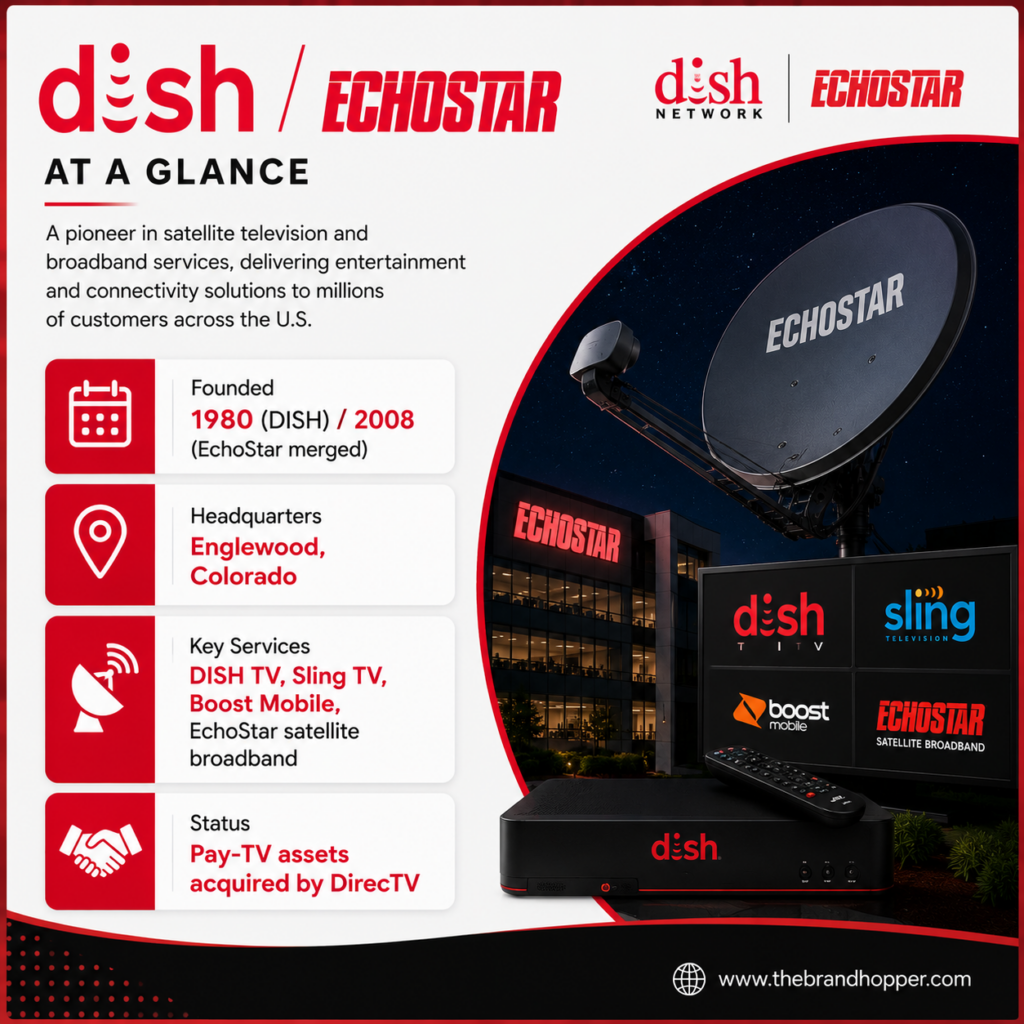
Official Website: dish.com
DISH Network and EchoStar represent one of the most turbulent corporate stories in U.S. media and telecom. DISH merged with EchoStar in 2023 under significant financial pressure, having accumulated more than $20 billion in debt while attempting to build the first cloud-native, Open RAN 5G wireless network in the United States — an enormously capital-intensive project that resulted in Boost Mobile, which DISH had acquired from T-Mobile, struggling to compete effectively against the established Big Three wireless carriers.
DirecTV subsequently agreed to acquire DISH’s pay-TV and Sling TV assets, consolidating the satellite TV subscriber base. EchoStar retained its satellite broadband operations (HughesNet) and 5G network assets. For Comcast, DISH’s difficulties underscore the barriers to entry in building a new national wireless or broadband network from scratch — and reinforce Comcast’s advantage from its existing cable infrastructure.
Sling TV — DISH’s online live-TV streaming service — remains a notable Comcast competitor, offering skinny live-TV bundles starting at approximately $40 per month without requiring cable or satellite infrastructure. Sling has approximately 2 million subscribers and targets cord-cutters who still want live sports and news but at a lower cost than a traditional cable package.
| Why DISH/EchoStar Matters
Sling TV is a direct live-TV streaming competitor to Comcast’s streaming ambitions. EchoStar’s satellite broadband (HughesNet) also serves rural markets that Comcast cannot reach with cable — though satellite broadband has been increasingly pressured by SpaceX Starlink. |
10. Netflix
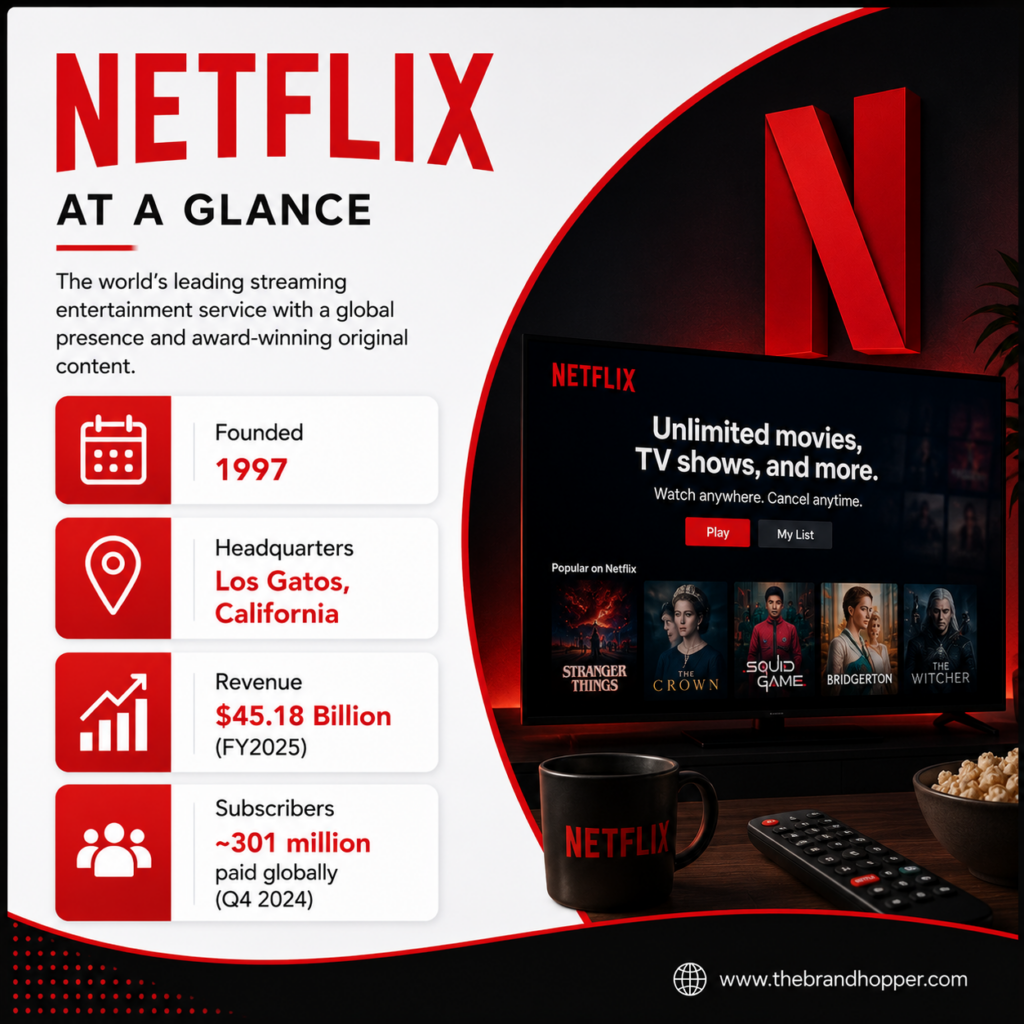
Official Website: netflix.com
Netflix is the world’s largest subscription streaming service and the company most responsible for the cord-cutting wave that has eroded Comcast’s cable TV subscriber base. Netflix reported revenues of $39.0 billion in its most recent fiscal year — up 16% year-over-year — with a net income of $8.71 billion and an operating income of $10.4 billion, marking one of its most profitable years ever. With approximately 301 million paid subscribers worldwide, Netflix has more customers globally than Comcast has broadband subscribers domestically.
Netflix’s competitive impact on Comcast operates on two levels. First, Netflix’s ad-supported tier (launched in late 2022) now has over 70 million monthly active users, giving it an advertising platform that competes with NBCUniversal’s Peacock and broader linear ad inventory. Second, Netflix’s investment in live content — including NFL Christmas Day games, WWE Raw, boxing events, and original live experiences — directly challenges the ‘sports and news’ moat that cable companies including Comcast use to retain subscribers.
Netflix’s password-sharing crackdown, which launched in 2023, converted millions of free-riders into paying subscribers and drove the company to peak profitability. The company is also investing heavily in gaming, live events, and international originals. For Comcast, Netflix represents both a competitor (for entertainment dollars and eyeballs) and a distribution partner — Netflix is available on Comcast’s X1 and Flex platforms, and Comcast bundles it with some Xfinity packages.
| Why Netflix Is the Defining Streaming Threat
Netflix is the company that made cord-cutting mainstream and continues to grow its revenue and profit while Comcast’s cable TV subscriber rolls shrink. Its move into live sports and advertising directly challenges the two pillars — sports rights and ad revenue — that have underpinned cable TV’s value for decades. |
11. Amazon Prime Video
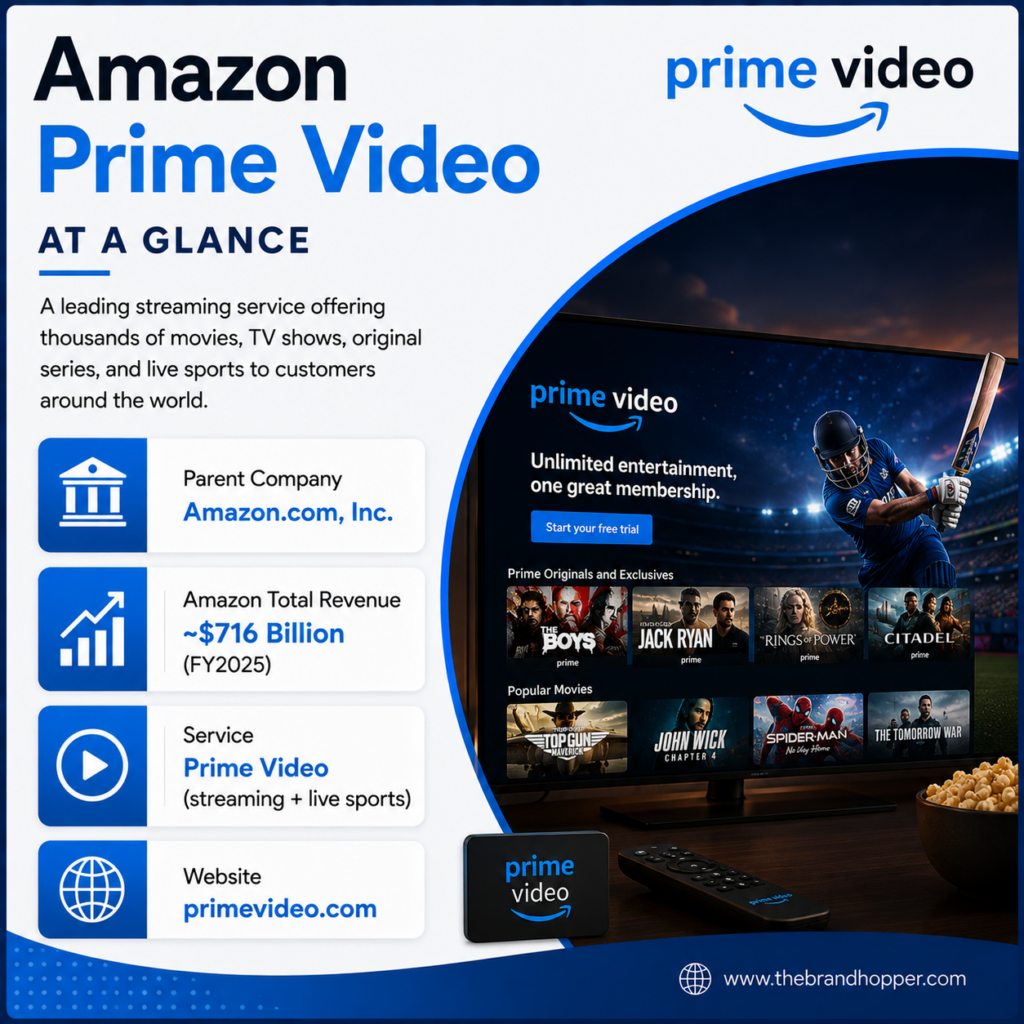
Official Website: primevideo.com
Amazon Prime Video is the streaming service embedded within Amazon’s Prime membership — a $14.99/month subscription that also includes free shipping, Amazon Music, and other benefits. This bundling strategy makes Prime Video extraordinarily difficult to compete with on a stand-alone value basis, and it has given Amazon one of the largest global streaming audiences, estimated at over 200 million viewers across countries.
Amazon’s ambitions in live sports are a critical competitive dimension for Comcast. Amazon’s exclusive Thursday Night Football (TNF) deal with the NFL runs through 2033 and delivers the league’s most-watched weekly games to Prime Video rather than linear cable. Amazon also holds rights to some UEFA Champions League matches, MotoGP, and select college football games. These rights-holder relationships reduce the sports-exclusivity advantage that has historically kept cable subscribers from cutting the cord.
Amazon’s Prime Video Channels feature — which allows Prime members to subscribe to add-on channels including Paramount+, Starz, and others — functions as a virtual MVPD (multichannel video programming distributor), positioning Amazon as a direct competitor to Comcast’s Xfinity cable platform. Additionally, Amazon’s Fire TV platform competes with Comcast’s Flex and X1 hardware as a living-room entertainment hub. Amazon’s retail media and AWS infrastructure give it financial resources that dwarf most media competitors.
| Why Amazon Prime Video Is a Deep-Pocketed Rival
Amazon can absorb losses in streaming indefinitely due to its retail and AWS profit engines, and its Thursday Night Football exclusivity undermines one of cable’s core retention tools. Its Channels marketplace also positions it as a streaming aggregator — a role Comcast has built its X1 platform around. |
12. The Walt Disney Company
Official Website: thewaltdisneycompany.com
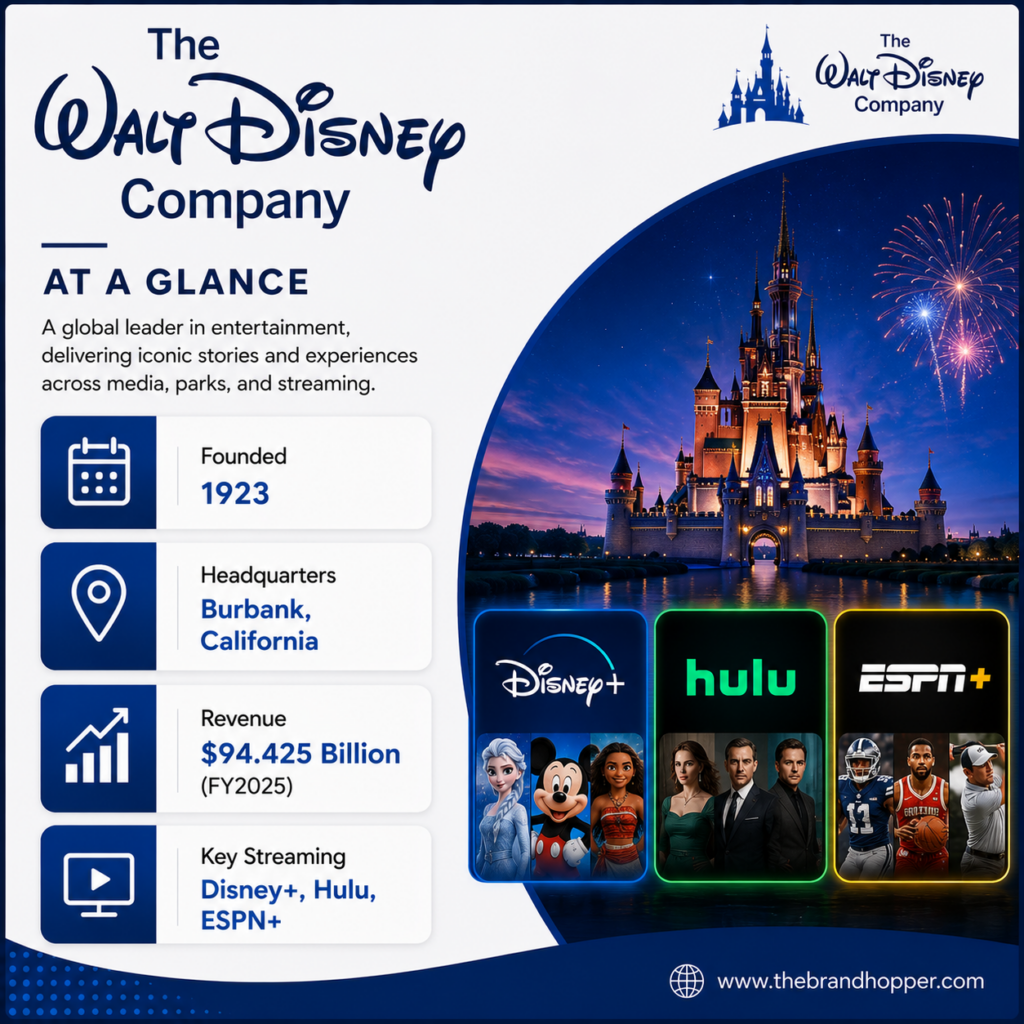
The Walt Disney Company is simultaneously one of Comcast’s most complex business relationships and one of its fiercest competitors. Disney and Comcast share a complicated history — Comcast’s NBCUniversal and Disney’s ABC/ESPN compete directly for advertising, sports rights, and entertainment audiences — and the two companies were in a drawn-out negotiation over Comcast’s stake in Hulu, which Disney ultimately bought out for approximately $8.6 billion, bringing Hulu fully under Disney’s control. Disney reported total revenues of $94.4 billion for fiscal year 2025, up 3% year-over-year.
Disney’s streaming portfolio — Disney+, Hulu, and ESPN+ — collectively had over 230 million subscriptions globally, making the Disney streaming bundle one of the most compelling value propositions in the market. Disney+ reaches children and family audiences (Marvel, Star Wars, Pixar, National Geographic) while Hulu serves general entertainment and live TV, and ESPN+ covers sports. The combination directly competes with Comcast’s Peacock and the content produced by NBCUniversal.
Disney’s ESPN is perhaps the most strategically significant media asset in the U.S., as it holds rights to major sports leagues including the NFL, NBA, MLB, and college football — the very programming that cable operators use to justify high monthly fees. Disney has been preparing to launch a direct-to-consumer version of ESPN, which would allow sports fans to access content without a cable subscription. For more, see Disney’s Top Competitors and Alternatives.
| Why Disney Is an Existential Content Competitor
Disney’s ownership of ESPN, ABC, Disney+, and Hulu — plus its film studio — gives it a content portfolio that competes across every segment of NBCUniversal’s business, from sports to entertainment to news (via ABC). A standalone ESPN streaming service would further erode the case for a traditional cable bundle. |
13. Hulu
Official Website: hulu.com
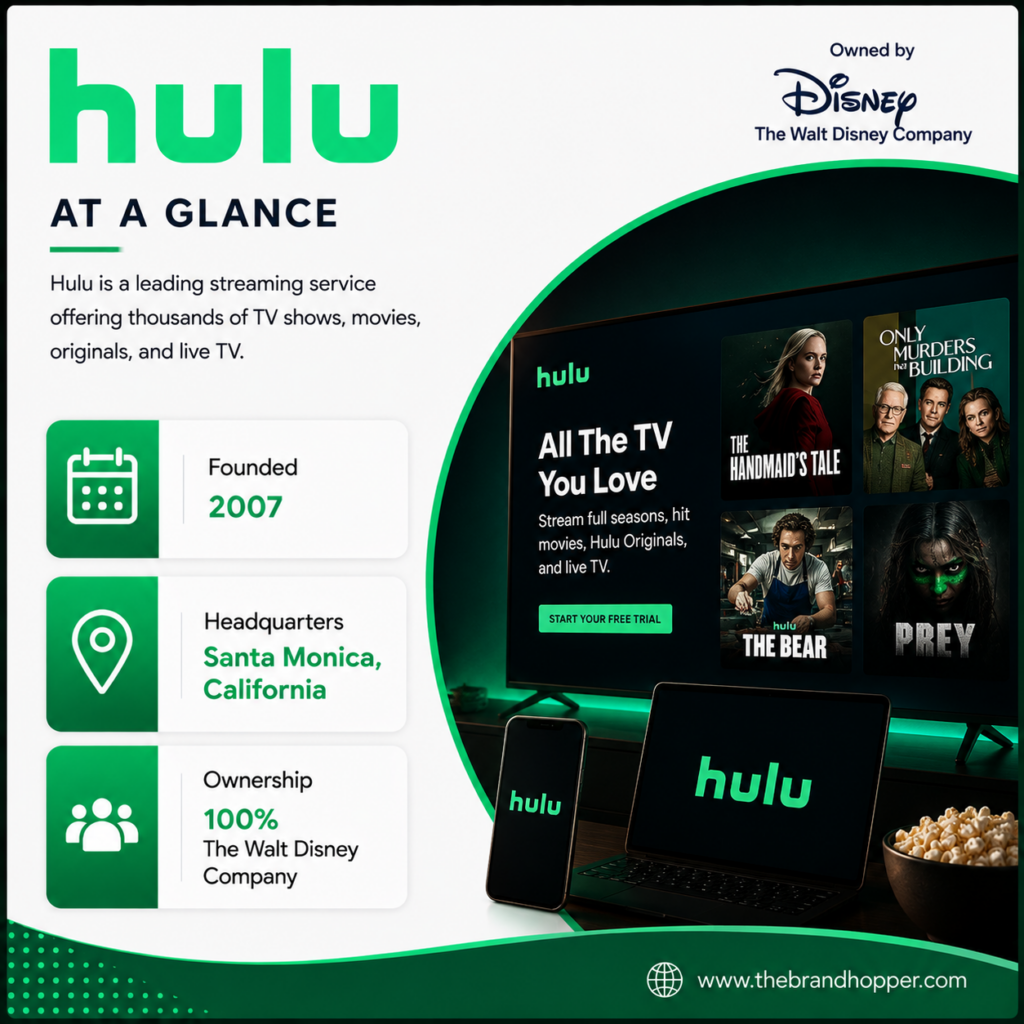
Hulu warrants its own entry — separate from The Walt Disney Company — because it is the streaming platform that most directly replicates the Comcast cable TV experience. While Disney+ focuses on family and franchise content, Hulu offers current-season broadcast TV from ABC, NBC (Comcast’s own network), Fox, and CBS, plus a growing library of originals, FX programming, and live TV through its Hulu + Live TV tier.
Hulu + Live TV — which includes more than 95 channels of live television alongside Hulu’s on-demand library, Disney+, and ESPN+ — is one of the most direct substitutes for a traditional Comcast cable TV subscription. It starts at $82.99 per month and includes sports, news, and entertainment channels that overlap heavily with Comcast’s Xfinity cable package. Hulu + Live TV had approximately 4.7 million subscribers and was growing, representing a clear cord-cutting destination for former Comcast TV customers.
The irony for Comcast is that Hulu carries NBC — Comcast’s own broadcast network — because broadcast carriage rights require it. Comcast’s NBCUniversal content therefore helps make Hulu a compelling cable replacement. At the same time, Comcast’s Peacock (its own streaming service) competes with Hulu for the same audiences, creating tension between Comcast’s roles as Hulu’s content supplier and streaming rival.
| Why Hulu Is a Direct Cable Replacement Threat
Hulu + Live TV is one of the most comprehensive cable TV substitutes on the market — offering news, sports, and entertainment live and on-demand at prices below a traditional Comcast cable bundle. It is the destination many Comcast TV cord-cutters choose. |
14. Warner Bros. Discovery
Official Website: wbd.com
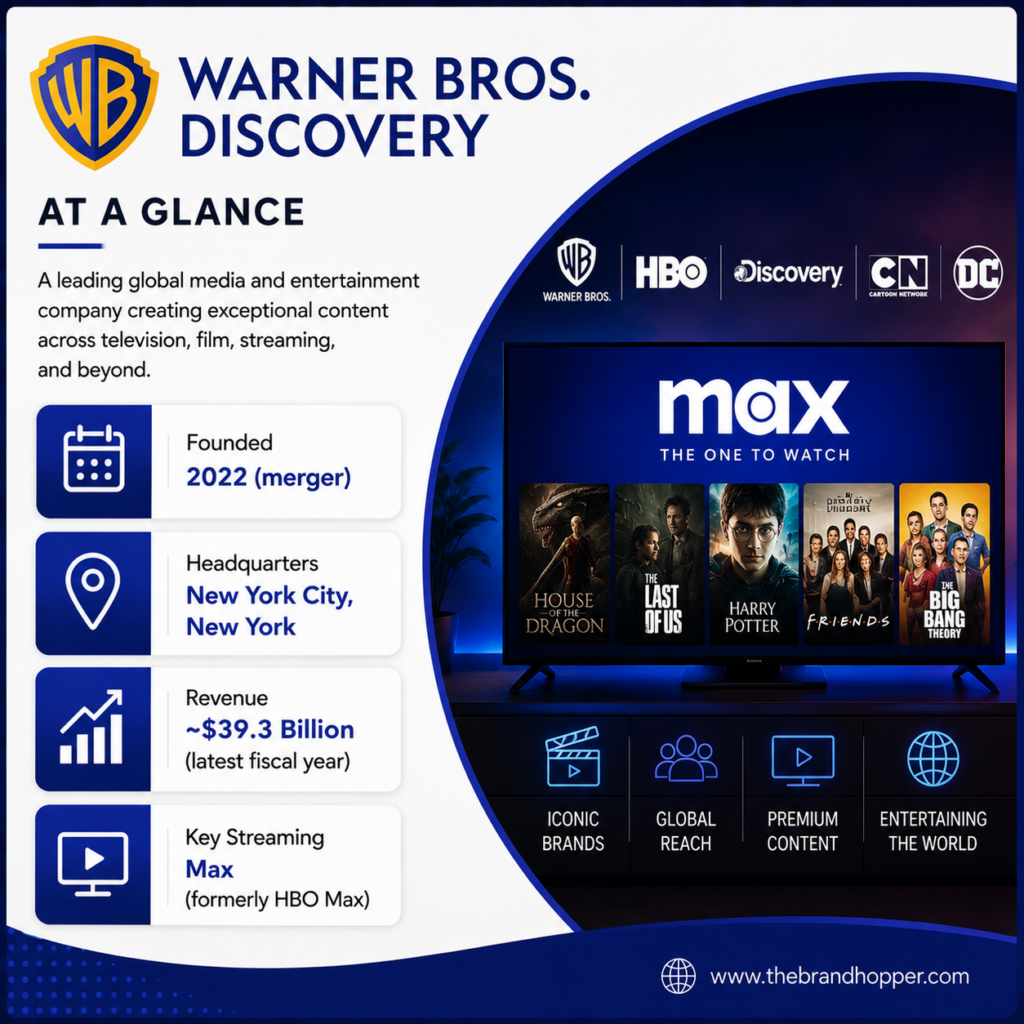
Warner Bros. Discovery (WBD) was formed by the merger of WarnerMedia (spun off from AT&T) and Discovery, Inc. in 2022. WBD posted revenues of approximately $39.3 billion, with its portfolio spanning cable networks (CNN, TNT, TBS, HBO, Discovery), streaming (Max), film studio (Warner Bros.), and international TV. Max — relaunched from HBO Max with the addition of Discovery+ content — has grown to over 115 million subscribers globally and represents the primary competitive streaming vehicle.
WBD’s relationship to Comcast is competitive but nuanced. CNN competes directly with MSNBC (Comcast-owned) for cable news viewers. HBO and Max compete with Peacock for premium streaming subscribers. Warner Bros. theatrical releases compete with Universal Pictures (NBCUniversal) in the film market. TNT Sports (in the U.K.) competes with Sky Sports (Comcast-owned). In the U.S., WBD had key NBA rights alongside ESPN, but the NBA’s new media deal (beginning in the 2025–26 season) replaced WBD’s portion with Amazon Prime Video and NBC (Comcast), making the streaming competitive landscape even more complex.
WBD has been carrying significant debt from the WarnerMedia–Discovery merger and has pursued an aggressive cost-reduction strategy, including layoffs, content write-downs, and pulling titles from Max. Despite this financial pressure, Max’s subscriber growth and the company’s content IP — Batman, Superman, Harry Potter, Game of Thrones, Friends, and CNN’s news brand — make WBD a durable and significant media competitor.
| Why Warner Bros. Discovery Competes with Comcast
CNN vs. MSNBC, Max vs. Peacock, Warner Bros. vs. Universal — WBD and Comcast/NBCUniversal are competitors across cable news, streaming, and film. The NBA deal shift (NBC and Amazon replacing WBD) reshuffled the sports media landscape further. |
15. Paramount Global
Official Website: paramount.com
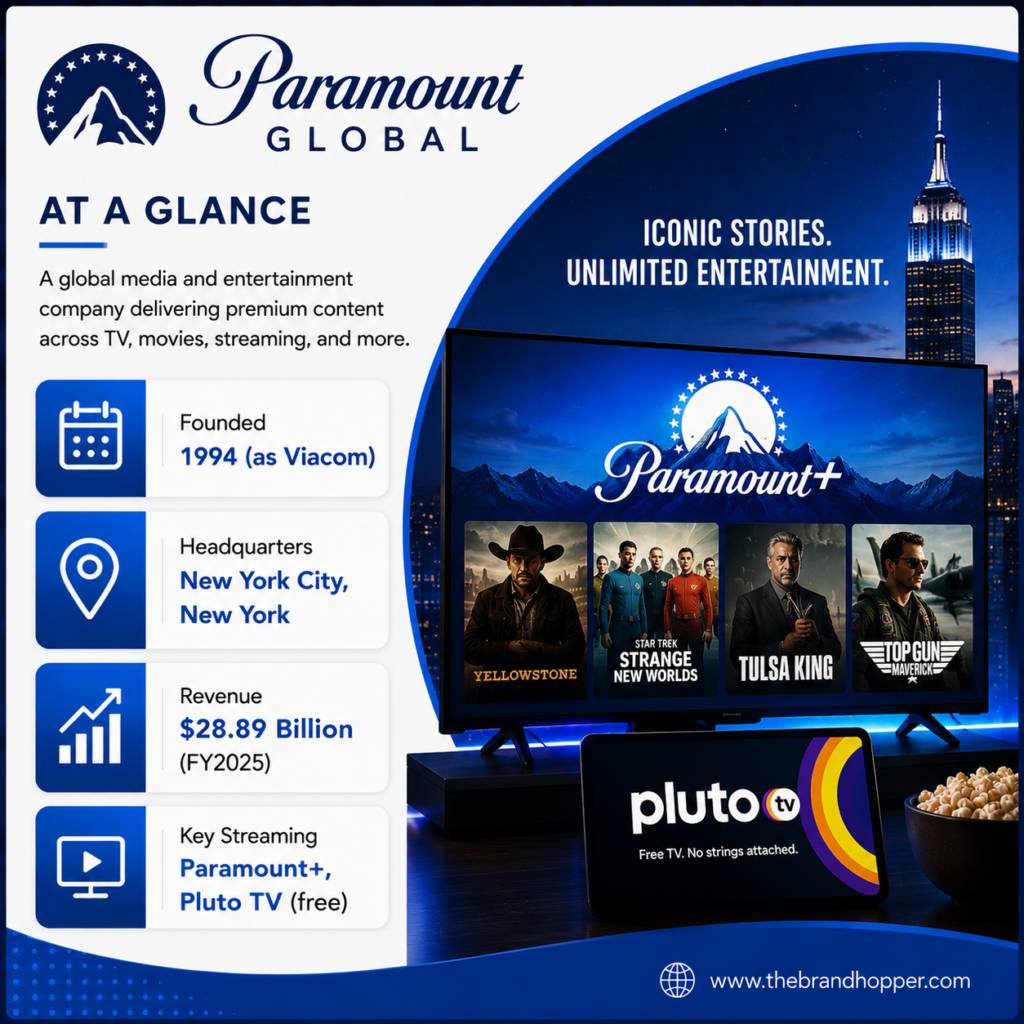
Paramount Global — the successor to ViacomCBS — controls one of the most recognizable media portfolios in the world: CBS (the most-watched broadcast network in the U.S.), Nickelodeon, MTV, Comedy Central, BET, the Paramount film studio, and the Paramount+ streaming service. With revenues of $28.89 billion, Paramount is a smaller but highly impactful player in Comcast’s competitive environment.
CBS’s broadcast reach — including the NFL (AFC games, Super Bowl rotation), NCAA March Madness, and top-rated scripted dramas — positions it as a direct rival to NBC (Comcast-owned) for advertiser dollars and sports rights. In streaming, Paramount+ competes with Peacock for subscribers in the sports, news, and entertainment space, and Pluto TV — Paramount’s free ad-supported streaming (FAST) service — competes for cord-cutter attention in the AVOD space.
Paramount completed a merger with Skydance Media in late 2024, bringing new ownership and a capital infusion. The new ownership group has signalled intentions to invest in streaming growth, international expansion, and potentially to explore bundling partnerships — following the industry trend toward bundling competing streaming services. Paramount+ with Showtime (renamed from Showtime) also competes with Peacock Premium for premium subscribers, particularly given Paramount+’s strong live sports and Showtime-branded drama lineup.
| Why Paramount Competes with Comcast
CBS vs. NBC, Paramount+ vs. Peacock, Paramount films vs. Universal — Paramount and Comcast/NBCUniversal compete for broadcast viewership, advertiser dollars, sports rights (NFL, March Madness), and streaming subscribers across the same demographic sweet spots. |
16. Apple TV+
Official Website: tv.apple.com
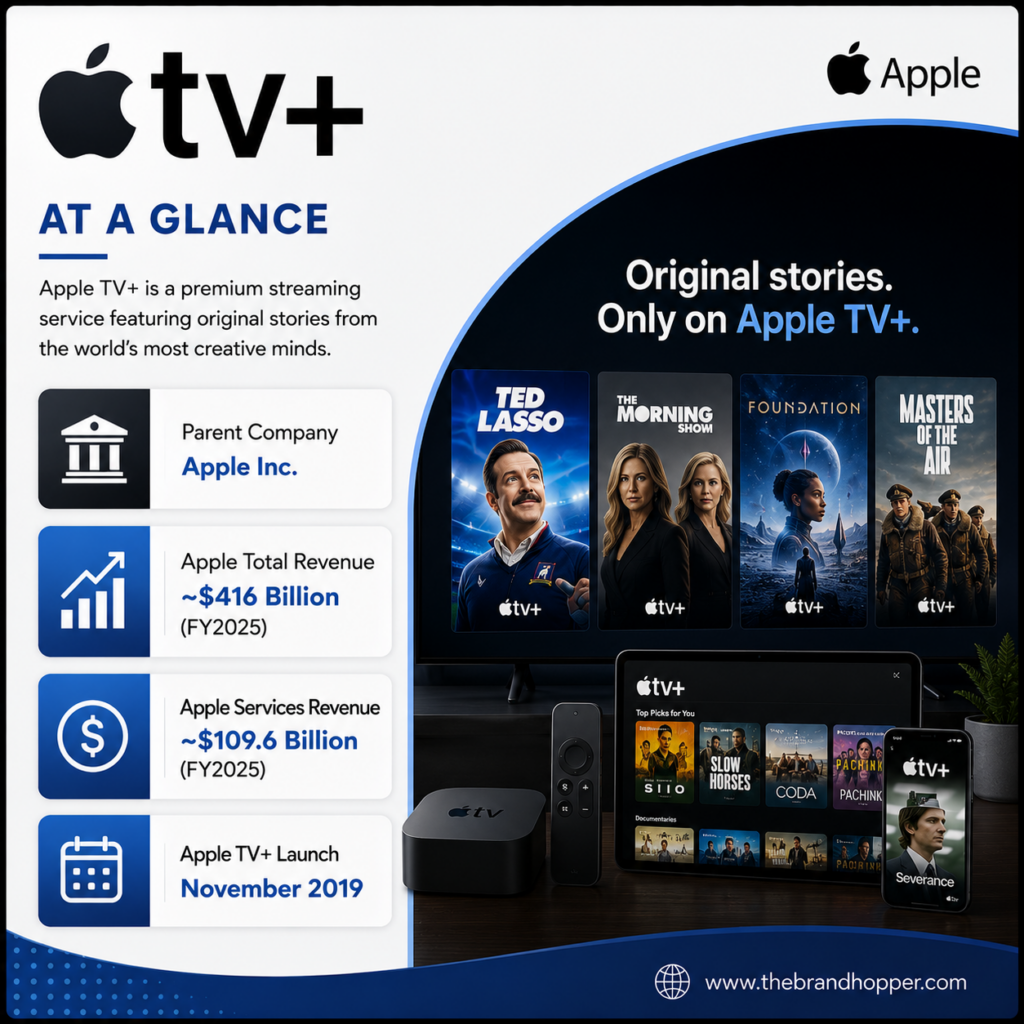
Apple TV+ is a subscription streaming service included with new Apple device purchases and available for $9.99 per month. While Apple does not disclose standalone subscriber or revenue figures for TV+, the service is available on over 2 billion active Apple devices globally — a distribution advantage that no other streaming service can match. Apple’s total revenue reached approximately $391 billion in its most recent fiscal year, with its Services segment (which includes TV+, the App Store, iCloud, Apple Music, and Apple Pay) generating approximately $96 billion.
Apple TV+ has taken a quality-over-quantity approach, investing in prestige originals rather than broad content libraries. Its strategy has produced a remarkable awards track record: Ted Lasso, Severance, The Morning Show, Shrinking, Slow Horses, For All Mankind, and Killers of the Flower Moon (film) have collectively won multiple Emmy and Academy Award nominations. Severance in particular became a cultural phenomenon and demonstrated Apple TV+’s ability to generate mainstream buzz.
Apple’s bundling strategy — Apple One, which packages TV+ with Apple Music, iCloud, Arcade, and Fitness+ — mirrors the logic of Comcast’s bundled broadband-TV-wireless packages. Apple’s deep integration with the iPhone ecosystem and its brand loyalty mean it competes for entertainment attention from consumers who might otherwise spend that time (and money) on Peacock or cable. Apple has also acquired MLS Season Pass rights (Major League Soccer) and has explored broader live sports rights, which signals ambitions beyond prestige drama.
| Why Apple TV+ Is a Quiet but Powerful Rival
Apple’s balance sheet ($90+ billion in cash) means it can invest in content or sports rights at any scale, without needing streaming to be profitable. Its device ecosystem and bundling strategy compete directly with Comcast’s cable-broadband-wireless bundle model. |
17. YouTube (Alphabet)
Official Website: youtube.com
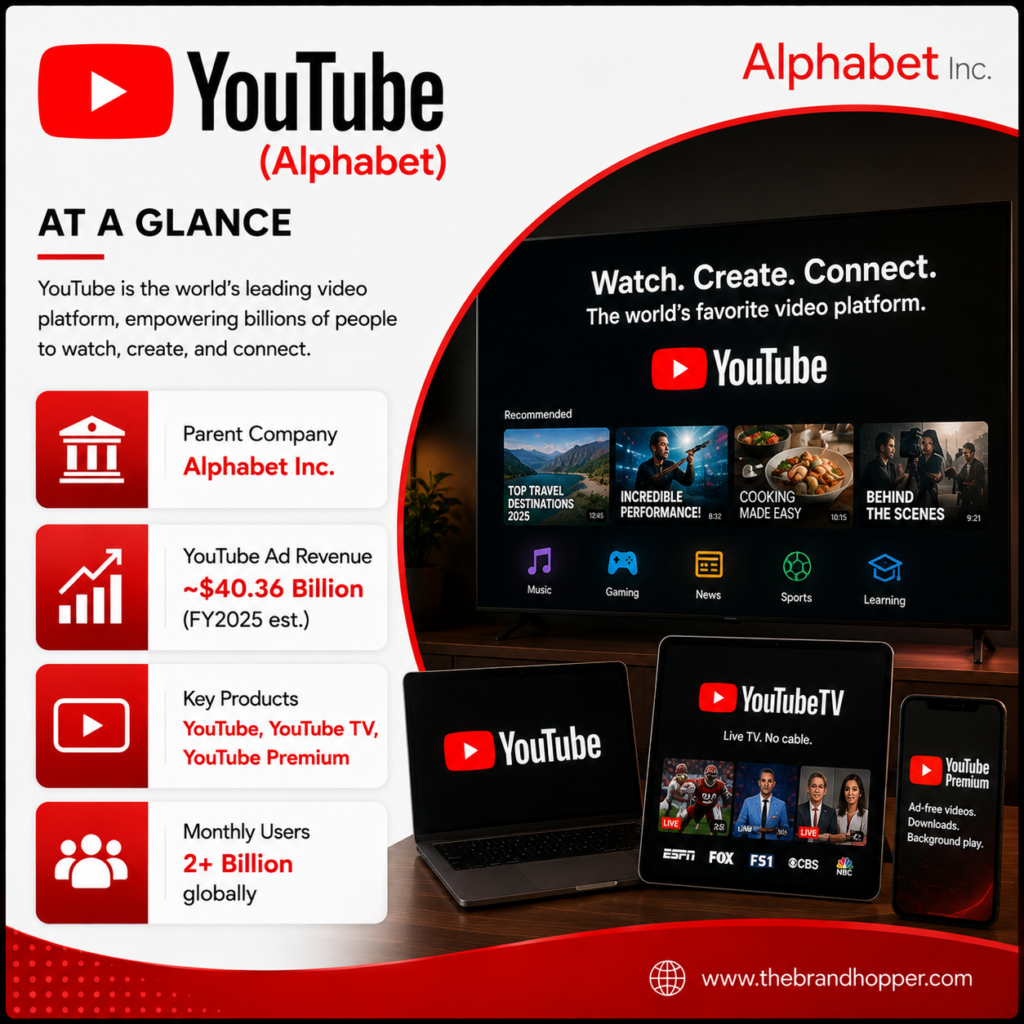
YouTube is the world’s largest video platform, with over 2 billion logged-in users monthly, and it competes with Comcast across multiple fronts: as a free advertising-supported video platform competing with NBCUniversal’s digital ad inventory, as a paid subscription service (YouTube Premium, YouTube TV), and as the new home of NFL Sunday Ticket — the league’s out-of-market game package that DirecTV held exclusively for nearly three decades.
YouTube TV — Google’s live-TV streaming service — now has over 8 million subscribers, making it the largest virtual MVPD (vMVPD) in the United States by subscribers. At approximately $72.99 per month, YouTube TV offers more than 100 live channels including sports, news, and entertainment, with unlimited DVR — directly competing with Comcast’s Xfinity cable TV tiers. YouTube TV’s NFL Sunday Ticket add-on (available for an additional fee) is the most direct sports-rights competition to cable TV that currently exists in the streaming market.
YouTube’s advertising platform is one of the most powerful in the world, with targeted video ads that compete directly with NBCUniversal’s digital and streaming advertising business. Peacock, Comcast’s streaming service, relies on advertising revenue as a core part of its model — placing it in direct competition with YouTube’s advertiser relationships. Alphabet’s financial resources (total revenues of approximately $350 billion) give YouTube the ability to outbid any traditional media company for sports rights or content partnerships.
| Why YouTube Is One of Comcast’s Biggest Long-Term Threats
YouTube TV has already overtaken traditional cable as the preferred live-TV service for many cord-cutters. YouTube’s NFL Sunday Ticket rights, combined with Google’s advertising dominance, threaten NBCUniversal’s revenue and Xfinity’s subscriber retention simultaneously. |
18. Roku
Official Website: roku.com
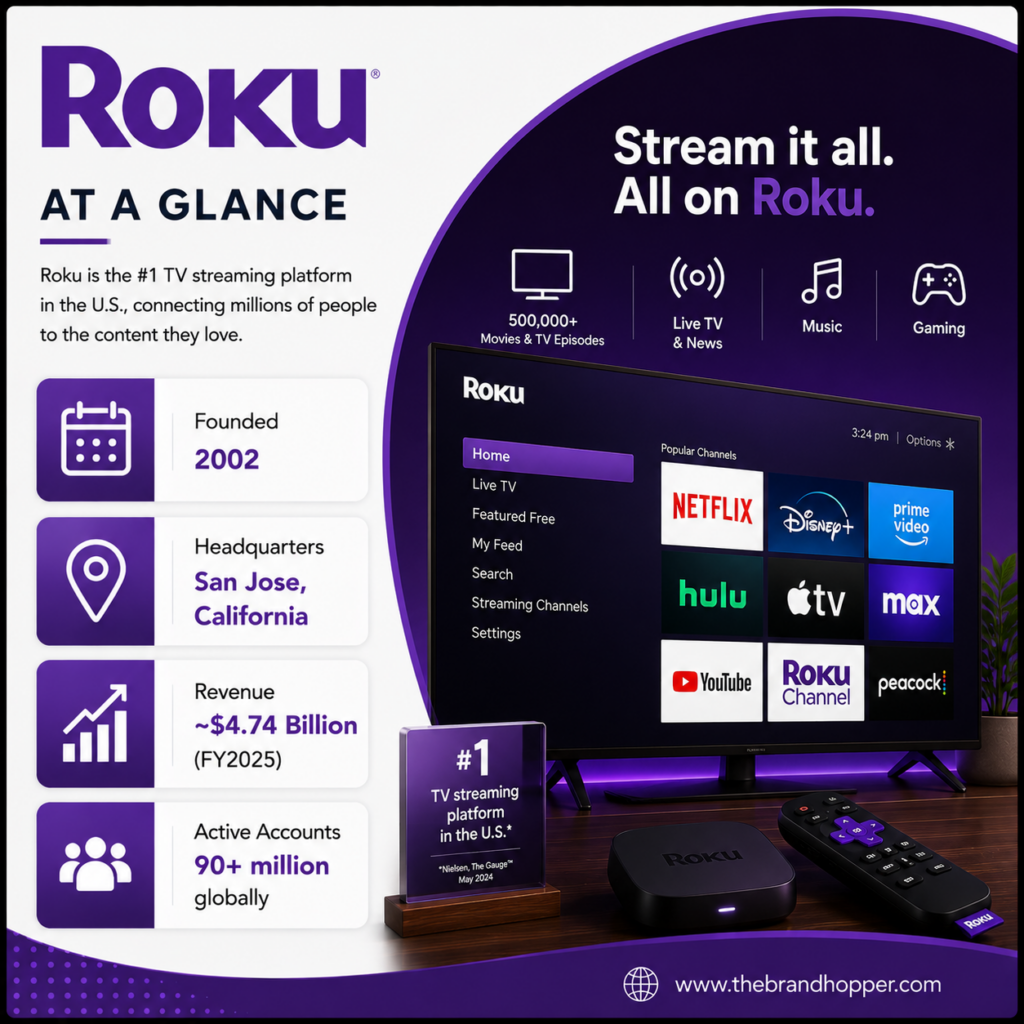
Roku is the leading streaming platform in the United States by active accounts and hours streamed, functioning as the operating system for millions of smart TVs and streaming devices. With over 90 million active accounts and revenues of approximately $4.1 billion, Roku is not a content company or a broadband provider — but it is a fierce competitor to Comcast’s X1 and Flex platforms as the interface through which households discover and consume streaming content.
Comcast’s X1 platform has been one of its most successful innovations, transforming the cable box into an aggregation hub that pulls together live TV, streaming apps, and voice search. Roku’s operating system does the same — but without requiring a cable subscription. Roku’s The Roku Channel is a free ad-supported streaming service that offers movies, TV shows, and live news at no cost, generating advertising revenue that competes with Peacock’s AVOD model.
Roku’s business model is predicated on taking a share of advertising and subscription revenue from every streaming service that uses its platform — similar to how Comcast’s Flex earns revenue from partner platforms. Roku is now licensed by TCL, Hisense, Sharp, Philips, and other TV manufacturers, meaning it is built into tens of millions of new televisions. As more homes move to Roku-powered smart TVs, the traditional cable box becomes increasingly unnecessary — reducing a key point of engagement Comcast has with its broadband customers.
| Why Roku Is an Underestimated Comcast Rival
Roku’s 90+ million accounts represent the living-room real estate that Comcast’s X1/Flex platform competes for. As Roku-powered smart TVs proliferate, the cable set-top box loses relevance — and with it, one of Comcast’s strongest points of customer lock-in. |
Comcast’s Top 18 Competitors: At-a-Glance Overview
The table below provides a consolidated view of all 18 competitors across the key competitive dimensions.
| # | Competitor | Revenue | Primary Competition with Comcast |
| 1 | AT&T | $122.34B | Broadband (fiber), wireless, streaming (Max bundles) |
| 2 | Verizon Communications | $134.8B | Broadband (FWA + Fios fiber), wireless, Frontier fiber |
| 3 | Charter / Spectrum | $55.08B | Cable broadband, wireless MVNO, cable TV |
| 4 | T-Mobile US | $66.2B (service rev.) | Broadband (5G FWA home internet) |
| 5 | Cox Communications | ~$13B (est., private) | Regional cable, broadband, wireless MVNO |
| 6 | Altice USA (Optimum) | $9.0B | Cable TV, broadband (NY metro area) |
| 7 | Frontier Communications | $5.94B | Fiber broadband (now part of Verizon) |
| 8 | DirecTV | ~$14B (est., private) | Satellite + streaming live TV |
| 9 | DISH / EchoStar | Declining (Sling TV) | Satellite TV, Sling TV live streaming |
| 10 | Netflix | $39.0B | Streaming (Peacock rival), live sports |
| 11 | Amazon Prime Video | ~$590B (Amazon total) | Streaming, live sports (TNF), smart TV platform |
| 12 | Walt Disney Company | $91.4B | Disney+/ESPN/Hulu streaming, NBC rivalry |
| 13 | Hulu (Disney) | ~$6B (est.) | Live TV streaming bundle (cable replacement) |
| 14 | Warner Bros. Discovery | ~$39.3B | Max streaming, CNN vs. MSNBC, film (WB vs. Universal) |
| 15 | Paramount Global | $29.21B | CBS vs. NBC, Paramount+ vs. Peacock |
| 16 | Apple TV+ | ~$391B (Apple total) | Premium streaming, Apple ecosystem bundling |
| 17 | YouTube / Alphabet | ~$36B (YT ads est.) | YouTube TV live streaming, NFL Sunday Ticket, digital ads |
| 18 | Roku | ~$4.1B | Smart TV platform competing with X1/Flex |
The Three Battlefronts: How Comcast Is Fighting Back
Broadband dominance.
Comcast’s HFC cable network — being upgraded to DOCSIS 3.1 and now DOCSIS 4.0 — delivers multi-gigabit speeds to over 60 million homes passed. The network’s capacity and reliability remain superior to most FWA alternatives in densely populated markets. Comcast’s broadband now accounts for the largest share of its revenue and operating profit, and the company has been investing in low-latency, symmetrical speed upgrades (10G initiative) to maintain its technical edge over fiber and FWA competitors.
Streaming through Peacock and X1.
Peacock — Comcast’s streaming service featuring NBCUniversal content, live sports (NFL, Premier League, Olympics, NBA starting 2025–26), and original programming — had 41 million paid subscribers. Comcast’s X1 and Flex platforms serve as aggregation hubs that bring Netflix, Disney+, Peacock, HBO Max, and others into a single interface, reducing churn and keeping Comcast at the center of the streaming ecosystem even as linear TV declines.
Bundling with Xfinity Mobile.
Xfinity Mobile — Comcast’s MVNO on Verizon’s network — reached 7.7 million lines and is one of the fastest-growing wireless providers in the U.S. By bundling wireless with broadband, Comcast reduces churn and increases average revenue per customer. Xfinity Mobile users who also subscribe to Xfinity broadband churn at significantly lower rates, making wireless a powerful retention tool even if the MVNO itself operates at modest margins.
Frequently Asked Questions (FAQs)
Q: Who is Comcast’s biggest competitor?
A: Comcast’s biggest competitor varies by business segment. In broadband and telecom, AT&T ($122.34B revenue) and Verizon ($134.8B) are the largest rivals — both with expanding fiber and fixed wireless networks. In streaming and content, Netflix ($39B), Disney ($91.4B), and YouTube are the defining competitors. In cable TV specifically, Charter Communications (Spectrum) is the closest peer.
Q: Who is bigger, Comcast or AT&T?
A: AT&T and Comcast are very closely matched in revenue. AT&T reported $122.34 billion and Comcast reported $123.7 billion in their most recent fiscal years — making them essentially the same size. However, AT&T is primarily a telecom company while Comcast also includes NBCUniversal’s studios, theme parks, and Sky’s European operations in its revenue base.
Q: What is the best alternative to Comcast Xfinity for broadband?
A: The best broadband alternative depends on location. AT&T Fiber and Frontier Fiber offer symmetrical gigabit speeds where available. Verizon Fios serves the Northeast with reliable fiber. T-Mobile Home Internet and Verizon Home Internet (5G fixed wireless) are widely available alternatives without long-term contracts, typically at lower prices. Charter Spectrum and Cox serve overlapping cable markets in some areas.
Q: Who competes with Comcast’s Peacock streaming service?
A: Peacock’s direct streaming competitors include Netflix, Disney+, Hulu, Max (Warner Bros. Discovery), Paramount+, and Apple TV+. Peacock differentiates through NBCUniversal’s library, live sports (NFL, Premier League, Olympics), and live news. The platform’s ad-supported tier also competes with free services like Pluto TV, Tubi, and The Roku Channel for ad-supported viewers.
Q: Is DirecTV still a major Comcast competitor?
A: DirecTV’s significance has diminished from its peak, but it remains relevant. After acquiring DISH’s pay-TV subscriber base, DirecTV consolidated the satellite TV market and maintains an estimated 13–15 million subscribers — a large pool of households that have chosen alternatives to cable TV. DirecTV Stream (its OTT product) also competes in the live-TV streaming market alongside YouTube TV, Hulu + Live TV, and Sling TV.
Q: How does T-Mobile compete with Comcast?
A: T-Mobile competes with Comcast primarily through its 5G Home Internet (fixed wireless access) service, which had over 6 million subscribers and was adding approximately 500,000–600,000 new subscribers per quarter. T-Mobile markets it as a simpler, no-contract alternative to Xfinity broadband, often at lower prices. T-Mobile does not compete in cable TV or streaming, keeping its broadband competition focused on connectivity rather than content.
Q: What makes Netflix a threat to Comcast specifically?
A: Netflix is the primary driver of cord-cutting — as subscribers leave cable TV (including Comcast’s Xfinity TV), many cite Netflix as their main alternative for entertainment. Netflix’s 301 million paid subscribers globally exceed Comcast’s entire broadband customer base. Additionally, Netflix’s growing live sports coverage (NFL games on Christmas Day, WWE Raw, boxing events) directly challenges the sports-rights moat that kept cable TV subscriptions sticky.
Q: Does Comcast have competitors outside the United States?
A: Yes. Comcast owns Sky — one of Europe’s largest pay-TV and broadband operators, with strong market positions in the UK, Ireland, Germany, Italy, and Austria. In the UK, Sky competes with BT Group (BT TV, EE broadband), Virgin Media O2 (another cable/broadband provider), and streaming services including Netflix, Disney+, and Amazon Prime Video. In Germany, Sky faces competition from Deutsche Telekom’s MagentaTV. Internationally, Comcast’s NBCUniversal content also competes globally with Disney, WBD, and Paramount for licensing and theatrical distribution.
Conclusion
Comcast faces a competitive landscape more complex and fragmented than at any point in its history. The company built its dominance on two pillars — broadband infrastructure and cable TV — and both are now under sustained pressure. In broadband, fiber operators (AT&T, Verizon-Frontier) and fixed wireless providers (T-Mobile, Verizon) are eroding the geographic exclusivity that made Comcast’s cable plant so valuable. In video, the shift to streaming has transferred billions of entertainment dollars from linear cable subscriptions to Netflix, Disney, Warner Bros. Discovery, and YouTube.
Yet Comcast’s position is far from precarious. Its HFC network — now being upgraded to DOCSIS 4.0 multi-gig speeds — is one of the most extensive and capable broadband infrastructure assets in the world. NBCUniversal’s content engine (Universal Pictures, DreamWorks, NBC, MSNBC, Bravo, Peacock) generates significant intellectual property and advertising value. Sky gives Comcast a pan-European presence that most U.S. media companies lack. And Xfinity Mobile’s rapid wireless growth demonstrates the company’s ability to execute on new strategic bets.
The companies that pose the most immediate threat are AT&T and Verizon (broadband), T-Mobile (fixed wireless), Netflix and YouTube (streaming/live sports), and Disney (content and streaming bundling). Understanding each competitor’s strategy — and where they overlap with Comcast’s business — is essential for anticipating how the U.S. media and telecom landscape will continue to evolve.
Also Read: Exploring Disney’s Top Competitors and Alternatives
To read more content like this, subscribe to our newsletter