Last Updated on September 3, 2026 by Team TBH
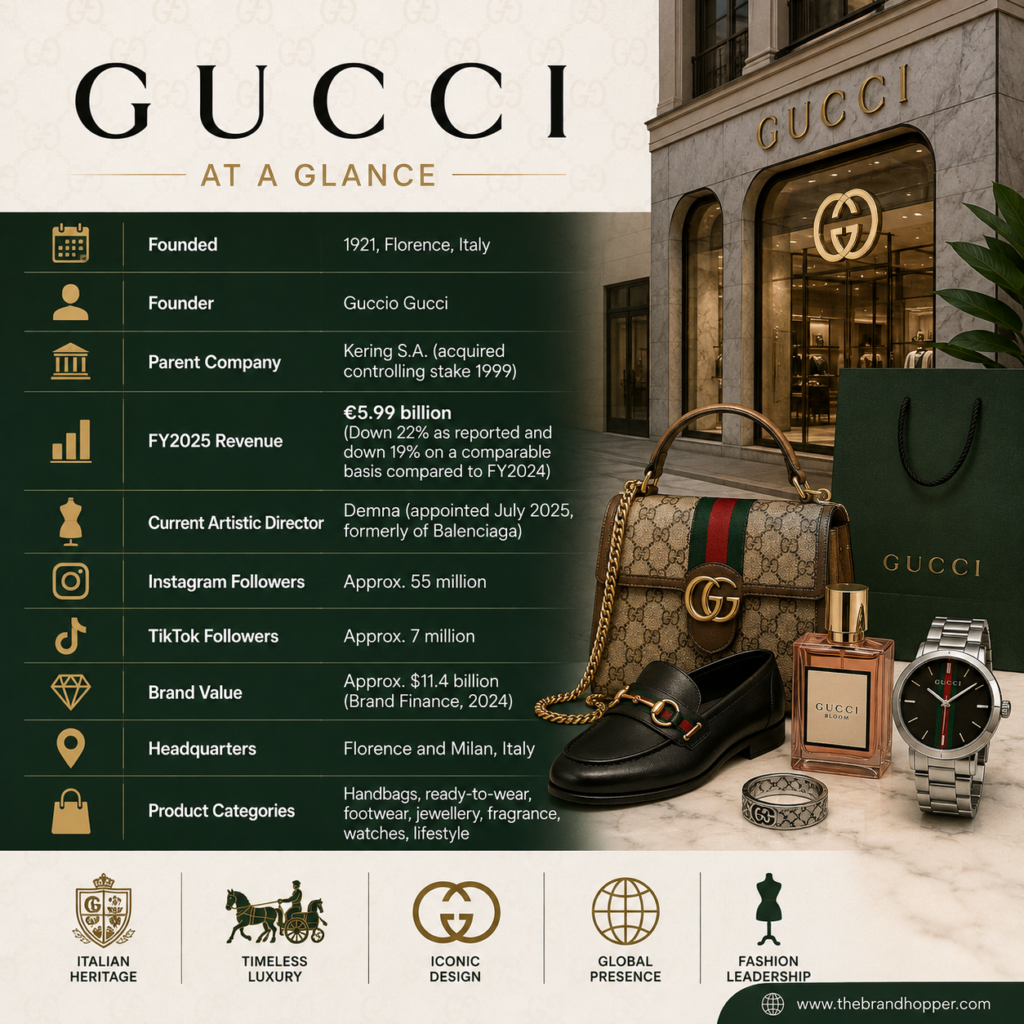
Few brands in the history of luxury fashion have demonstrated the same capacity for reinvention as Gucci. Founded in 1921 in Florence by Guccio Gucci — a former saddle-maker who had observed the refined tastes of European aristocracy during his time working at London’s Savoy Hotel — the house began as a purveyor of fine leather goods and equestrian accessories. Over a century later, it stands as one of the most recognisable and culturally resonant luxury brands in the world.
Gucci’s enduring power is not accidental. The brand’s marketing is a masterclass in balancing heritage with disruption, scarcity with accessibility, and global appeal with cultural specificity. From the GG monogram to the red-green-red web stripe, from Tom Ford’s provocative maximalism to Alessandro Michele’s gender-fluid eclecticism, and into Demna’s era of conceptual disruption, each chapter of Gucci’s story has been told with extraordinary marketing precision.
This article unpacks core marketing strategies that keep Gucci at the pinnacle of global luxury — examining the creative choices, campaigns, and commercial logic behind the brand’s continued cultural dominance. All financial figures are drawn from official Kering annual results and verified primary sources.
About Gucci: From a Florence Saddlery to a Global Luxury Empire
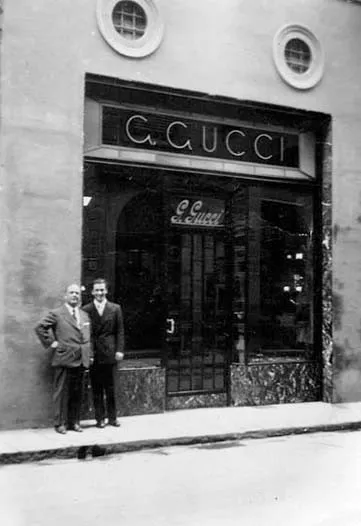
Guccio Gucci was born in Florence in 1881. After working as a lift boy at the Savoy Hotel in London, he returned to Italy with a deep appreciation for the refined tastes of the European elite. In 1921, he opened a small leather goods and luggage shop at Via della Vigna Nuova in Florence, producing horse-riding equipment and travel accessories of exceptional quality. The equestrian influence — the Horsebit hardware, stirrup motifs, and bridle details — remains embedded in Gucci’s visual identity to this day.
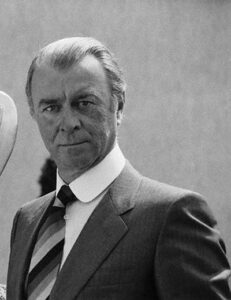
Throughout the mid-twentieth century, Gucci expanded rapidly, opening stores in Rome in 1938, New York in 1953, and London in 1961. The brand became a symbol of post-war Italian glamour, attracting a devoted clientele that included Princess Grace of Monaco, Audrey Hepburn, and Jacqueline Kennedy — for whom the Jackie bag is named. The bamboo-handled bag, born of wartime material scarcity in 1947 when leather was rationed, became one of fashion’s most enduring design icons.
The mid-century success was followed by a turbulent period in the 1980s, when family disputes and over-licensing eroded the brand’s prestige. The decisive turning point came in 1994, when Tom Ford was appointed Creative Director alongside CEO Domenico De Sole. Ford’s sexually charged, confident aesthetic rescued the brand from near-obscurity and set the template for modern luxury brand revival.
In 1999, the French luxury conglomerate Pinault Printemps Redoute — now Kering — completed its acquisition of Gucci Group. Under Kering’s stewardship, Gucci has grown into a multi-billion euro business. According to Kering’s 2024 Annual Results, Gucci recorded revenue of €5.99 billion in FY2025, accounting for the largest single-brand share of Kering’s total group revenue of €14.77 billion.
Gucci Creative Directors: A Century of Reinvention
| Creative Director | Tenure | Defining Aesthetic & Legacy |
| Tom Ford | 1994–2004 | Provocative sexuality and confident glamour; rescued the brand from commercial decline; made Gucci globally aspirational |
| Frida Giannini | 2006–2014 | Feminine luxury; Flora pattern revival; celebrity-centred campaigns; steady commercial growth |
| Alessandro Michele | 2015–2022 | Maximalist eclecticism and gender-fluid romanticism; cult cultural following; brand valuation approximately tripled during tenure |
| Sabato De Sarno | Jan 2023–Feb 2025 | Quiet luxury and craftsmanship focus; ‘Gucci Ancora’ debut campaign; deliberate retreat from logomania |
| Demna | July 2025–Present | Formerly artistic director of Balenciaga; known for conceptual disruption, cultural commentary, and highly anticipated creative pivots |
What Makes Gucci Iconic: The Brand’s Visual Codes
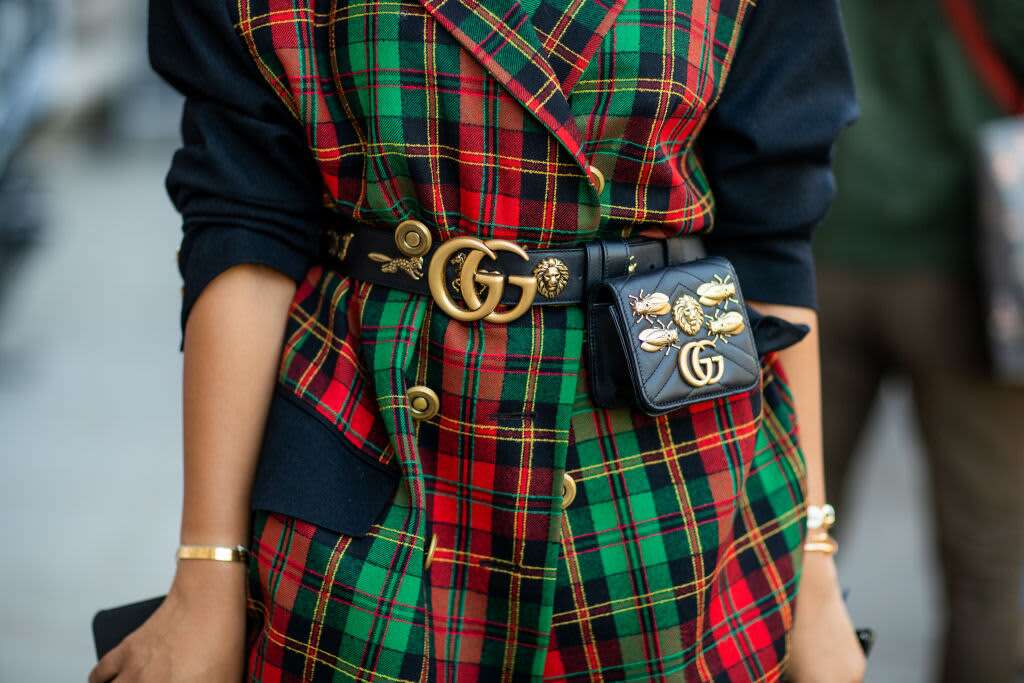
Gucci’s marketing is built on a series of instantly recognisable visual signatures that function as cultural shorthand for luxury. The GG monogram — overlapping double G initials of Guccio Gucci, introduced in the 1960s — is one of the most copied and coveted brand marks in fashion history. It appears across the entire product range, from the classic GG canvas to the GG Marmont quilted bag, embedding brand recognition in every consumer touchpoint.
The red-green-red web stripe, derived from the girth of a horse saddle, is among the most distinctive house codes in luxury fashion. The Horsebit hardware — a curb-chain bit connecting two rings, as used in equestrian bridles — appears across footwear, bags, and jewellery, tying the contemporary collection to the brand’s saddlery origins. The bamboo handle (Bamboo 1947 bag) and the chain-link Sylvie bag are similarly enduring signatures.
These codes are intentionally preserved across creative director transitions. Each new creative director reinterprets the codebook rather than replacing it — maintaining brand recognition across wildly different aesthetic eras. This system of inherited symbols is Gucci’s most durable marketing asset.
Marketing Strategies of Gucci
Gucci’s marketing operates across ten interconnected pillars, each reinforcing the others to create a coherent brand experience — from the global campaign level down to the individual in-store client appointment. The following strategies examine how each pillar functions, drawing on specific campaigns, verified financial data, and the brand’s own communications.
1. Brand Identity & Iconic Visual Codes
Gucci’s most durable marketing asset is its codebook of visual identifiers: the GG monogram, Horsebit, bamboo handle, red-green-red web stripe, and Flora print. These symbols function independently of any single creative director, carrying cultural authority that no advertising campaign alone can manufacture. Unlike competitors whose identities are inseparable from one designer’s vision, Gucci has built a system that outlasts any individual creative tenure.
The commercial proof is in the product. The Jackie bag, the Horsebit 1955 loafer, the Bamboo 1947, and the GG Marmont are perennial bestsellers that sell not because of seasonal trend alignment but because they carry a century of accumulated meaning. When Kering reported Gucci’s FY2025 revenue of €5.99 billion amid a challenging macro environment, the relative resilience of leather goods was specifically noted in the results commentary — a direct function of these enduring product codes.
The GG monogram in particular operates at every price point and across product categories, from entry-level accessories to bespoke leather goods — providing the brand with a wide commercial aperture while maintaining a consistent visual identity. This breadth is a deliberate marketing choice: the monogram democratises aspiration without devaluing the brand’s luxury positioning.
2. Creative Direction as a Brand Reinvention Engine
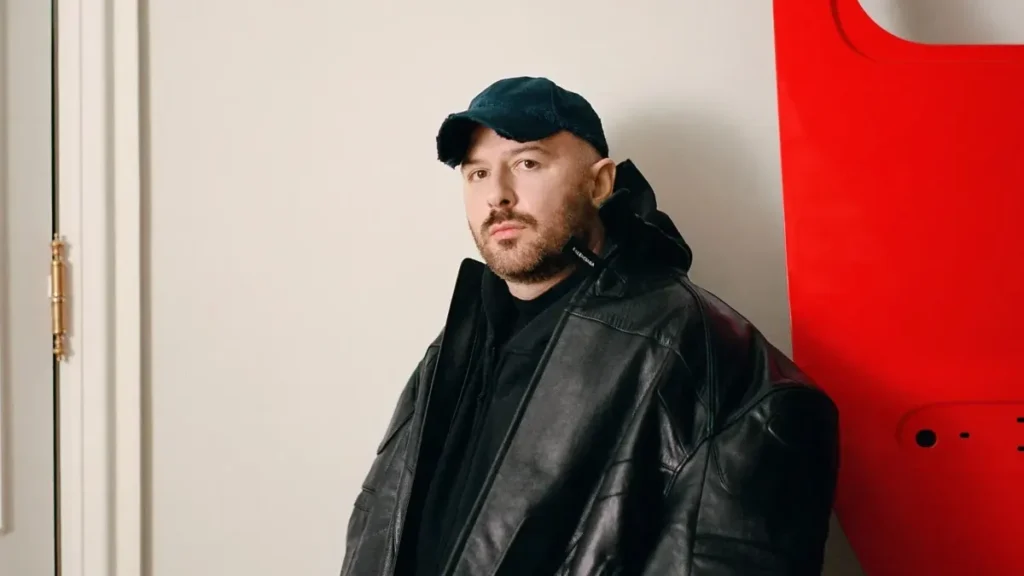
One of the most distinctive aspects of Gucci’s marketing strategy is the conscious use of creative director transitions as brand relaunch events. Each appointment generates months of earned media, fashion industry analysis, and consumer anticipation that no advertising budget can replicate. The announcement of Demna’s arrival in 2025 — transferring from Balenciaga, where he had redefined luxury streetwear and generated sustained cultural conversation — generated global coverage across fashion, business, and general interest media alike.
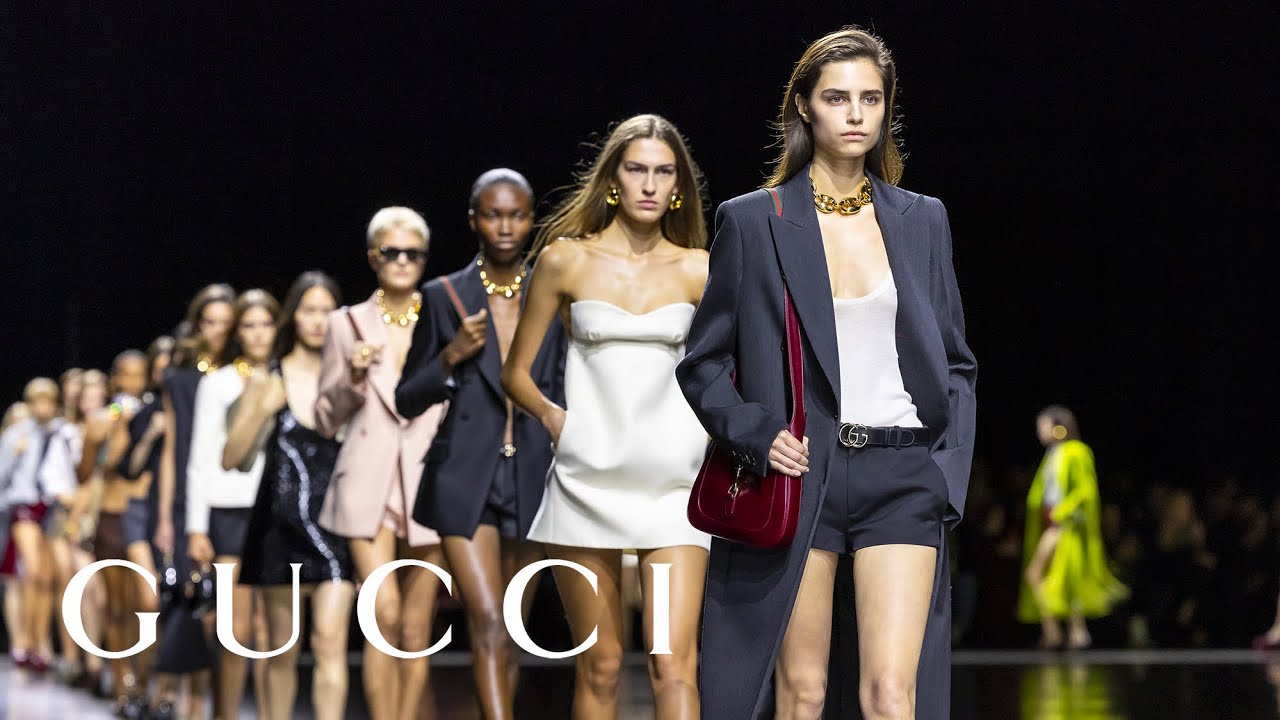
Sabato De Sarno’s debut collection, shown at Milan Fashion Week in September 2023, introduced the concept of “Gucci Ancora” — Italian for “again” or “still.” Photographed by David Sims and emphasising a more restrained, wearable vocabulary, the Ancora campaign marked a deliberate pivot from Alessandro Michele’s maximalism toward quieter, more intimate luxury. The first cruise collection under De Sarno was presented at Tate Modern, London, in May 2024, with attendees including Dua Lipa, Demi Moore, Paul Mescal, and Kate and Lila Moss — generating millions of organic social media impressions.
De Sarno’s tenure concluded in February 2025 following a period of significant commercial pressure, with Gucci revenue declining 23% in FY2024. The fall 2025 show was presented by the in-house design team before Demna’s appointment in July 2025. His arrival signals Kering’s conviction that a bold creative pivot — rather than incremental refinement — is required to reignite brand aspiration for the brand’s next growth cycle.
3. Celebrity & Influencer Marketing
Gucci’s approach to celebrity and influencer marketing is characterised by cultural alignment over transactional endorsement. Rather than paying a celebrity to wear the brand for a single season, Gucci builds long-term relationships with cultural figures whose personal aesthetic and audience genuinely intersect with Gucci’s world — creating earned credibility rather than paid placement.
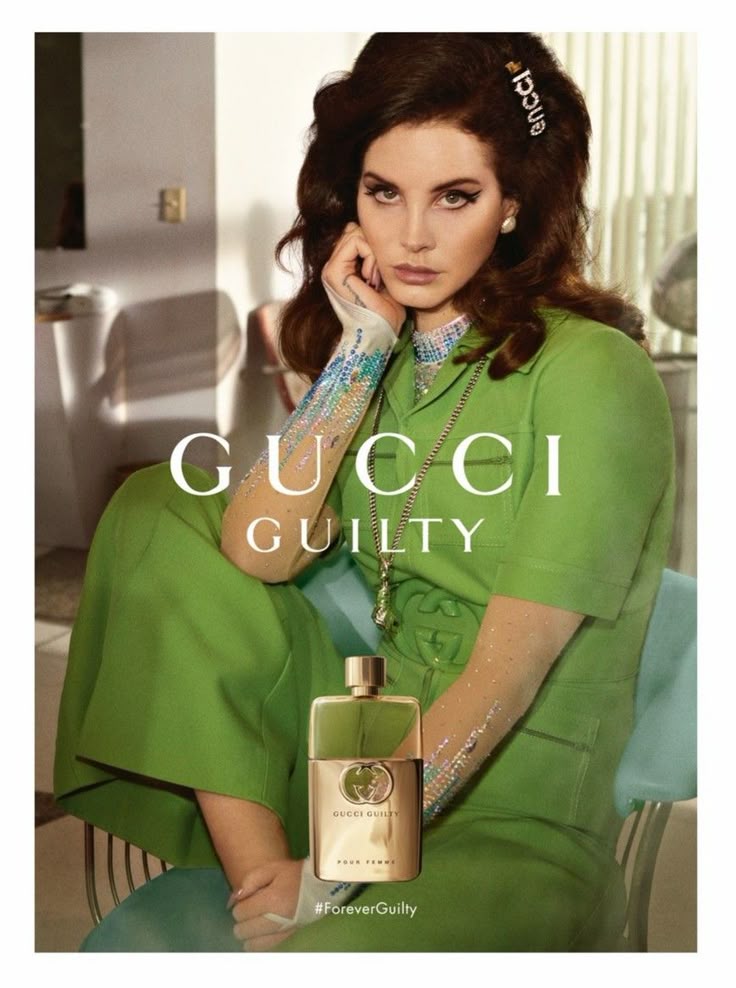
During Alessandro Michele’s tenure, Gucci constructed an elaborate web of celebrity advocates — Harry Styles, Billie Eilish, Jared Leto, Lana Del Rey, and Florence Pugh — who wore the brand because it aligned with their own eclectic, boundary-pushing identities. These relationships were nurtured over multiple seasons rather than contracted for single campaigns. The result was a perception of organic cultural belonging rather than commercial transaction.
Under Sabato De Sarno, Gucci pivoted toward a more focused ambassador strategy. The brand signed Italian tennis star and world number one Jannik Sinner as an ambassador, building a campaign around the tagline “Gucci is a feeling.” The Sinner partnership was particularly strategic: it reached a sports-engaged male audience that luxury fashion has historically struggled to convert, while reinforcing the brand’s Italian identity at a moment of exceptional Italian tennis visibility on the global stage.
On social media, Gucci’s influencer strategy has evolved from macro-celebrity dependency toward a blended model. With approximately 55 million Instagram followers and over 7 million on TikTok, the brand in 2024 deliberately shifted resources from high-cost celebrity exclusives toward smaller, more authentic creator partnerships — generating content that performs within platform algorithms and resonates with Gen Z and Millennial audiences through perceived authenticity.
4. Experiential Events & Runway as Marketing Theatre
Luxury brands live and die by the quality of their experiences, and Gucci consistently treats its runway shows, store openings, and brand events as marketing productions rather than purely commercial exercises. The event itself is the content — producing editorial coverage, social media posts, and brand narrative that circulate long after the show closes.
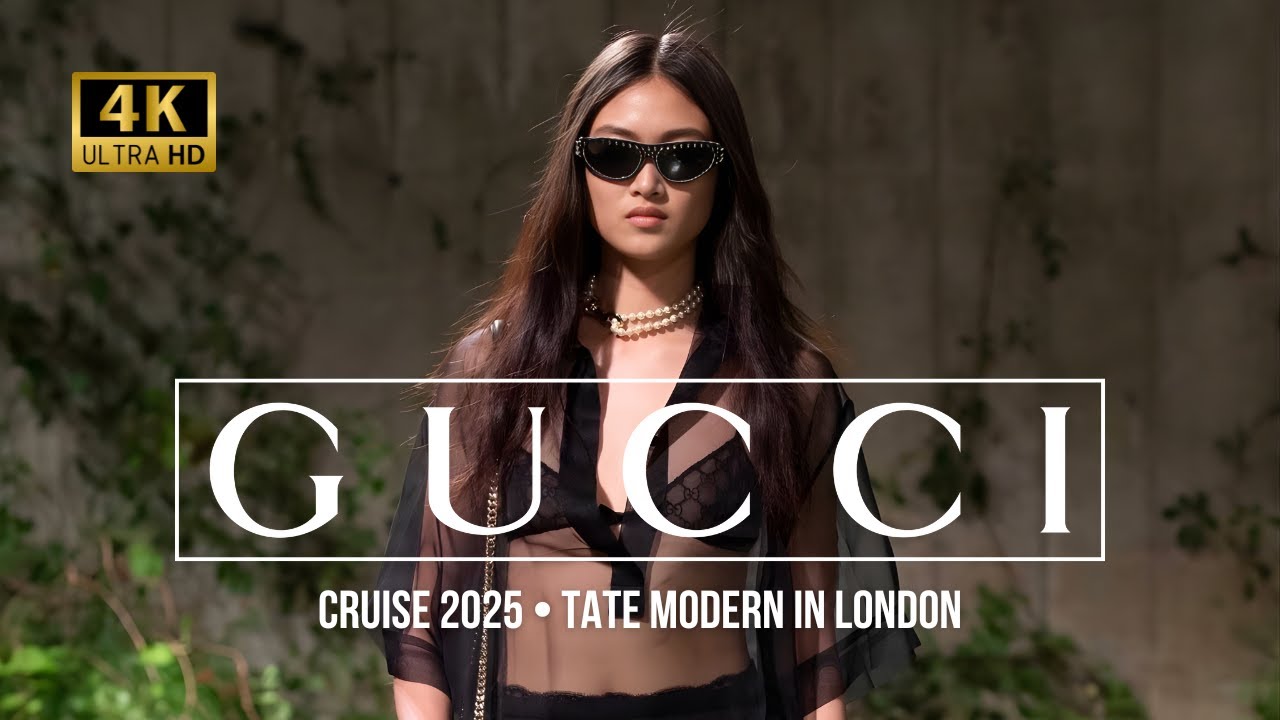
The Gucci Cruise 2024 show at Tate Modern, London exemplified this philosophy. Held in one of the world’s most photographed contemporary art institutions, the event placed Gucci at the intersection of fashion and art in a setting that resonated far beyond the fashion front row. Guests including Dua Lipa, Demi Moore, Paul Mescal, and Kate and Lila Moss generated millions of organic social media impressions through their own channels — extending the brand’s reach to their combined audiences without direct media spend.
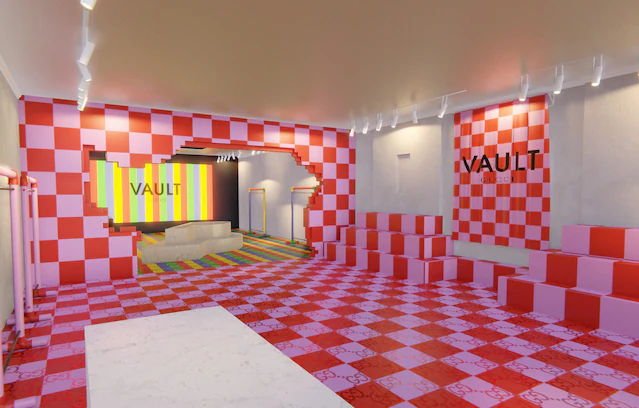
Gucci has also deployed the Gucci Cosmos travelling exhibition (showcasing over a century of archival pieces and brand history), and the Gucci Vault — a concept space available both online and as a series of physical pop-ups — which blends vintage Gucci archive with collaborations from emerging designers and artists. Each format generates its own distinct media narrative while deepening consumer engagement with the brand’s heritage and cultural authority.
5. Digital Innovation & Social Media Strategy
Gucci was among the first luxury houses to recognise that social media was not a threat to luxury positioning but an opportunity to extend brand storytelling to new audiences. The brand built a significant presence across Instagram, TikTok, Pinterest, YouTube, and WeChat well ahead of most competitors — establishing that digital platforms could carry luxury desire rather than dilute it.
The brand’s Instagram presence, with approximately 50 million followers, features a deliberate mix of campaign imagery, backstage content, archival references, and celebrity moments. TikTok strategy has focused on platform-native content: creator collaborations, cultural challenges, and behind-the-scenes access designed to perform within the algorithm rather than simply reposting broadcast-quality campaign films.
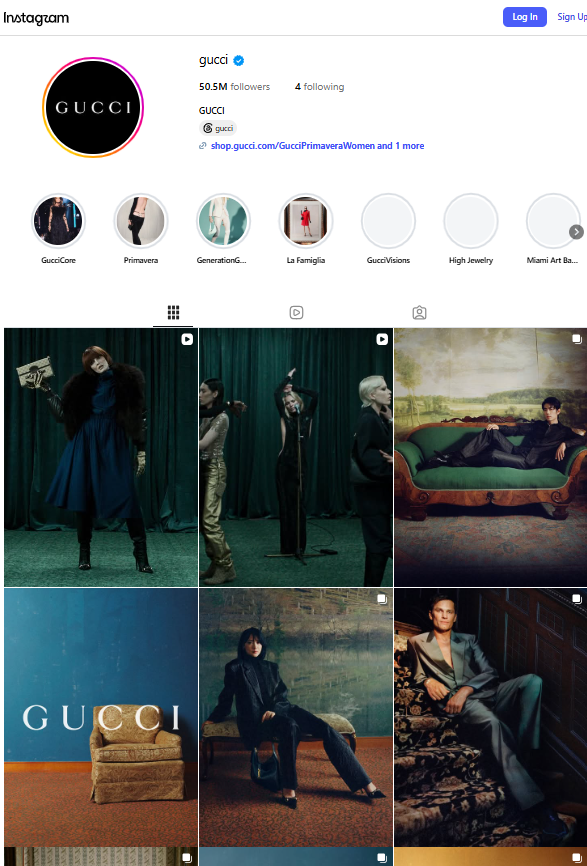
Gucci has been a consistent innovator in digital-native brand experiences. It collaborated with Roblox to create Gucci Garden — an immersive virtual space where users could explore a Gucci-themed environment and purchase limited virtual items — pioneering luxury fashion’s entry into gaming and the metaverse. The brand has also experimented with NFTs, augmented reality (AR) shoe try-on through Snapchat and Instagram, and digital fashion wearables. These initiatives serve a dual function: reaching Gen Z consumers in environments they inhabit, and generating earned media in tech and culture press.
MY GUCCI, the brand’s personalisation and loyalty programme, creates a first-party data relationship with consumers. Account holders can save products, receive personalised recommendations, manage orders and returns, access curated collections early, and request in-store appointments with dedicated Client Advisors — including via video chat. This programme reflects Gucci’s recognition that personalised relationship management at scale is the next competitive frontier in luxury retail.
6. Product Placement & Pop Culture Integration
Gucci’s visibility in film, television, music, and sport — both paid and organic — has been a consistent driver of brand desirability across decades. The brand’s status as a lyrical reference in hip-hop is particularly well-documented: from Jay-Z and the Geto Boys in the 1990s to Gucci Mane (who borrowed the brand’s name as his stage name), Travis Scott, and Cardi B in more recent years. This pop culture osmosis functions as authentic aspiration marketing — the brand becomes a symbol of success and elevation that artists invoke to communicate their own status.
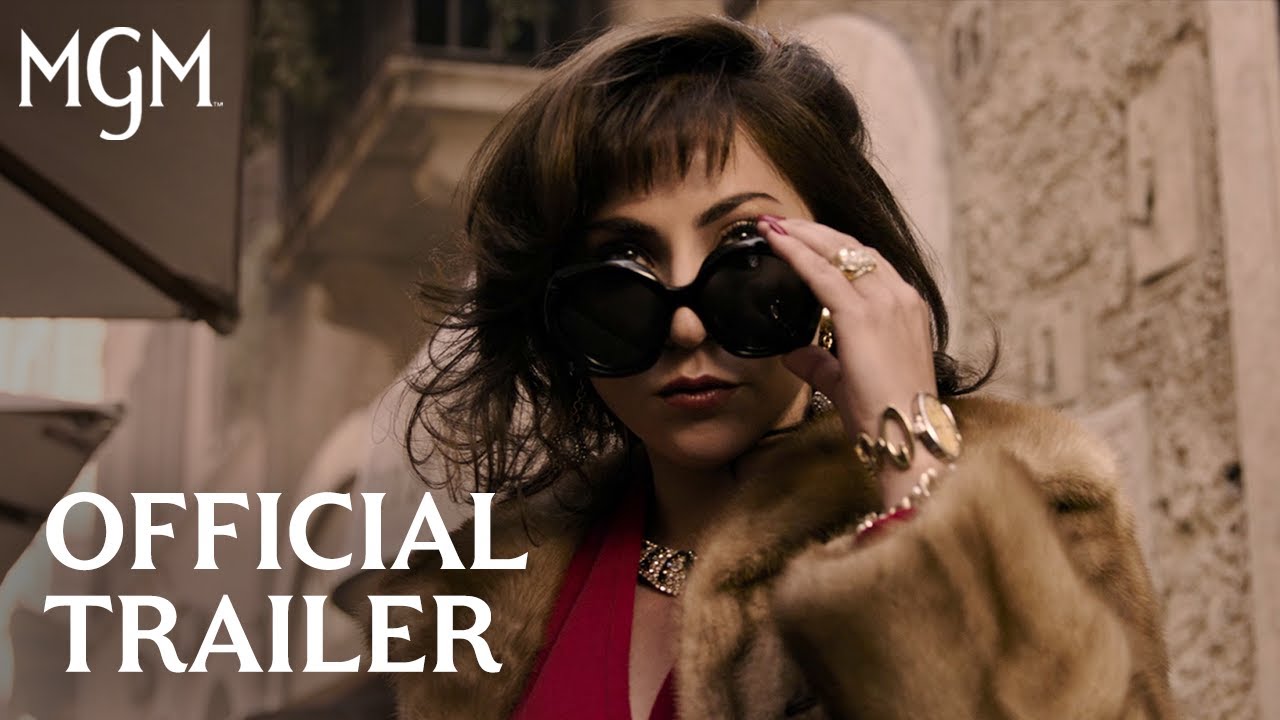
In film, the 2021 Ridley Scott production House of Gucci — starring Lady Gaga, Adam Driver, Al Pacino, and Jared Leto, and based on the true story of Patrizia Reggiani’s murder of her former husband Maurizio Gucci — generated extraordinary global visibility for the brand’s history, mythology, and Italian heritage. Though Gucci the company did not formally endorse the production, it drove significant search interest, tourism to Florence, and renewed consumer fascination with the brand’s decades-long story.
In television, Gucci pieces appear routinely in prestige productions — from Succession to Emily in Paris — often through styling relationships rather than formal product placement contracts. The brand’s willingness to supply editorial to major productions ensures organic visibility in high-attention cultural moments. This earned placement is frequently more commercially valuable than paid media because it is perceived as authentic narrative endorsement.
7. Strategic Collaborations & Limited Editions
Gucci’s collaboration strategy is one of the most deliberately managed in luxury fashion. Rather than pursuing broad commercial partnerships for volume, the brand selects collaborators whose cultural credentials amplify a specific facet of Gucci’s identity — surprising enough to generate media coverage, coherent enough not to dilute brand equity.
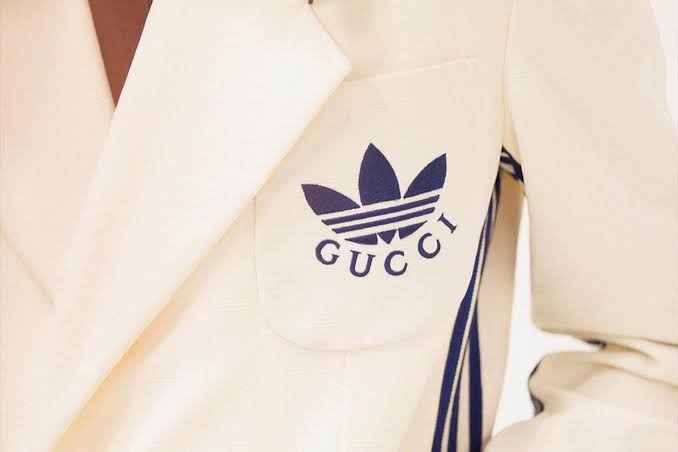
The Gucci x Adidas collaboration, first shown at the Gucci Fall/Winter 2022 show under Alessandro Michele, was a landmark moment in luxury-sportswear cross-pollination. Combining Gucci’s GG monogram with Adidas’s Three Stripes and Trefoil, the collection created objects of genuine desire for consumers from both brand universes — selling through rapidly at retail and commanding significant premiums on the secondary market. It also demonstrated Gucci’s ability to engage sportswear culture without compromising its luxury positioning.
The “Hacker Project” — a collaboration between Gucci and Balenciaga shown at Gucci’s Fall/Winter 2021 show — was even more conceptually provocative: two luxury houses simultaneously referencing and subverting each other’s archives and brand codes. The project generated enormous global earned media and established Gucci as a luxury brand willing to engage in cultural deconstruction. Other notable collaborations have included Gucci x The North Face (luxury outdoor utility), Gucci x Disney, and annual limited editions tied to Chinese New Year and key cultural moments in major markets.
The Gucci Vault platform, launched under Michele and maintained as a permanent laboratory, curates Gucci archive pieces alongside collaborations with emerging designers and artists from outside fashion — positioning the brand as a cultural curator and attracting an audience that values discovery and cultural authority alongside conventional luxury credentials.
8. Sustainability & Gucci Equilibrium
Gucci’s sustainability programme — operating under the Gucci Equilibrium platform, launched in 2018 — is one of the most comprehensive corporate sustainability commitments in luxury fashion. The platform organises all environmental and social commitments across three pillars: Planet, People, and Progress, and publishes annual accountability reports against verified targets.
Key verified milestones as of the most recent reporting cycle include: 99% traceability for raw materials (achieved and maintained); the introduction of Gucci’s first denim range (Fall 2024) using 74% cotton from regenerative farming practices combined with 26% post-consumer recycled (PCR) fibres, all processed in Italy; and regenerative agriculture initiatives for leather sourcing from European farms adhering to animal welfare standards, alongside a supply chain programme for regenerative cashmere sourcing in Mongolia.
The commercial rationale for this investment is measurable. Gucci ranked first among luxury brands in the Vogue Business Index ESG category in 2024, and second across all 250 fashion brands assessed by Fashion Revolution’s “What Fuels Fashion?” report. The brand also received recognition from the Ellen MacArthur Foundation for its circular economy work. These rankings directly influence purchasing decisions among Millennial and Gen Z consumers, for whom environmental credentials are an increasing factor in luxury brand selection. The brand’s partnership with The RealReal, a luxury resale platform, further reinforces the narrative of Gucci’s longevity and product quality within circular economy frameworks.
9. Precision Campaign Storytelling
Gucci’s advertising campaigns are consistently among the most discussed in the industry — not because of production budgets alone, but because of the coherence, cultural depth, and visual distinctiveness of their storytelling. Each creative director era has a campaign aesthetic so specific it is instantly recognisable: Tom Ford’s sleek, sexually charged cinematography; Michele’s dense, literary tableau campaigns styled like stills from a Federico Fellini production; De Sarno’s intimate, restrained David Sims photography.
Sabato De Sarno’s “Gucci Ancora” campaign, photographed by David Sims, presented a deliberately quieter register — focused on the tactile relationship between a person and a beautiful object rather than an elaborate aesthetic fantasy. The choice of Sims — a photographer associated with precise, unsentimental beauty rather than theatrical production — was itself a communicative act, signalling a brand that had returned to artisanal clarity.
Casting choices across all eras are equally intentional. The “Gucci is a feeling” campaign featuring Jannik Sinner integrated Italian sporting achievement with luxury brand identity, reaching audiences far beyond the established Gucci fashion consumer. Each campaign is designed not simply to sell product for a season but to add a chapter to the ongoing Gucci cultural narrative — a narrative that compound-accrues value over decades.
10. Omnichannel Retail & Personalised Client Experience
Gucci operates a global retail network of flagship stores, boutiques, and department store concessions across Europe, the Americas, Asia-Pacific, and the Middle East — supported by a sophisticated e-commerce infrastructure and the MY GUCCI personalisation programme. The brand’s omnichannel strategy ensures a consistent Gucci experience whether a consumer is browsing a Milanese flagship, shopping on Gucci.com, or consulting with a Client Advisor via video call.
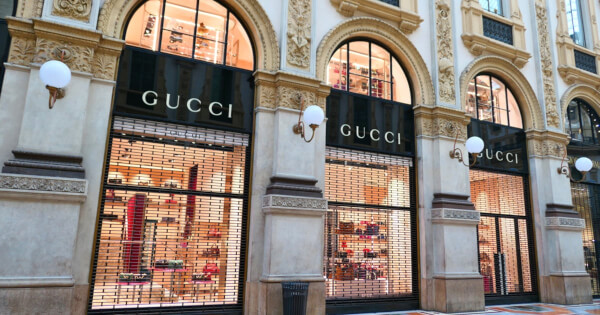
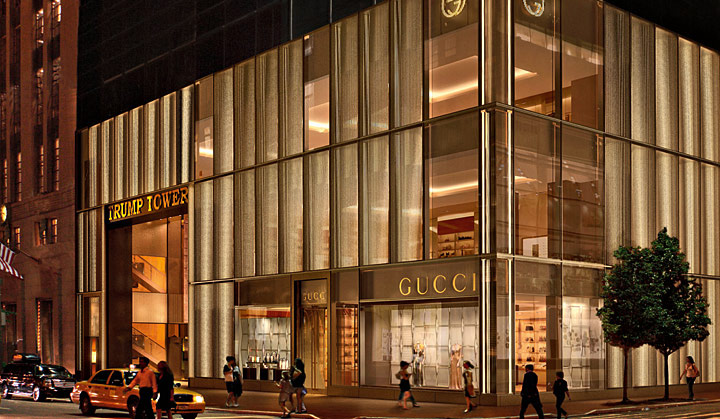
Store design is treated as a brand communication tool in its own right. Gucci’s flagship stores — in Milan, Florence, New York, Tokyo, and elsewhere — are developed as physical brand statements: architectural environments that communicate the brand’s heritage, craftsmanship, and cultural authority through material choices, archival references, and spatial design. Each store is tailored to its location while remaining unmistakably Gucci.
The Gucci Vault concept space, available both as a digital platform and a series of physical pop-up installations, functions as a discovery and brand affinity tool — attracting a culturally curious consumer who may not yet be purchasing core product but is building a long-term relationship with the brand. Client Advisors are extensively trained in product knowledge and brand history, enabling the personalised relationships that drive repeat purchase and referral at the high-spend end of the customer base. MY GUCCI formalises this digitally, enabling seamless personalised service across all channels.
Gucci Revenue & Financial Performance
Gucci is the flagship brand of Kering S.A., which publishes detailed revenue data for Gucci in its annual results disclosures. The figures below are drawn directly from official Kering communications.The FY2025 revenue decline of 22% to €5.99 billion reflects a confluence of macro and brand-specific factors.
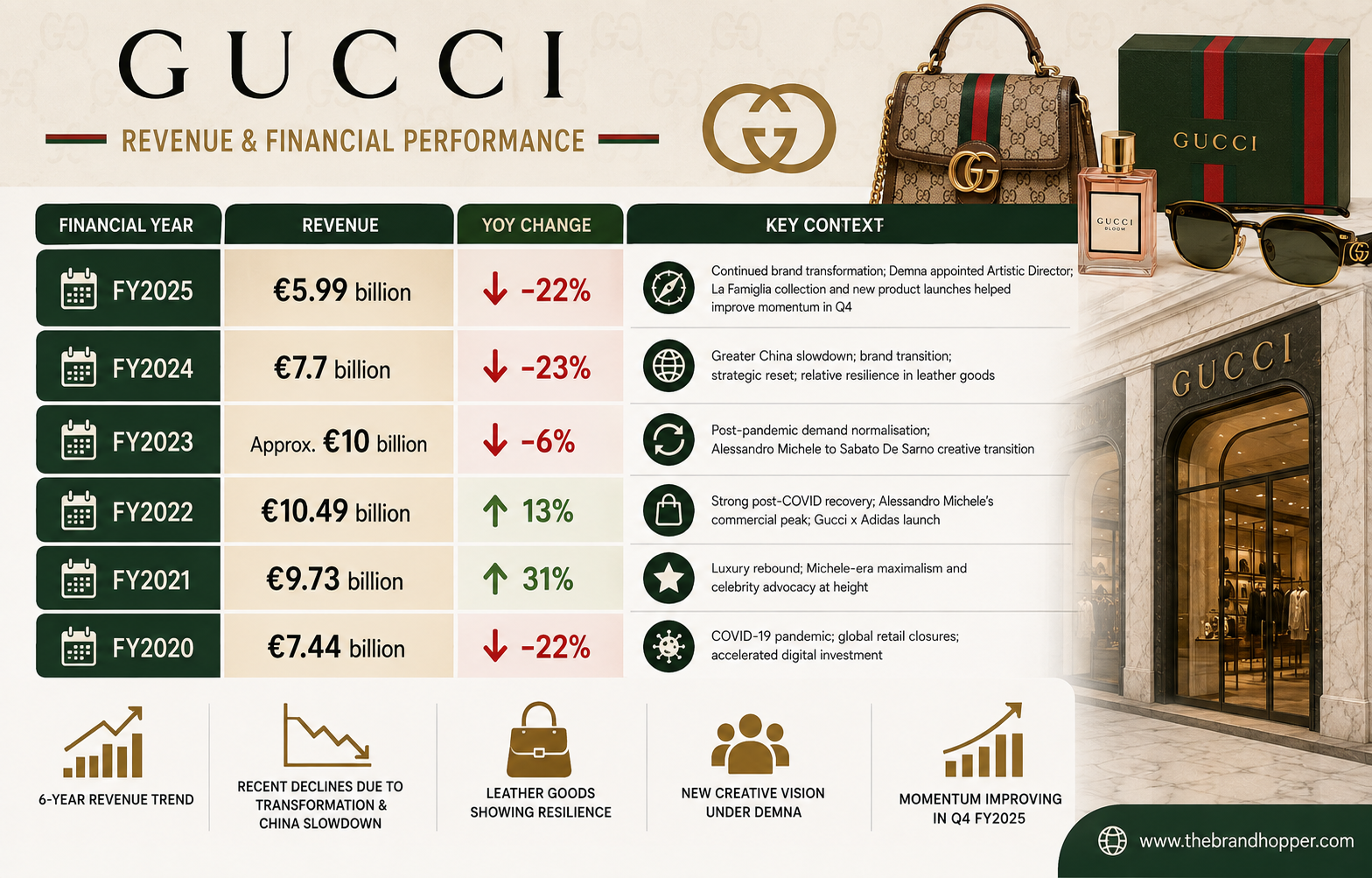
The appointment of Demna as artistic director in July 2025 signals Kering’s view that a high-conviction creative bet — rather than cautious refinement — is the correct strategic response. Demna’s track record at Balenciaga of generating sustained cultural conversation and consumer desire, even through deliberately provocative moves, makes him a high-profile choice for a brand that needs to reignite aspirational pull in its key markets.
Gucci vs Key Luxury Competitors: Brand Positioning Comparison
The table below situates Gucci within its primary competitive set across key commercial and marketing dimensions.
| Brand | Parent | Revenue (FY2025) | Core Positioning | Marketing Signature |
|---|---|---|---|---|
| Gucci | Kering | €5.99B | Italian heritage + cultural reinvention + creative director narrative | Creative director events; cultural collabs; Ancora/Demna eras |
| Louis Vuitton | LVMH | Part of LVMH Fashion & Leather Goods: €37.77B | Travel heritage; aspirational accessibility; monogram ubiquity | Superstar artist collabs; Vuitton x Supreme; spectacle shows |
| Chanel | Private | Not publicly disclosed | French haute couture; timeless femininity; exclusivity | No. 5 legacy; Métiers d’Art shows; selective distribution |
| Prada / Miu Miu | Prada Group | €5.72B combined | Intellectual fashion; conceptual luxury; Miu Miu micro-cultural moments | Nylon bag; academia aesthetic; Miu Miu cult status |
| Hermès | Hermès International | €16.00B | Extreme craft scarcity; waiting list as marketing; artisan mystique | Birkin scarcity model; no conventional advertising dependency |
| Bottega Veneta | Kering | €1.71B | Logo-free quiet luxury; intrecciato weave; anti-logomania | Deliberate social media absence; product as communication |
Key Takeaways
Gucci’s enduring marketing success across more than a century rests on a set of principles that transcend any single campaign, creative director, or market cycle:
Heritage as fuel, not constraint: The GG monogram, Horsebit, bamboo handle, and red-green-red stripe provide continuity across creative transitions, ensuring brand recognition survives radical aesthetic shifts.
Creative director appointments are brand events: Each transition generates months of earned media and consumer anticipation that no advertising budget can manufacture.
Cultural embedding over hard selling: From hip-hop lyrics to prestige film, Gucci’s pop culture presence is so organic it functions as authentic aspiration rather than paid placement.
Experiential events drive global media cycles: The Tate Modern cruise show, Gucci Cosmos exhibition, and Vault pop-ups generate coverage that amplifies campaign spend many times over.
Digital without diluting luxury: Gucci proved that social media, AR try-on, and virtual worlds (Roblox) can extend luxury desire rather than compromise it.
Sustainability is commercial strategy: First-place ESG rankings directly influence Gen Z and Millennial luxury purchasing decisions in an increasingly values-conscious market.
Strategic collaborations generate outsized earned media: Gucci x Adidas, the Hacker Project with Balenciaga, and the Gucci Vault all created media cycles far exceeding their production costs.
Personalised client relationships are the next frontier: MY GUCCI and the Client Advisor model position the brand for first-party data and long-term relationship-led growth.
Conclusion
Gucci’s century of marketing mastery offers lessons that extend well beyond luxury fashion. The brand demonstrates that the most powerful marketing is not advertising — it is the totality of cultural presence, creative authority, product mythology, and human connection that a brand builds over time. The GG monogram sells not because of any individual campaign but because it has accumulated more than 60 years of meaning, worn by icons from Jackie Kennedy to Harry Styles.
The brand’s capacity for reinvention — from Tom Ford’s provocative glamour to Alessandro Michele’s romantic maximalism, from Sabato De Sarno’s quiet luxury to Demna’s anticipated conceptual disruption — is made possible precisely because the underlying visual codebook is so strong. Each new creative director can take radical aesthetic risks because the Horsebit, the bamboo handle, and the GG monogram provide an anchor of continuity that consumers instinctively trust.
As a flagship brand within the Kering portfolio, Gucci benefits from the operational and financial resources of one of the world’s leading luxury conglomerates — enabling investment in sustainability, digital innovation, and global retail experience at a scale that independent luxury brands cannot match. Kering’s disciplined approach to brand stewardship — resisting short-term pressure to protect long-term equity — is a critical enabler of Gucci’s marketing strategy.
For a broader view of how luxury conglomerates build and sustain brand portfolios across multiple houses, see our in-depth analysis: The Magic of LVMH: Exploring the Success Story Of Luxury Empire.
What is certain is that Gucci’s ability to continue reinventing itself — while remaining anchored to an instantly recognisable codebook of heritage symbols — will remain its most potent marketing weapon for decades to come. Demna’s arrival marks the beginning of a new chapter in one of fashion’s most extraordinary brand stories.
Frequently Asked Questions (FAQs)
Q1. What is Gucci’s marketing strategy in a nutshell?
Gucci’s marketing strategy combines iconic visual codes with high-impact creative director narratives, celebrity and influencer partnerships, experiential events, precision campaign storytelling, digital innovation, and sustainability commitments — each reinforcing the others to sustain brand desirability across generations and market cycles.
Q2. What is Gucci’s annual revenue?
According to Kering’s official 2024 Annual Results, Gucci generated revenue of €7.7 billion in FY2024 — a 23% year-on-year decline driven by macro headwinds in Greater China, post-pandemic demand normalisation, and the brand’s ongoing creative and commercial reset.
Q3. Who is Gucci’s current artistic director?
Demna — formerly the long-serving artistic director of Balenciaga — was appointed as Gucci’s artistic director in July 2025. He succeeded Sabato De Sarno, who departed in February 2025 after approximately two years in the role. The fall 2025 collection was shown by the in-house design team in the interim.
Q4. What is the GG monogram and why is it so important to Gucci?
The GG monogram — overlapping double G initials for Guccio Gucci — was introduced in the 1960s as a canvas pattern for luggage and accessories. It is one of the most recognised brand marks in fashion history and appears across handbags, footwear, apparel, and accessories at every price point. Its ubiquity provides instant brand recognition while also remaining susceptible to counterfeiting — an ongoing brand management challenge.
Q5. How does Gucci’s influencer marketing strategy work?
Gucci uses a tiered influencer model: long-term celebrity relationships with culturally aligned figures (e.g., Harry Styles and Billie Eilish during the Michele era; Jannik Sinner under De Sarno), mega-influencers for broad reach, micro-influencers for niche credibility, and platform-native content creators for organic authenticity on TikTok and Instagram. In 2024, the brand deliberately shifted resources from high-cost celebrity exclusives toward smaller, more authentic creator partnerships to improve content performance and perceived genuineness.
Q6. What is Gucci Equilibrium?
Gucci Equilibrium is the brand’s sustainability platform, launched in 2018, which consolidates all environmental and social commitments under three pillars: Planet, People, and Progress. Verified achievements include 99% raw material traceability, regenerative agriculture sourcing for leather and cashmere, and a denim range using 74% regeneratively farmed cotton with 26% post-consumer recycled fibres (Fall 2024). Gucci ranked first among luxury brands in Vogue Business Index ESG in 2024.
Q7. Who owns Gucci?
Gucci is owned by Kering S.A., the French luxury conglomerate, which also owns Yves Saint Laurent, Bottega Veneta, Balenciaga, Alexander McQueen, and other luxury brands. Kering acquired its controlling stake in Gucci Group in 1999. Kering is listed on Euronext Paris and publishes annual results including detailed Gucci revenue figures.
Q8. What is the Gucci Vault?
Gucci Vault is a multi-format concept space — available as a digital platform and a series of physical pop-up installations — that curates Gucci archive pieces alongside collaborations with emerging designers and artists. It functions as a discovery and cultural authority platform, attracting a culturally curious consumer to the Gucci universe and reinforcing the brand’s credentials as a cultural curator rather than merely a commercial luxury house.
Q9. How does Gucci compete with Louis Vuitton, Chanel, and Hermès?
Gucci competes primarily through cultural reinvention and creative director-driven narrative — a more dynamic positioning than Louis Vuitton’s monogram ubiquity, Chanel’s timeless haute couture heritage, or Hermès’s extreme craft scarcity. Gucci occupies a distinctive middle ground: more culturally provocative than LV, more accessible than Hermès, and more fashion-forward than Chanel. Its willingness to undergo radical aesthetic reinvention every creative cycle is both its greatest risk and its most powerful differentiator.
Q10. Why did Gucci’s revenue decline in 2024?
Gucci’s FY2024 revenue fell 23% to €7.7 billion due to a combination of: a prolonged luxury spending slowdown in Greater China; post-pandemic demand normalisation across the sector; the disruption of a major creative transition (from Alessandro Michele to Sabato De Sarno, and then toward Demna); and a weaker performance in ready-to-wear and wholesale channels relative to leather goods. Kering has acknowledged the brand is undergoing a deliberate strategic reset and that Demna’s appointment is central to its recovery plan.
To read more content like this, subscribe to our newsletter