

Last Updated on October 26, 2026 by Team TBH
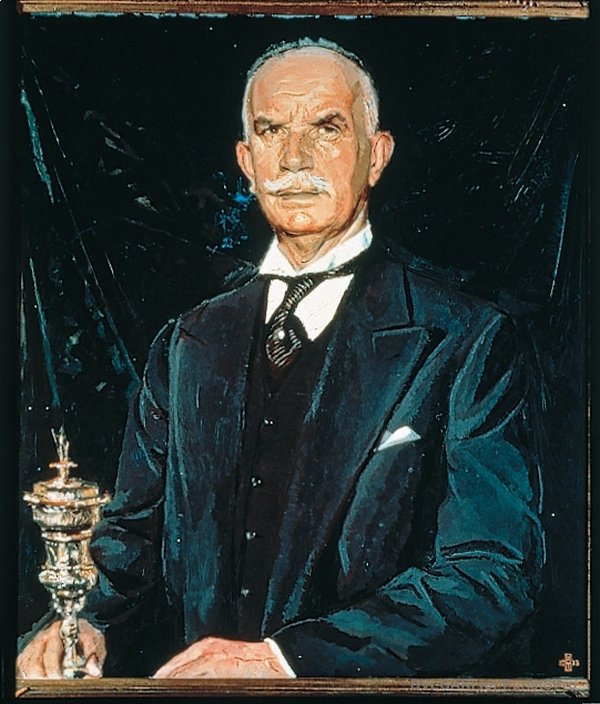
Bvlgari is more than a jewellery brand. It is a global luxury maison that has transformed Roman heritage, colourful gemstones, distinctive design and cultural storytelling into a powerful brand identity. Founded in Rome in 1884 by Greek silversmith Sotirio Bulgari, the company has expanded into fine jewellery, watches, leather goods, fragrances, accessories and luxury hospitality.
Today, Bvlgari is part of LVMH, the world’s leading luxury goods group. Its marketing combines historical storytelling with contemporary design, celebrity ambassadors, cultural partnerships, high-profile exhibitions and immersive brand experiences.
Understanding Bvlgari’s marketing strategy offers valuable lessons in luxury brand management. Rather than relying on heritage alone, the maison continually reinterprets its signature design codes through new collections, campaigns and experiences.
This article examines Bvlgari’s marketing strategies, including Roman heritage storytelling, product innovation, celebrity partnerships, experiential marketing, digital execution, sustainability, luxury hospitality and its complete marketing mix. It also explores the brand’s segmentation, targeting and positioning strategy, using identifiable campaigns and publicly available information.
Bvlgari: A Legacy of Roman Audacity
Sotirio Bulgari opened his first shop in Rome in 1884, initially selling silver ornaments and other precious objects. In 1905, the business moved to the now-iconic Via Condotti location, which became a landmark in the maison’s history.
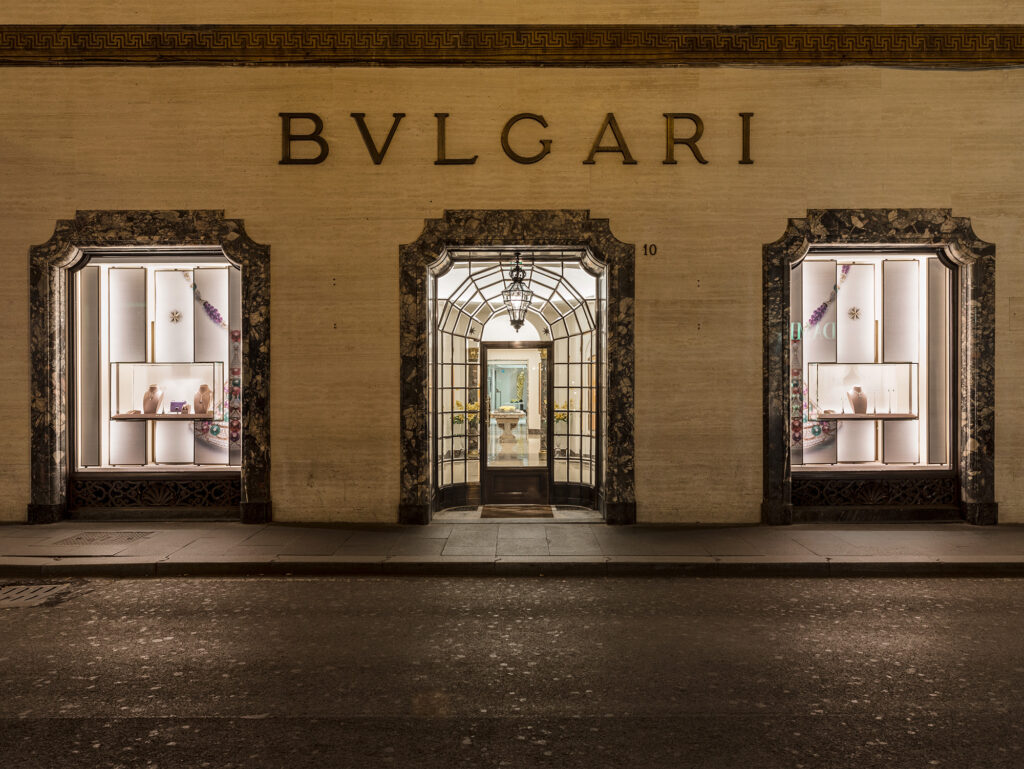
Bvlgari gradually developed a distinctive design language influenced by Rome’s architecture, classical art, Italian culture and Mediterranean colours. Its use of vibrant gemstones, architectural forms and bold combinations of materials helped distinguish it from luxury jewellery houses associated with more restrained aesthetics.
LVMH acquired Bvlgari in 2011 in a transaction valued at approximately €3.7 billion at the time of the announcement, strengthening the group’s position in luxury jewellery and watches. Jean-Christophe Babin became Bvlgari’s CEO in 2013, while Laura Burdese was announced as the brand’s CEO effective July 2026.
Bvlgari’s business now extends well beyond jewellery. Its portfolio includes iconic collections such as Serpenti, B.zero1 and Divas’ Dream, alongside high-end watchmaking, fragrances, leather goods and Bvlgari Hotels & Resorts.
The brand’s high jewellery strategy also illustrates its commercial ambition. In 2025, Bvlgari unveiled Polychroma, a high jewellery and high-end watch collection celebrating colour, gemstones and craftsmanship. LVMH reported that Polychroma generated record sales of multi-million-dollar pieces, although Bvlgari does not publicly disclose a separate audited revenue figure for the collection.
Bvlgari’s commercial performance should be distinguished from LVMH’s consolidated results. LVMH’s Watches & Jewelry business group generated €10.486 billion in revenue in 2025, but this figure includes multiple maisons and cannot be attributed to Bvlgari alone.
Marketing Strategies of Bvlgari
1. Brand Heritage and Roman Storytelling
Bvlgari’s Roman identity is one of its most important marketing assets. The brand consistently draws on the city’s architecture, history, artistic traditions and cultural atmosphere to distinguish its products from those of other luxury jewellery houses.
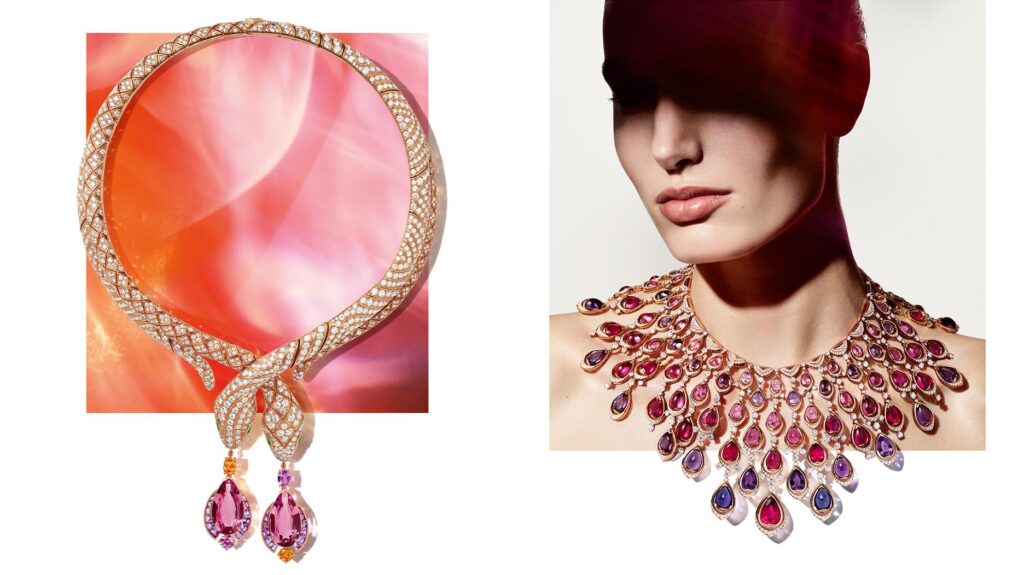
Its signature motifs translate this heritage into recognisable product designs. The Serpenti collection draws on the symbolism of the snake and its associations with transformation and renewal, while Divas’ Dream takes inspiration from the fan-shaped mosaics of Rome’s Baths of Caracalla. The B.zero1 collection, introduced in 1999, reinterprets architectural forms through its distinctive spiral design.
Bvlgari’s Eternally Reborn brand campaign celebrates renewal, craftsmanship and the continuous reinvention of its design language. Featuring imagery that connects precious gemstones, contemporary personalities and Roman-inspired visual elements, the campaign turns the maison’s heritage into a story about modern identity rather than simply presenting jewellery as a product.

Another relevant example is Bvlgari’s historical storytelling around the Serpenti icon. By repeatedly reinterpreting the snake motif across watches, high jewellery and accessories, the brand keeps a recognisable symbol relevant to new generations without abandoning its heritage.
The approach is also evident in Bvlgari’s official historical and editorial content, which connects archival designs with contemporary collections. This allows the brand to communicate continuity, craftsmanship and authenticity while giving customers a narrative that extends beyond the material value of the jewellery.
Bvlgari’s heritage strategy demonstrates that history can be an active marketing resource. When heritage informs product design, campaign imagery, retail environments and storytelling, it becomes a distinctive brand experience rather than a decorative reference to the past.
2. Product Innovation and Design Audacity
Bvlgari uses product design itself as a marketing tool. Instead of relying exclusively on advertising to differentiate its offerings, the maison develops recognisable forms, distinctive materials and technical innovations that generate attention and reinforce its premium positioning.
The Tubogas technique is an important example. Known for its flexible, solder-free construction, it has been a Bvlgari signature since the 1940s and continues to inspire contemporary jewellery, watches and accessories.
The B.zero1 ring, launched in 1999, provides another example of the brand’s design philosophy. Its spiral construction and architectural inspiration distinguish it from conventional jewellery designs while allowing the collection to evolve through new materials, finishes and interpretations.

In watchmaking, Bvlgari has built a reputation around the Octo Finissimo collection and its pursuit of ultra-thin mechanical movements. The collection’s record-setting achievements have helped the brand establish credibility in technical watchmaking alongside its reputation for jewellery design.
Presented in 2025, Serpenti Aeterna reinterpreted the Serpenti watch through a streamlined, sculptural design. The launch demonstrated how Bvlgari can modernise an established icon while preserving the symbolic identity that makes it recognisable.
Unveiled in 2025, Polychroma brought together high jewellery and high-end watches in a collection built around colour, rare gemstones and complex craftsmanship. The launch reinforced Bvlgari’s association with chromatic richness and provided a platform for editorial storytelling about gemstone selection, design and artisanal expertise.
Bvlgari also used the Year of the Snake in 2025 to connect the Serpenti icon with Chinese New Year. The cultural relevance of the snake motif gave the brand a natural opportunity to present its signature designs in a context that resonates with audiences across Asian markets.
These examples illustrate how product innovation, cultural relevance and collection storytelling can work together. The product becomes both a commercial offering and a source of brand communication.
3. Celebrity Ambassadors and Cultural Icons
Bvlgari’s celebrity strategy connects its jewellery with personalities who have international visibility and cultural influence. These partnerships provide campaign reach, editorial exposure and opportunities to present jewellery in distinctive fashion and entertainment contexts.
The brand’s ambassador and campaign ecosystem has included Zendaya, Anne Hathaway, Priyanka Chopra Jonas, Liu Yifei and Lisa of BLACKPINK, among other personalities. Dua Lipa was announced as a Bvlgari Global Brand Ambassador in February 2026, while Florence Pugh has also joined the brand’s ambassador ecosystem.

Ambassador roles can differ by market, campaign and product category, so the complete list of personalities appearing in Bvlgari campaigns should not automatically be treated as a single, permanent global ambassador roster.
Relevant campaign: Eternally Reborn. The campaign uses personalities including Zendaya and Anne Hathaway to connect Bvlgari’s heritage and craftsmanship with contemporary ideas of reinvention, confidence and individuality. This approach helps the maison communicate across age groups while retaining a coherent visual identity.
Relevant campaign: Inside the Dream. Bvlgari’s Inside the Dream content brings audiences closer to the creation of high jewellery, including the work of jewellery creative director Lucia Silvestri. Featuring personalities such as Zendaya, Lisa and Priyanka Chopra Jonas, the project combines celebrity appeal with behind-the-scenes storytelling about gemstones and craftsmanship.

The brand also uses major public appearances to demonstrate how its jewellery looks when worn. Red-carpet placements, fashion-editorial coverage and ambassador appearances create visual associations between Bvlgari and glamour, artistry and cultural relevance.
Rather than treating celebrity partnerships as simple endorsements, Bvlgari can use them to give different collections distinct cultural contexts. A campaign featuring a global pop artist can reach music-oriented audiences, while a high jewellery appearance by an established film star can reinforce craftsmanship and prestige.
The strategic lesson is that celebrity selection works best when the personality, collection and campaign narrative reinforce one another. Reach alone does not guarantee brand fit; the value lies in the association the partnership creates.
4. Experiential and Immersive Marketing
Bvlgari uses exhibitions, installations and physical brand experiences to allow audiences to explore its products and history beyond conventional advertising. This is particularly valuable in luxury, where the atmosphere surrounding a product can be as important as its physical features.
In 2025, Bvlgari presented the Serpenti Infinito exhibition in Shanghai, Seoul and Mumbai. The project explored the Serpenti icon through jewellery, archival material, contemporary art and cultural interpretations of the snake.
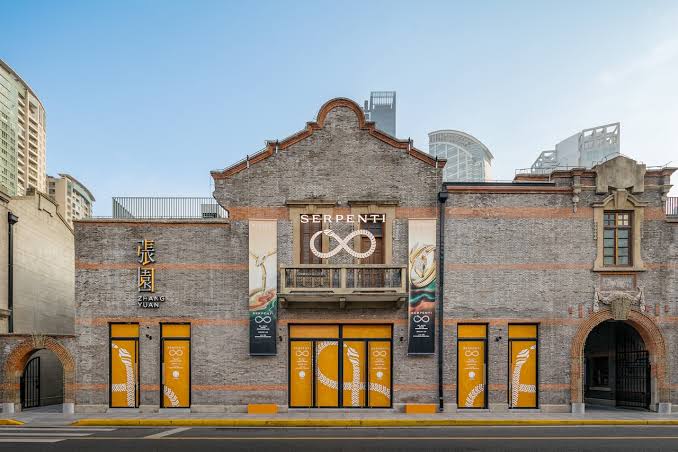
The Mumbai chapter took place at the Art House at the Nita Mukesh Ambani Cultural Centre. It featured historical and contemporary Serpenti creations alongside Indian art and an immersive, AI-generated installation by media artist Refik Anadol. The exhibition also included a collaboration with the Aravani Art Project, whose artists reinterpreted the Serpenti motif.
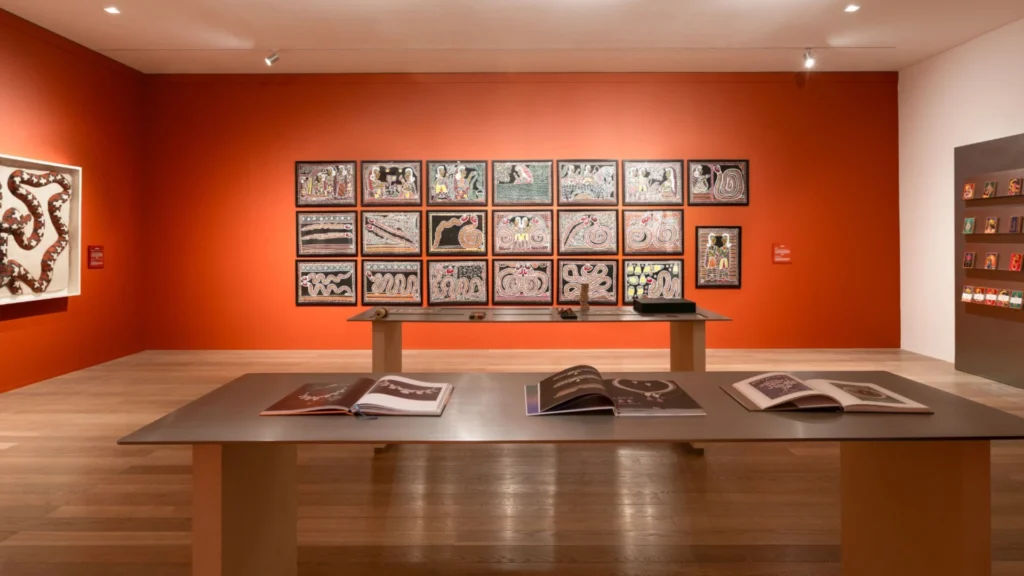
This exhibition is an important example of experiential marketing because it connected a familiar luxury icon with local cultural references. Instead of presenting the Serpenti solely as a product collection, Bvlgari positioned it as a symbol that can be interpreted through different artistic traditions.
Bvlgari introduced Polychroma in 2025 through a major presentation in Sicily, using the setting and collection narrative to emphasise colour, artistry and the maison’s Roman roots. LVMH subsequently reported record sales of multi-million-dollar pieces from the collection.
Bvlgari’s retail spaces and hospitality properties also contribute to its experiential strategy. Flagship boutiques, private client services and hotel environments give customers opportunities to engage with the brand through architecture, service, craftsmanship and personal interaction.
The objective is not simply to increase attendance at an event. Immersive experiences can create press coverage, generate social content, deepen emotional engagement and give customers a more memorable understanding of the brand.
5. Digital Marketing and Social Media Presence
Bvlgari uses digital platforms to communicate its design language, craftsmanship and lifestyle associations through high-quality visual storytelling. Its digital presence combines product imagery with campaign films, ambassador content, collection narratives and editorial material.
The Eternally Reborn campaign translates Bvlgari’s themes of renewal and reinvention into digital storytelling. Campaign pages and accompanying content present gemstones, craftsmanship and personalities within a consistent visual framework, helping the brand maintain continuity across its website and social channels.
The other example is Inside the Dream campaign by showing how high jewellery is developed, the project offers audiences a view into a world that is usually difficult to access. This type of behind-the-scenes storytelling makes craftsmanship more tangible while preserving the exclusivity associated with high jewellery.
Video is particularly useful for Bvlgari because it can communicate the movement, texture, light and scale of jewellery more effectively than a static product description. Short campaign edits can support discovery on social platforms, while longer films and editorial pages can provide more depth for people researching the brand.
China requires a market-specific digital strategy. Platforms such as WeChat, Weibo and Xiaohongshu play different roles in discovery, communication and shopping, and should not be treated as interchangeable with Instagram or YouTube. Bvlgari’s digital approach therefore needs to account for regional platform preferences and local customer journeys.
The brand’s website also functions as more than a transaction channel. Collection pages, product photography and editorial features can communicate the inspiration behind a design while allowing interested customers to explore available products and services.
Bvlgari has experimented with technology-led storytelling in the past, including digital fragrance-related initiatives. However, individual projects should be described with their original dates and verified details rather than presented as current flagship campaigns without evidence.
The broader strategy is to make digital content feel consistent with the brand’s physical world: visually distinctive, carefully produced and rooted in design, craftsmanship and cultural storytelling.
6. Events, Red Carpet and Cultural Partnerships
Bvlgari uses entertainment, fashion and art events to place its jewellery in culturally influential settings. These occasions can generate editorial coverage and make the brand visible to audiences who may not encounter it through traditional jewellery advertising.
Bvlgari continued its partnership with BAFTA in 2025 as an exclusive jewellery and watch partner for the film awards, following a collaboration that began in 2022. The partnership included support for the BAFTA Nominees’ Party and the EE BAFTA Film Awards.

This is a clear example of how a luxury maison can align itself with cinema and the arts. The association creates opportunities for jewellery placement, celebrity visibility and storytelling around the relationship between craftsmanship and film culture.
Also, Bvlgari became the exclusive partner of the International Art Exhibition of La Biennale di Venezia for the next three editions. For the 2026 edition, the maison presented a major commission by artist Lotus L. Kang at the Bvlgari Pavilion in the Giardini.
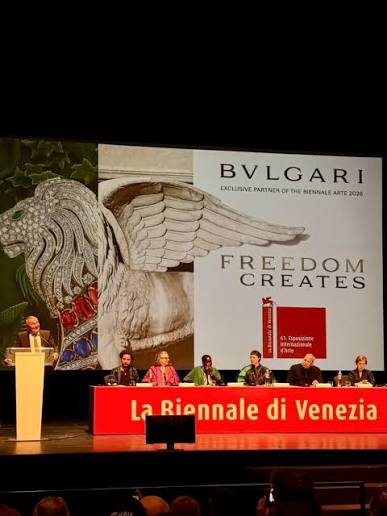
The partnership positions Bvlgari as a supporter of contemporary artistic expression, not only as a commercial luxury brand. It also provides a platform for conversations about creativity, experimentation and cultural exchange.
The brand’s broader presence at film festivals, fashion events and red-carpet occasions allows it to showcase jewellery in real-world styling contexts. Such placements can generate images that circulate through fashion publications, entertainment media and social platforms well beyond the event itself.
The strategic value of cultural partnerships lies in their relevance to the brand. The strongest initiatives connect Bvlgari with creativity, artistic excellence and the audiences most likely to appreciate its products.
7. Sustainability, CSR and the Save the Children Partnership
Bvlgari’s social responsibility strategy includes a long-standing partnership with Save the Children. Launched in 2009 to mark the brand’s 125th anniversary, the partnership uses specially created jewellery to raise funds for programmes supporting children and young people.
Bvlgari reports that the collaboration has raised more than US$120 million through the sale of its Save the Children jewellery collection. The company’s published figures also report that the programmes have reached more than 3.38 million people, including over 2.4 million children and young people, across 39 countries.
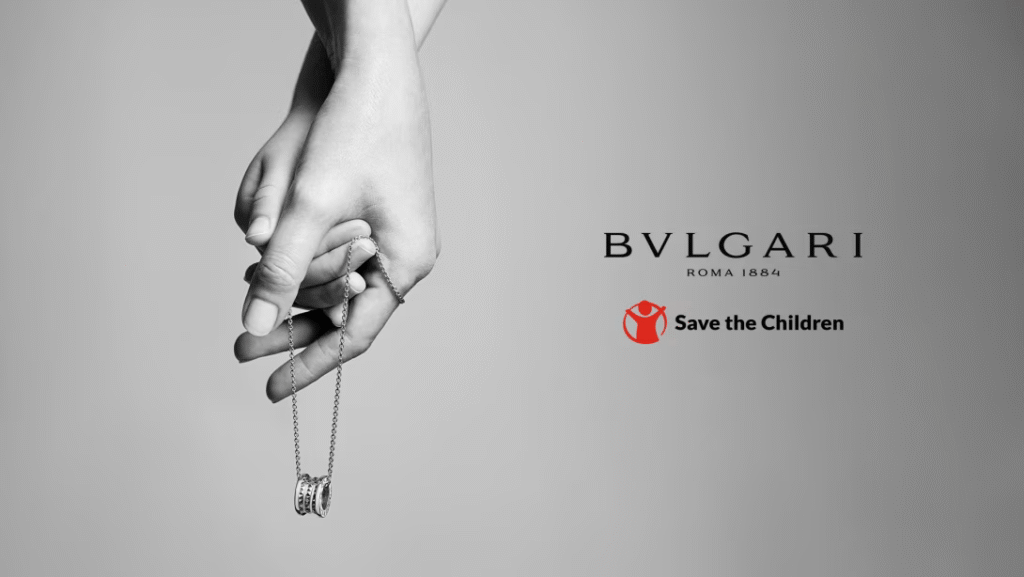
The dedicated jewellery collection connects a product purchase with a charitable contribution. Bvlgari states that each creation sold contributes a specified amount to Save the Children, making the relationship between the commercial product and the social initiative more concrete.
The partnership is a strong example of cause-related marketing because it is a sustained programme rather than a one-off promotional event. It gives customers a clear way to participate in the initiative while helping Bvlgari demonstrate a longer-term social commitment.
Environmental responsibility is another relevant area, particularly through LVMH’s group-wide environmental programmes and reporting. However, brand-specific claims about gemstone traceability, emissions reductions, hotel certifications or particular sustainable materials should be supported by Bvlgari’s own published disclosures before being presented as confirmed achievements.
Sustainability communication is most credible when it identifies the action taken, the scope of the commitment and the available evidence. For luxury brands, this is important because broad claims about ethical sourcing or environmental performance can otherwise imply more transparency than has actually been demonstrated.
The lesson from Bvlgari’s charitable partnership is that purpose-led marketing is strongest when the initiative is sustained, measurable and directly connected to a recognisable part of the brand.
8. Luxury Hospitality as a Brand Strategy
Bvlgari Hotels & Resorts extends the brand into hospitality, allowing customers to experience its design principles through architecture, interiors, service and dining. The hotel business provides a different kind of interaction from a jewellery purchase: guests can spend hours or days in an environment shaped by the brand.
The first Bvlgari Hotel opened in Milan in 2004. The portfolio subsequently expanded to destinations including London, Bali, Beijing, Dubai, Shanghai, Paris, Tokyo and Rome. The brand has announced additional projects, but planned properties should be distinguished from hotels that are already open.
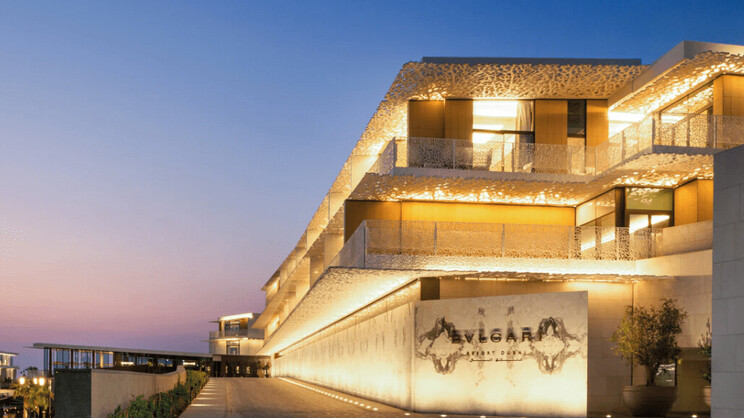
The Bvlgari Hotels & Resorts translate the maison’s design language into hospitality settings, with an emphasis on materials, craftsmanship, contemporary Italian style and a distinctive sense of place. This creates a lifestyle experience that reinforces the brand beyond jewellery, watches and accessories.
The hotels also give Bvlgari opportunities to engage with affluent travellers through personalised service, dining, spa experiences and other hospitality touchpoints. These interactions can strengthen customer relationships and encourage guests to explore other parts of the brand.
Bvlgari Hotel Tokyo received Three MICHELIN Keys for the second consecutive year in the 2025 selection. Such external recognition can support the property’s positioning by providing an independent signal of service, design and overall guest experience.
Unlike a short advertising campaign, the hotel network provides an ongoing brand environment. Its marketing value comes from the consistency of the guest experience, the visual identity of each property and the connection between hospitality and the wider Bvlgari universe.
The business logic should nevertheless be described carefully. Hotels are commercial operations as well as brand touchpoints, but their direct impact on jewellery sales should not be assumed without published evidence. Their broader strategic value is that they extend customer contact with the brand and create additional contexts in which its design and service standards can be experienced.
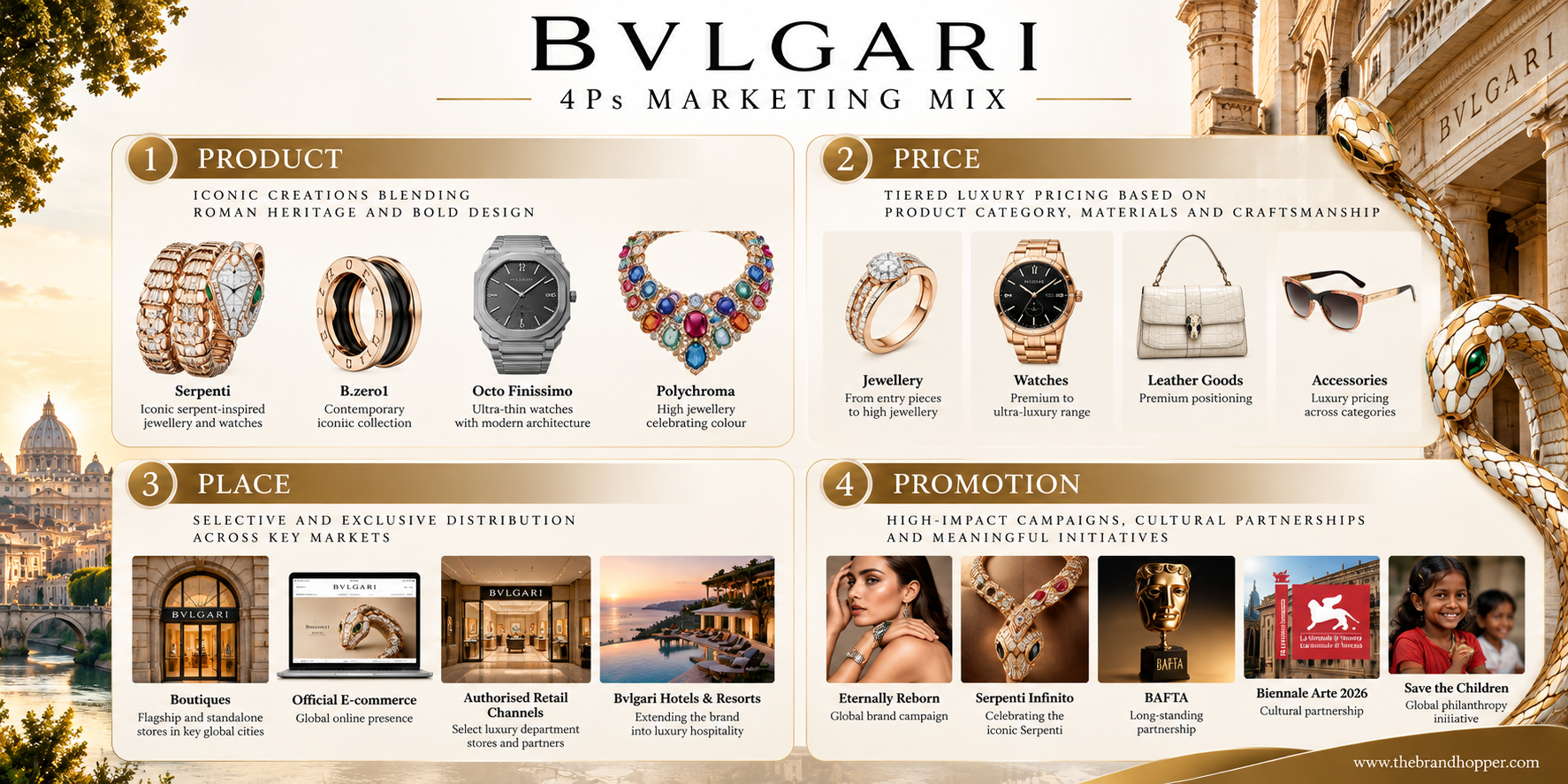
Marketing Mix of Bvlgari (4Ps)
Product
Bvlgari’s product strategy centres on developing its established design icons while introducing new interpretations. Collections such as Serpenti, B.zero1, Divas’ Dream and Tubogas provide recognisable foundations for product innovation across jewellery, watches and accessories.
Serpenti is particularly versatile because the motif can be reinterpreted across jewellery, watches, handbags and other accessories. B.zero1 offers a different design language based on architectural geometry, while Divas’ Dream draws on the decorative forms of ancient Rome.
Product development also extends into high watchmaking. The Octo Finissimo collection supports Bvlgari’s positioning in technical watch design, while Serpenti models connect watchmaking with the maison’s jewellery heritage.
Eternally Reborn communicates the continuing reinvention of Bvlgari’s aesthetic language; Serpenti Aeterna demonstrates how an established icon can be reimagined; and Polychroma showcases the brand’s high jewellery craftsmanship and use of colour.
| Category | Key products and collections | Distinctive feature |
|---|---|---|
| Fine jewellery | Serpenti, B.zero1, Divas’ Dream, Fiorever, Polychroma, Aeterna | Roman-inspired design, coloured gemstones and recognisable motifs |
| Watches | Octo Finissimo, Serpenti, Serpenti Seduttori, Lucea | Technical watchmaking combined with distinctive Italian design |
| Leather goods | Serpenti Forever, Serpenti Cabochon and other leather collections | Sculptural hardware, signature motifs and premium materials |
| Fragrances | Allegra, Le Gemme, Bvlgari Man and other fragrance lines | Fragrance storytelling and sensory associations |
| Eyewear | Serpenti, Divas’ Dream and other eyewear collections | Design codes adapted to wearable accessories |
| Hotels and resorts | Bvlgari Hotels & Resorts | Luxury hospitality built around the maison’s design language |
| Accessories | Selected scarves, small leather goods and other accessories | Brand motifs extended to additional product categories |
The product strategy allows Bvlgari to preserve recognisability while offering novelty. Rather than relying entirely on new categories, the maison can reinterpret established design codes through different materials, technical developments and collection narratives.
Price
Bvlgari uses a tiered luxury pricing structure across jewellery, watches, fragrances, leather goods and high jewellery. Fragrances and selected smaller accessories generally sit below fine jewellery and high-end watches, while exceptional high jewellery pieces are priced according to their gemstones, craftsmanship and individual specifications.
The price of a particular product varies by country, metal, gemstone, model and collection. Any published price range should therefore be treated as indicative and checked against the current official store for the relevant market; bespoke high jewellery cannot be accurately represented by a single standard price range.
| Category | Pricing approach | Positioning |
|---|---|---|
| Fragrances | Varies by size, concentration and product line | Entry point into the brand’s wider luxury universe |
| Selected jewellery | Varies by collection, materials and design | Accessible relative to the maison’s high jewellery |
| Core jewellery icons | Varies by metal, gemstones and model | Premium jewellery with strong brand recognition |
| High jewellery | Often individually priced or quoted through the maison | Rare gemstones, exceptional craftsmanship and exclusivity |
| Watches | Varies by movement, materials, complications and setting | Luxury watchmaking and jewellery-led design |
| Leather goods | Varies by size, material and collection | Luxury fashion accessories |
| Hotels | Varies by destination, room category, season and availability | Premium hospitality and immersive brand experience |
Bvlgari’s pricing strategy is therefore based on perceived value, design differentiation, craftsmanship and brand prestige. It is not appropriate to assume that every category follows identical pricing or discounting practices; these can differ across markets, products and retail channels.
Place
Bvlgari distributes its products through its boutiques, official e-commerce operations and selected authorised retail partners, depending on the product category and market. It also offers products and services through its hospitality properties.
Flagship locations in important luxury shopping districts help the brand communicate its identity through architecture, merchandising, private client services and the presentation of jewellery. The retail environment is part of the overall value proposition, particularly for high-value purchases that require personal consultation.
The brand’s digital store complements its physical network by allowing customers in supported markets to discover products, explore collections and access relevant services online. Availability and delivery options differ by country.
Bvlgari Hotels & Resorts provide an additional physical environment in which customers encounter the brand’s design language. However, hotel openings and planned projects should be reported separately so that the network’s current operating footprint is not overstated.
Relevant campaign and experience platforms: the Serpenti Infinito exhibition connected the brand’s icon with local art and cultural contexts, while Bvlgari’s hospitality properties extend its design principles into a longer, service-led experience.
Bvlgari’s distribution strategy is designed to preserve the quality of the customer experience across different points of contact. The key objective is consistency in presentation, service and product authenticity rather than simply maximising the number of outlets.
Promotion
Bvlgari’s promotional strategy combines brand campaigns, celebrity ambassadors, collection launches, cultural partnerships, social media, editorial content and experiential events. These channels work together to reinforce its positioning around Roman heritage, colourful gemstones, distinctive design and contemporary luxury.
Relevant campaigns and initiatives include:
- Eternally Reborn: A brand campaign centred on renewal, craftsmanship and the continuous reinvention of Bvlgari’s design language.
- Serpenti Infinito: A 2025 exhibition initiative connecting the Serpenti icon with art and cultural interpretations in Shanghai, Seoul and Mumbai.
- Polychroma: A 2025 high jewellery and high-end watch collection that showcased Bvlgari’s use of colour and craftsmanship.
- Year of the Snake: A 2025 cultural marketing opportunity linking the Serpenti motif with Chinese New Year.
- Inside the Dream: Behind-the-scenes storytelling about high jewellery creation and the expertise involved in selecting and transforming gemstones.
- BAFTA partnership: A cultural partnership connecting Bvlgari with cinema and the film awards ecosystem.
- Biennale Arte 2026: An arts partnership through which Bvlgari supported contemporary artistic expression in Venice.
- Bvlgari x Save the Children: A sustained charitable initiative connecting a dedicated jewellery collection with social impact.
- Bvlgari Hotels & Resorts: A continuing hospitality platform that extends the brand’s identity into luxury travel and service experiences.
| Promotional channel | Example | Strategic purpose |
|---|---|---|
| Brand campaigns | Eternally Reborn | Reinforce heritage, reinvention and craftsmanship |
| Celebrity partnerships | Campaigns featuring Zendaya, Anne Hathaway and other personalities | Connect the brand with contemporary culture and aspirational audiences |
| Collection launches | Polychroma and Serpenti Aeterna | Generate attention around product innovation and design |
| Cultural exhibitions | Serpenti Infinito | Connect signature icons with art and local cultural contexts |
| Film and entertainment | BAFTA partnership and red-carpet jewellery placements | Build associations with cinema, glamour and public figures |
| Art partnerships | Biennale Arte 2026 | Reinforce the brand’s connection with creativity and contemporary art |
| Digital content | Campaign films and Inside the Dream | Communicate product stories and craftsmanship across digital channels |
| Cause-related marketing | Bvlgari x Save the Children | Link the brand with a long-term social initiative |
| Hospitality experiences | Bvlgari Hotels & Resorts | Extend the brand experience beyond products and advertising |
| E-commerce | Official online store and editorial collection pages | Support product discovery and shopping in eligible markets |
Bvlgari’s promotional approach is most effective when each channel reinforces the same core identity. Campaign films create emotional context, exhibitions invite deeper engagement, ambassadors bring cultural visibility, and product pages provide information for customers who want to explore specific collections.
STP Analysis of Bvlgari
Segmentation
Bvlgari serves multiple segments within the global luxury market. Its segmentation can be understood through demographic, psychographic, geographic and behavioural dimensions.
Demographically, the brand serves affluent consumers across adult age groups, including established high jewellery buyers, collectors of luxury watches and younger customers entering the category through fragrances, accessories or selected jewellery. Its products appeal to both women and men, although the relevant collection and communication strategy may differ.
Psychographically, Bvlgari appeals to customers who value individuality, visual impact, craftsmanship and distinctive design. Its colourful gemstones and bold forms can attract consumers seeking a more expressive alternative to understated jewellery.
Geographically, the brand operates across established luxury markets in Europe and North America as well as important markets in Asia and the Middle East. Local preferences, retail access and cultural moments influence how the brand presents collections and campaigns in each market.
Behaviourally, customers may purchase Bvlgari for milestones, gifting, collecting, personal style or interest in fine jewellery and watchmaking. Some customers enter through more accessible product categories, while others purchase high jewellery or watches as part of an established luxury collection.
Relevant campaigns: Eternally Reborn supports the broad brand identity across customer groups, while Serpenti Infinito demonstrates how a global icon can be interpreted through local cultural references. The Year of the Snake campaign provides another example of adapting a signature motif to a culturally significant occasion.
These segmentation dimensions help explain why Bvlgari uses a combination of global brand storytelling and market-specific execution. The same core identity can be expressed differently according to the audience, product and occasion.
Targeting
Bvlgari’s primary target includes affluent consumers with the purchasing power and interest to buy luxury jewellery, watches and other premium products. Within this group, high jewellery clients and collectors are particularly relevant for exceptional creations and personalised service.
A second target includes aspirational luxury consumers who are beginning to engage with the brand through fragrances, accessories or selected jewellery. These customers may not immediately purchase high jewellery, but they can develop familiarity with Bvlgari’s design codes and brand story through other categories.
A third target includes cultural intermediaries such as fashion editors, stylists, artists, collectors and media personalities. Their exposure to collections, exhibitions and cultural partnerships can influence how Bvlgari is discussed and represented in public.
Inside the Dream offers craftsmanship-led content that can interest collectors and audiences curious about the creation of high jewellery. Eternally Reborn uses high-profile personalities to communicate the brand to broader luxury audiences, while Serpenti Infinito engages people through art and cultural interpretation rather than a conventional sales presentation.
This multi-layered targeting strategy allows Bvlgari to maintain its prestige while creating different points of entry for customers, advocates and cultural audiences.
Positioning
Bvlgari is positioned as a distinctive expression of Italian luxury, combining Roman heritage, architectural design, colourful gemstones and expressive craftsmanship. Its visual identity is often more chromatic and sculptural than the restrained design codes associated with some other luxury jewellery houses.
The positioning rests on three main pillars. The first is Roman heritage, which provides a specific historical and artistic foundation. The second is colour and gemstone expertise, which supports the brand’s recognisable use of vivid stones and complex combinations. The third is design audacity, expressed through icons such as Serpenti, B.zero1, Tubogas and Octo Finissimo.
Eternally Reborn expresses the relationship between heritage and reinvention; Polychroma highlights colour and high jewellery craftsmanship; and Serpenti Infinito shows how a signature icon can engage with contemporary art and different cultural traditions.
Bvlgari’s positioning is reinforced by the breadth of its portfolio, which includes jewellery, watches, fragrances, leather goods and luxury hospitality. This allows the maison to build a wider lifestyle identity while maintaining a recognisable design language across categories.
The brand’s connection with LVMH also gives it access to the wider group’s resources and expertise. However, the financial results of the entire LVMH Watches & Jewelry division should not be presented as Bvlgari’s own revenue or used to estimate its individual market share without additional evidence.
Frequently Asked Questions
Q1. What is Bvlgari’s overall marketing strategy?
A: Bvlgari combines Roman heritage storytelling, distinctive product design, celebrity partnerships, cultural events, digital content and luxury hospitality. Campaigns such as Eternally Reborn, the Serpenti Infinito exhibition and the Polychroma launch demonstrate how the brand connects product innovation with its wider cultural identity.
Q2. Who are Bvlgari’s current brand ambassadors?
A: Bvlgari’s ambassador and campaign ecosystem has included Zendaya, Anne Hathaway, Priyanka Chopra Jonas, Liu Yifei and Lisa of BLACKPINK. Dua Lipa was announced as a Global Brand Ambassador in February 2026, and Florence Pugh has also joined the brand’s ambassador ecosystem. Roles can vary by market and campaign, so the latest official announcements should be consulted for a definitive current roster.
Q3. What is the Polychroma collection?
A: Polychroma is a Bvlgari high jewellery and high-end watch collection unveiled in 2025. It celebrates colour, rare gemstones and craftsmanship, and LVMH reported record sales of multi-million-dollar pieces from the collection.
Q4. What is Serpenti Aeterna?
A: Serpenti Aeterna is a Bvlgari watch design presented in 2025 that reinterprets the maison’s iconic Serpenti motif through a more streamlined, sculptural form. It illustrates how Bvlgari refreshes a long-established design icon through contemporary product development.
Q5. How does Bvlgari use its hotels as a marketing tool?
A: Bvlgari Hotels & Resorts extends the maison’s design language into architecture, service, dining and hospitality. The hotels create longer brand encounters than a conventional advertisement or boutique visit, while also operating as a distinct hospitality business.
Q6. Which luxury segment does Bvlgari target?
A: Bvlgari targets affluent luxury customers, including high jewellery clients, watch collectors and consumers interested in distinctive design. It also serves aspirational customers through product categories such as fragrances, accessories and selected jewellery.
Q7. What is Bvlgari’s partnership with Save the Children?
A: Bvlgari began its partnership with Save the Children in 2009. The collaboration includes a dedicated jewellery collection that raises funds for programmes supporting children and young people. Bvlgari reports that the partnership has raised more than US$120 million.
Q8. How does Bvlgari differentiate itself from Cartier and Tiffany & Co.?
A: Bvlgari differentiates itself through its Roman heritage, expressive use of colour, architectural forms and distinctive motifs such as Serpenti and B.zero1. Cartier and Tiffany & Co. have their own established identities and design codes, so the comparison is best understood as a difference in brand emphasis rather than an absolute ranking of quality or heritage.
Conclusion
Bvlgari’s marketing strategy demonstrates how a luxury maison can preserve its heritage while continually refreshing its relevance. Its Roman identity provides a recognisable foundation, while collections such as Serpenti, B.zero1, Octo Finissimo and Polychroma give that identity a contemporary expression.
Campaigns such as Eternally Reborn, the Serpenti Infinito exhibition and the Polychroma launch illustrate how product design, cultural storytelling and experiential marketing can reinforce one another. Celebrity partnerships and film-industry relationships add cultural visibility, while digital content helps communicate craftsmanship to audiences across markets.
Bvlgari Hotels & Resorts extends the brand into hospitality, creating a broader lifestyle experience, while the Save the Children partnership demonstrates how a sustained social initiative can become part of the maison’s identity. Each activity serves a different purpose, but the strongest examples connect back to the brand’s design principles and heritage.
For marketers and brand strategists, Bvlgari offers a useful lesson: heritage becomes more powerful when it is continually reinterpreted through products, campaigns and experiences. A coherent luxury brand is not built through advertising alone; it emerges when the product, storytelling, customer experience and cultural presence all express the same distinctive identity.
Also Read: LVMH Marketing Strategy: The Magic Behind the Luxury Empire
To read more content like this, subscribe to our newsletter