Last Updated on October 27, 2026 by Team TBH
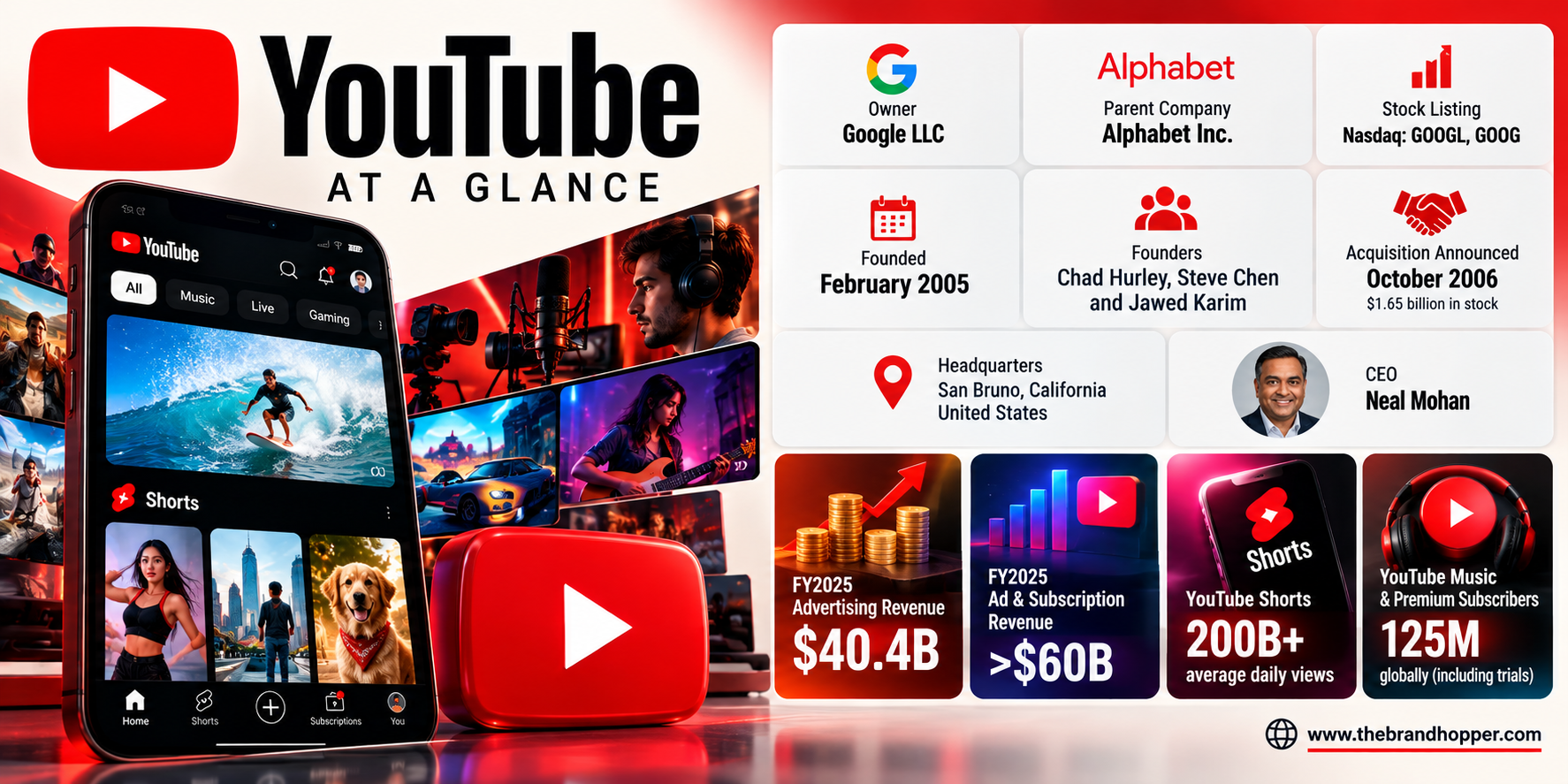
YouTube is one of the world’s largest video platforms, hosting everything from music videos and cooking tutorials to podcasts, livestreams, sports and creator-led entertainment. YouTube Shorts averages more than 200 billion daily views, and Nielsen ranked YouTube as the leading streaming service in the United States by watch time as of January 2026.
So, who owns YouTube, and how does it make money?
The short answer is that YouTube is owned by Google LLC, which is a wholly owned subsidiary of Alphabet Inc. Alphabet is a publicly traded company listed on Nasdaq, while its co-founders Larry Page and Sergey Brin retain majority voting control through a special class of shares.
Google announced its acquisition of YouTube in October 2006 for $1.65 billion in stock. Today, YouTube generates substantial revenue from advertising and subscriptions, while also sharing revenue with eligible creators and media partners.
This guide explains YouTube’s ownership structure, leadership, revenue model, creator monetization system and business performance using company filings and official announcements.
Who Owns YouTube? The Ownership Chain
YouTube is not a separately listed public company, so investors cannot buy YouTube shares directly. It operates within Google, which is a wholly owned subsidiary of Alphabet Inc.
Alphabet reports YouTube advertising revenue separately in its financial results. YouTube subscription revenue is included within the broader “Google subscriptions, platforms, and devices” revenue category, rather than being reported as a standalone YouTube subscription figure.
Step 1: Google Acquires YouTube
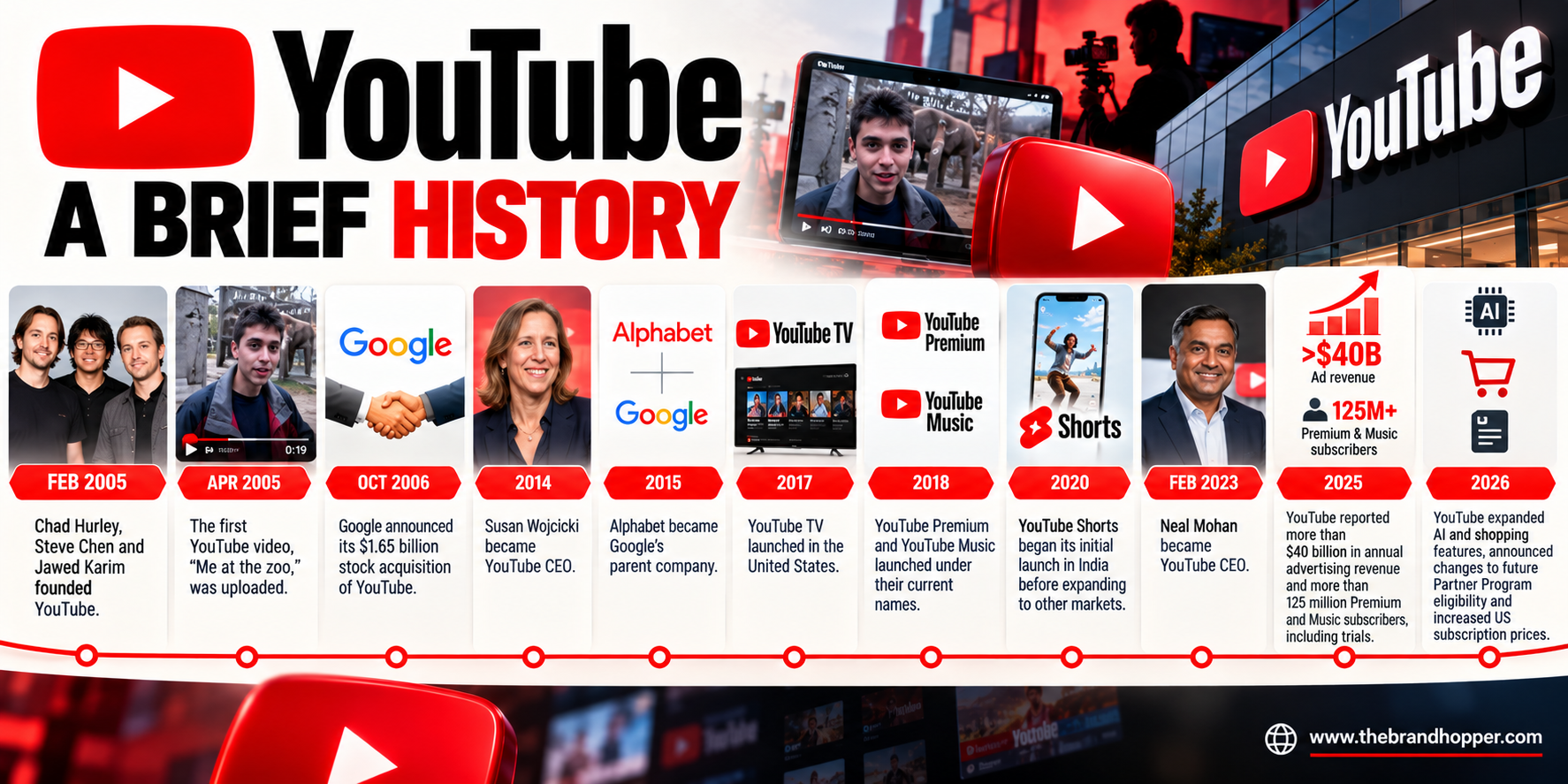
YouTube was founded in 2005 by Chad Hurley, Steve Chen and Jawed Karim, three former PayPal employees. Its first video, “Me at the zoo,” featuring Karim at the San Diego Zoo, was uploaded in April 2005.
In October 2006, Google announced that it would acquire YouTube for $1.65 billion in stock. The transaction gave Google a major position in online video at a time when digital video consumption and online advertising were expanding rapidly.
Step 2: Alphabet Becomes Google’s Parent Company
In 2015, Google reorganised under a new holding company called Alphabet Inc. Alphabet became the successor issuer to Google Inc. on October 2, 2015.
YouTube remained part of Google’s business under the new structure. Google LLC is now a wholly owned subsidiary of Alphabet, placing YouTube within Alphabet’s broader portfolio of technology and internet businesses.
Step 3: Who Owns Alphabet?
Alphabet is publicly owned, meaning its shares are held by institutional investors, individual investors, company insiders and other shareholders. However, its three-class share structure gives different voting rights to different types of shares.
Class A shares, traded as GOOGL, carry one vote per share. Class B shares are not publicly traded and generally carry 10 votes per share, while Class C shares, traded as GOOG, carry no voting rights.
Alphabet’s 2026 proxy statement reported that Larry Page held approximately 27.4% of total voting power and Sergey Brin held approximately 25.3%. Together, they controlled about 52.7% of the company’s voting power, giving them substantial influence over Alphabet’s governance.
| Alphabet shareholder or group | Reported share of voting power |
|---|---|
| Larry Page | Approximately 27.4% |
| Sergey Brin | Approximately 25.3% |
| All directors and executive officers as a group | Approximately 54.3% |
| BlackRock | Approximately 2.5%, as reported in the proxy statement |
Figures are from Alphabet’s 2026 proxy statement and reflect the dates and reporting definitions used in that document. Voting power is not the same as economic ownership.
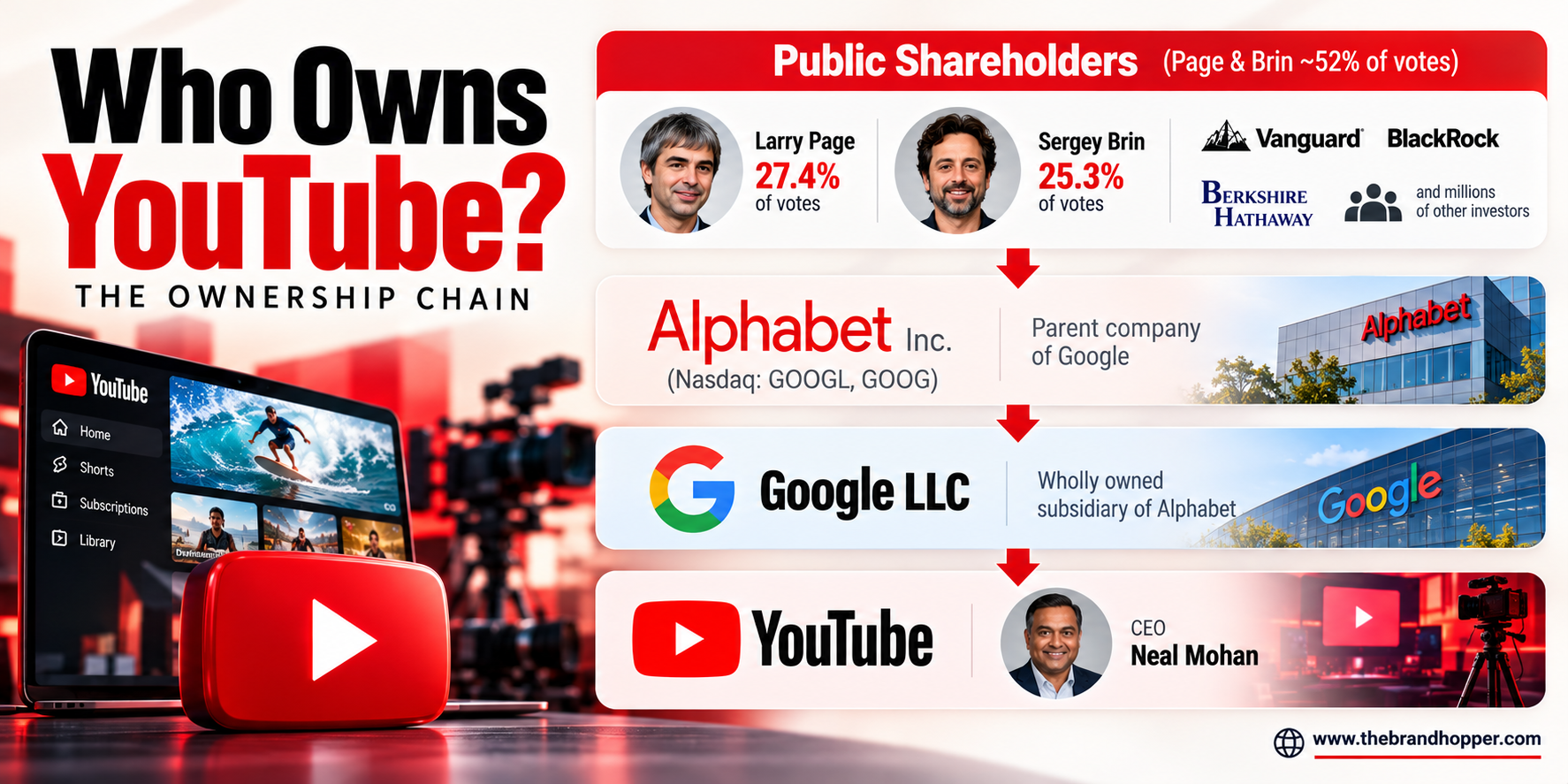
In short, public investors own Alphabet shares, but Page and Brin retain majority voting control through the company’s dual-class share structure. This gives them significant influence over the parent company that owns YouTube.
Who Runs YouTube?
Neal Mohan became YouTube’s CEO in February 2023, succeeding Susan Wojcicki, who led the platform from 2014 to 2023. Mohan joined Google through its acquisition of DoubleClick in 2008 and previously served as YouTube’s Chief Product Officer.
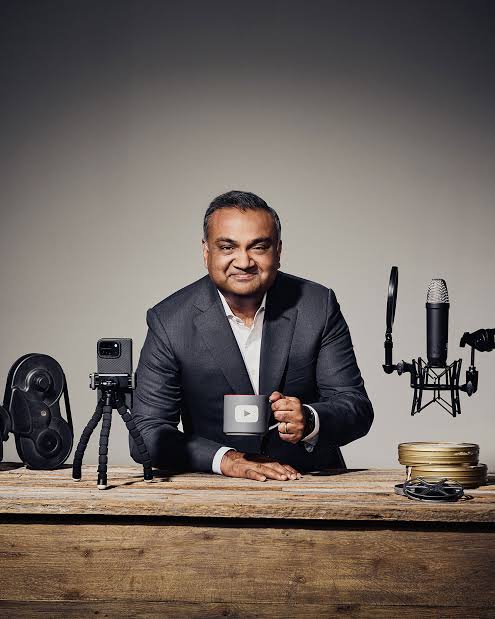
Mohan’s role covers the platform’s product strategy, creator ecosystem, advertising business, subscriptions and safety policies. He operates within Google’s wider corporate structure, led by Alphabet and Google CEO Sundar Pichai.
In his 2026 annual letter, Mohan highlighted four broad priorities: establishing creators as major entertainment figures, improving YouTube for children and teenagers, strengthening the creator economy, and using AI to support creativity while protecting the platform.
YouTube’s Revenue Model: How Does YouTube Make Money?
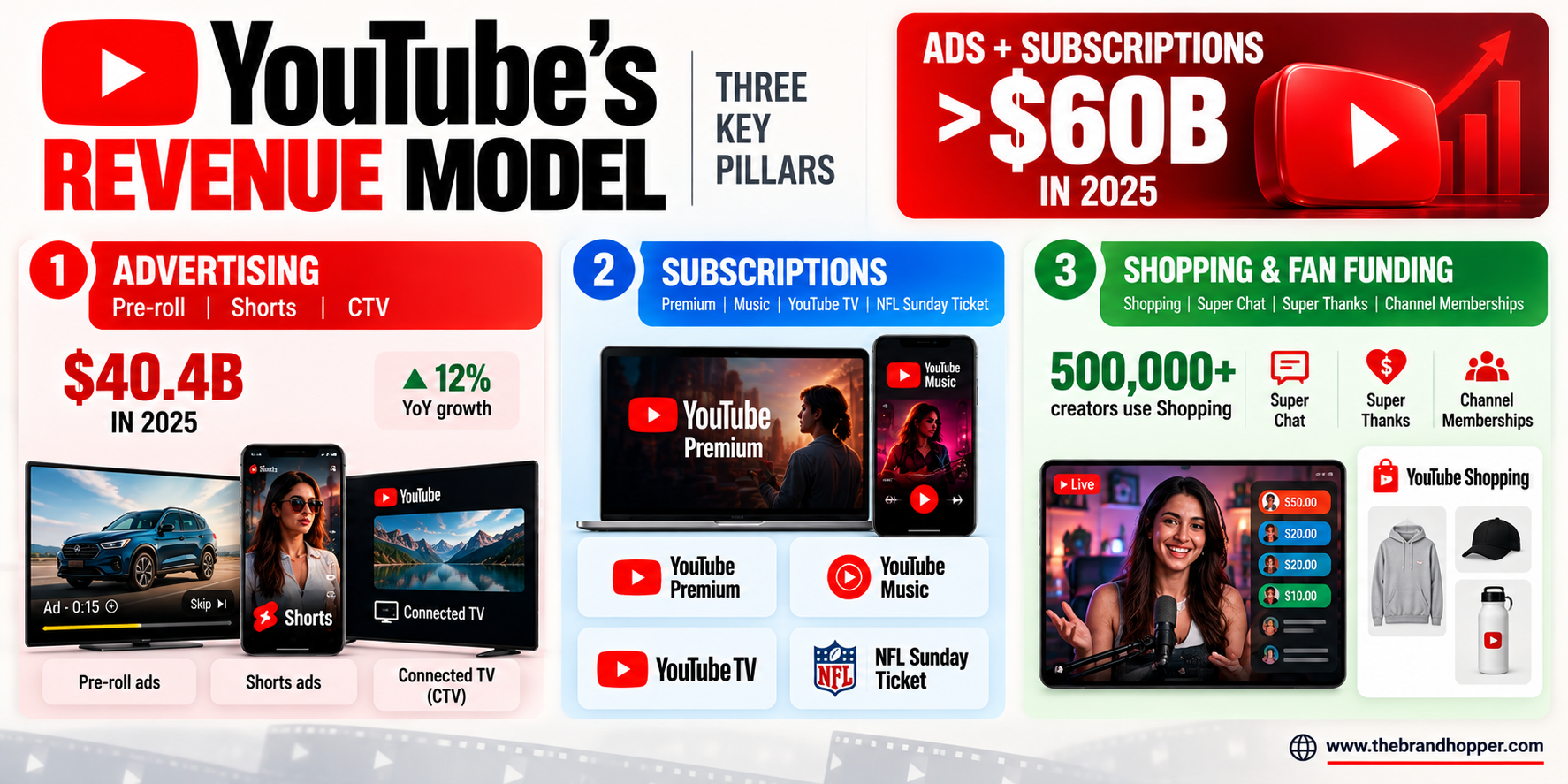
YouTube’s business model is built mainly on two revenue streams: advertising and subscriptions. Additional sources include shopping, paid channel memberships, fan-funding features and other commerce-related services.
Alphabet reports YouTube advertising revenue as a separate line item. Subscription revenue, however, is grouped with other Google subscriptions, platforms and devices, which means YouTube’s exact subscription revenue cannot be isolated from Alphabet’s published financial statements.
1. Advertising Revenue
Advertising is YouTube’s largest directly reported revenue stream. Advertisers pay to reach viewers through formats such as in-stream video ads, Shorts feed ads, home-feed placements and advertising on connected televisions.
YouTube offers advertisers access to a broad range of audiences, from viewers watching short clips on mobile devices to households streaming long-form content on television screens.
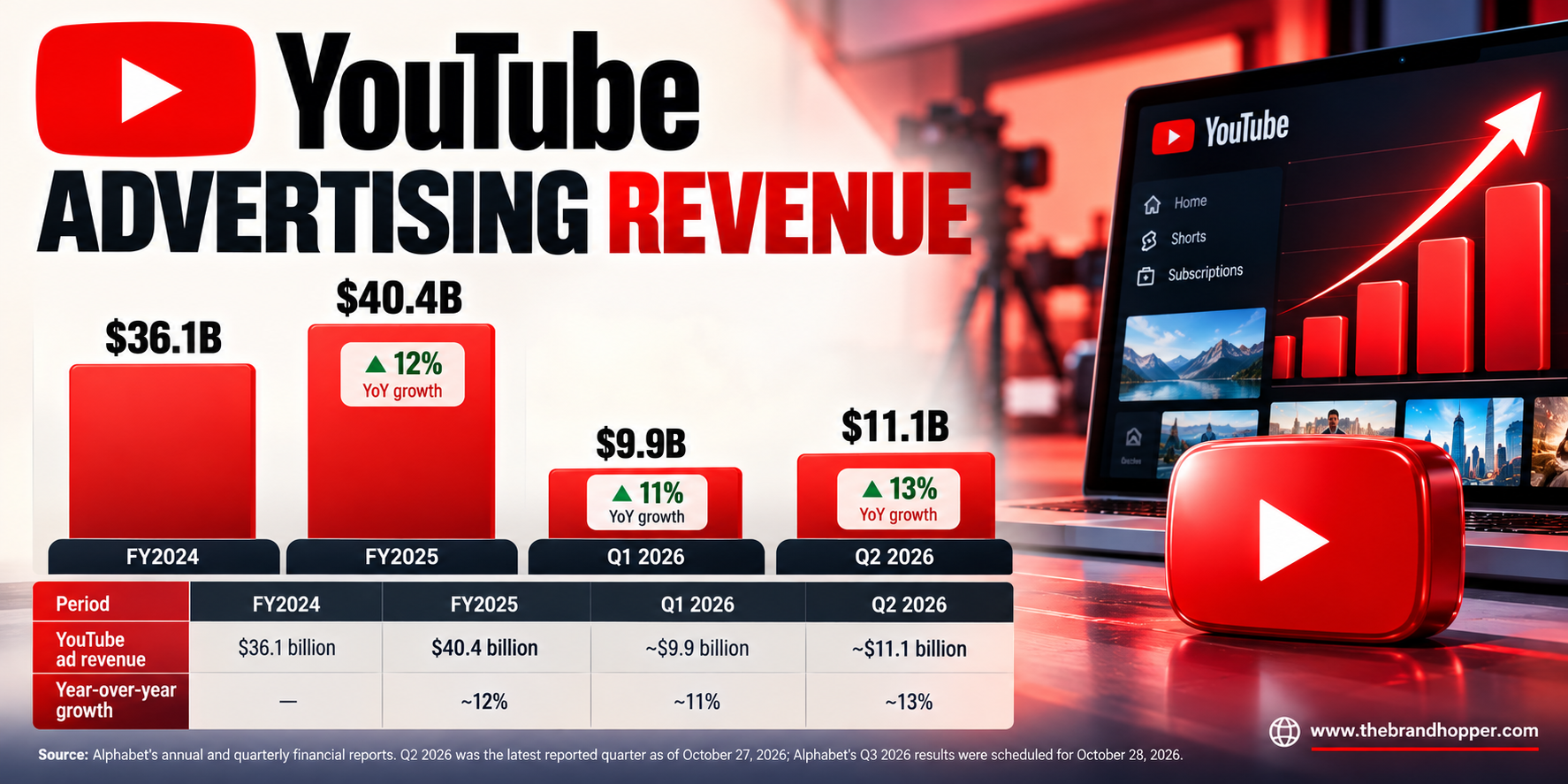
YouTube’s 2025 advertising revenue was approximately 10% of Alphabet’s total revenue of $402.8 billion. That makes YouTube a significant business in its own right, even though it is reported within Alphabet’s wider Google Services segment.
Major live events can also increase viewing and advertising opportunities. During the FIFA World Cup 2026, YouTube reported that more than 1.7 billion unique viewers globally watched World Cup-related videos on the platform, including more than 550 million viewers who watched on televisions.
2. Subscription Revenue
Subscriptions provide recurring revenue and help YouTube diversify beyond advertising. Alphabet’s CEO said YouTube’s advertising and subscription businesses together generated more than $60 billion in 2025, although the company does not publish a separate audited subscription total for YouTube.
YouTube’s principal subscription offerings include:
YouTube Premium: Offers ad-free viewing for most YouTube content, background play and downloads, plus YouTube Music Premium. In April 2026, the US individual plan price rose from $13.99 to $15.99 per month.
YouTube Music Premium: Provides an ad-free music-listening experience, alongside background playback and offline listening. YouTube announced 125 million YouTube Music and Premium subscribers globally, including trials, in March 2025.
YouTube TV: A US live-TV streaming service that provides access to broadcast and cable channels. YouTube has announced plans for more than 10 specialised packages spanning sports, entertainment and news, along with a customisable multiview feature.
NFL Sunday Ticket: Offers access to out-of-market NFL games in the United States through YouTube and YouTube TV, subject to the applicable package and subscription terms.
Channel memberships and Primetime Channels: Memberships allow viewers to pay creators monthly for additional benefits, while Primetime Channels lets eligible users subscribe to selected streaming services through YouTube.
Availability, prices and included features vary by country and subscription tier.
3. Shopping and Fan Funding
YouTube also helps creators earn money through product recommendations, affiliate commissions, channel memberships and direct fan payments. Its shopping tools allow eligible creators to tag products in videos, livestreams and Shorts.
YouTube reported more than 500,000 creators enrolled in its Shopping program in 2025. In 2026, it expanded access to the Shopping affiliate program to eligible YouTube Partner Program creators with at least 500 subscribers, subject to additional requirements.
Fan-funding tools include Super Chat, Super Stickers, Super Thanks and other gifting features. These features let viewers pay to highlight messages, thank creators or support participating channels, subject to eligibility and regional availability.
Why YouTube Matters to Alphabet
YouTube is one of Alphabet’s major growth businesses. Its advertising operation generates tens of billions of dollars annually, while subscriptions create an additional source of recurring revenue.
The platform also strengthens Google’s broader ecosystem. YouTube content can appear in Google Search results, and the service is widely available through Android devices, web browsers, streaming devices and smart TVs.
For advertisers, YouTube combines large-scale reach with video formats that work across mobile devices and living-room screens. Nielsen ranked YouTube first in US streaming watch time as of January 2026, although rankings and market shares depend on the measurement period and methodology.
How YouTube Shares Revenue With Creators
YouTube relies on creators, artists and media companies to produce much of the content that attracts viewers. Through the YouTube Partner Program, eligible creators can earn revenue from advertising, subscriptions and other monetisation features.
The revenue share depends on the format and the applicable monetisation terms.
| Revenue source | Creator share or payment model |
|---|---|
| Ads on eligible long-form videos | 55% of net advertising revenue from the watch page |
| Ads in the Shorts feed | 45% of the revenue allocated to the creator from the Shorts Creator Pool |
| YouTube Premium viewing | Creators receive a share of subscription revenue based on eligible viewing and the applicable terms |
Under the standard eligibility rules in effect on October 27, 2026, channels generally need 1,000 subscribers and either 4,000 valid public watch hours in the previous 12 months or 10 million valid public Shorts views in the previous 90 days to qualify for advertising revenue sharing. Channels must also meet YouTube’s monetisation policies and pass its review process.
YouTube announced changes to the eligibility requirements for new creators in August 2026. The new thresholds—8,000 qualified watch hours in the previous 365 days or 20 million qualified Shorts views in the previous 90 days—are scheduled to take effect on February 1, 2027, for new applicants under the announced policy. The change does not affect creators already in the Partner Program.
Shorts monetisation works differently from traditional long-form video advertising. Shorts feed revenue is pooled, music licensing costs are accounted for, and the remaining creator pool is allocated according to each eligible creator’s share of engaged views. Creators receive 45% of their allocated amount under the current Shorts revenue-sharing model.
YouTube said it had paid more than $100 billion to creators, artists and media companies globally over the four years preceding its September 2025 announcement. The platform also reported that its US creative ecosystem contributed $55 billion to US GDP in 2024 and supported the equivalent of 490,000 full-time jobs.
YouTube and Artificial Intelligence
AI has become an increasingly important part of YouTube’s product and creator strategy. The platform is introducing AI-assisted tools for content creation, discovery, translation and viewer interaction, while also developing safeguards for synthetic and altered content.
In his 2026 letter, Neal Mohan reported that more than one million channels used YouTube’s AI creation tools daily on average in December 2025. He also cited use of the platform’s AI question-answering tool and the growth of automatically dubbed content.
YouTube requires creators to disclose certain realistic altered or synthetic content that could be mistaken for real people, places or events. Its AI policies and product features continue to evolve, so creators should check the latest rules in YouTube Studio and the YouTube Help Center before publishing AI-generated material.
Can You Invest in YouTube?
You cannot invest in YouTube directly because it is not separately listed on a stock exchange. Investors can obtain indirect exposure by buying shares of Alphabet Inc., its parent company.
Alphabet has two publicly traded share classes: GOOGL, which carries voting rights, and GOOG, which carries no voting rights. Both provide economic exposure to Alphabet, including Google Search, YouTube, Google Cloud, Android and its other businesses.
Investors in India may be able to invest in US-listed shares through eligible international investment routes and intermediaries, subject to applicable Indian foreign-exchange, tax and investment rules. Alphabet shares are not a pure-play investment in YouTube because Alphabet operates several other businesses.
The Bottom Line
YouTube is owned by Google LLC, which is a wholly owned subsidiary of Alphabet Inc. Although Alphabet is publicly traded, co-founders Larry Page and Sergey Brin retain majority voting control through super-voting shares, while Neal Mohan leads YouTube’s day-to-day business.
YouTube’s business model relies primarily on advertising and subscriptions, with additional income opportunities through shopping and fan funding. Its advertising revenue reached approximately $40.4 billion in 2025, while Alphabet’s CEO said YouTube’s combined advertising and subscription businesses generated more than $60 billion that year.
Revenue sharing remains central to YouTube’s creator ecosystem. By giving creators ways to earn from advertising, subscriptions, shopping and fan support, YouTube connects its audience scale with a broad range of content and business models.
Frequently Asked Questions
Q: Who owns YouTube?
A: YouTube is owned by Google LLC, a wholly owned subsidiary of Alphabet Inc. Alphabet is publicly traded, but co-founders Larry Page and Sergey Brin retain majority voting control through super-voting shares.
Q: When did Google buy YouTube, and for how much?
A: Google announced its acquisition of YouTube in October 2006 for $1.65 billion in stock.
Q: Who is the CEO of YouTube?
A: Neal Mohan has been YouTube’s CEO since February 2023. Sundar Pichai is the CEO of Google and Alphabet.
Q: How much revenue does YouTube make?
A: YouTube generated approximately $40.4 billion in advertising revenue in FY2025. Alphabet’s CEO said YouTube’s advertising and subscription businesses combined generated more than $60 billion in 2025, although Alphabet does not report a separate audited total for YouTube subscriptions.
Q: How does YouTube make money?
A: YouTube earns most of its directly reported revenue from advertising. It also earns revenue through subscriptions such as YouTube Premium, YouTube Music Premium and YouTube TV, as well as shopping and fan-funding features.
Q: How much do YouTubers earn from advertising?
A: Under the standard current terms, eligible creators receive 55% of net advertising revenue from long-form videos and 45% of the revenue allocated to them from the Shorts Creator Pool. Actual earnings vary by audience, location, content, advertiser demand and other factors.
Q: Can I buy YouTube stock?
A: No. YouTube is not listed separately. You can invest indirectly through Alphabet shares traded as GOOGL or GOOG on Nasdaq.
Q: Who founded YouTube?
A: YouTube was founded in February 2005 by Chad Hurley, Steve Chen and Jawed Karim.
Also Read: Who Owns Google (Alphabet)? Ownership Explained
To read more content like this, subscribe to our newsletter