Last Updated on August 21, 2026 by Team TBH
In 2006, Cadbury recalled more than a million chocolate bars after a salmonella contamination scare — the kind of crisis most brands spend years quietly recovering from.
A year later, the company’s answer wasn’t a reassurance campaign about food safety.
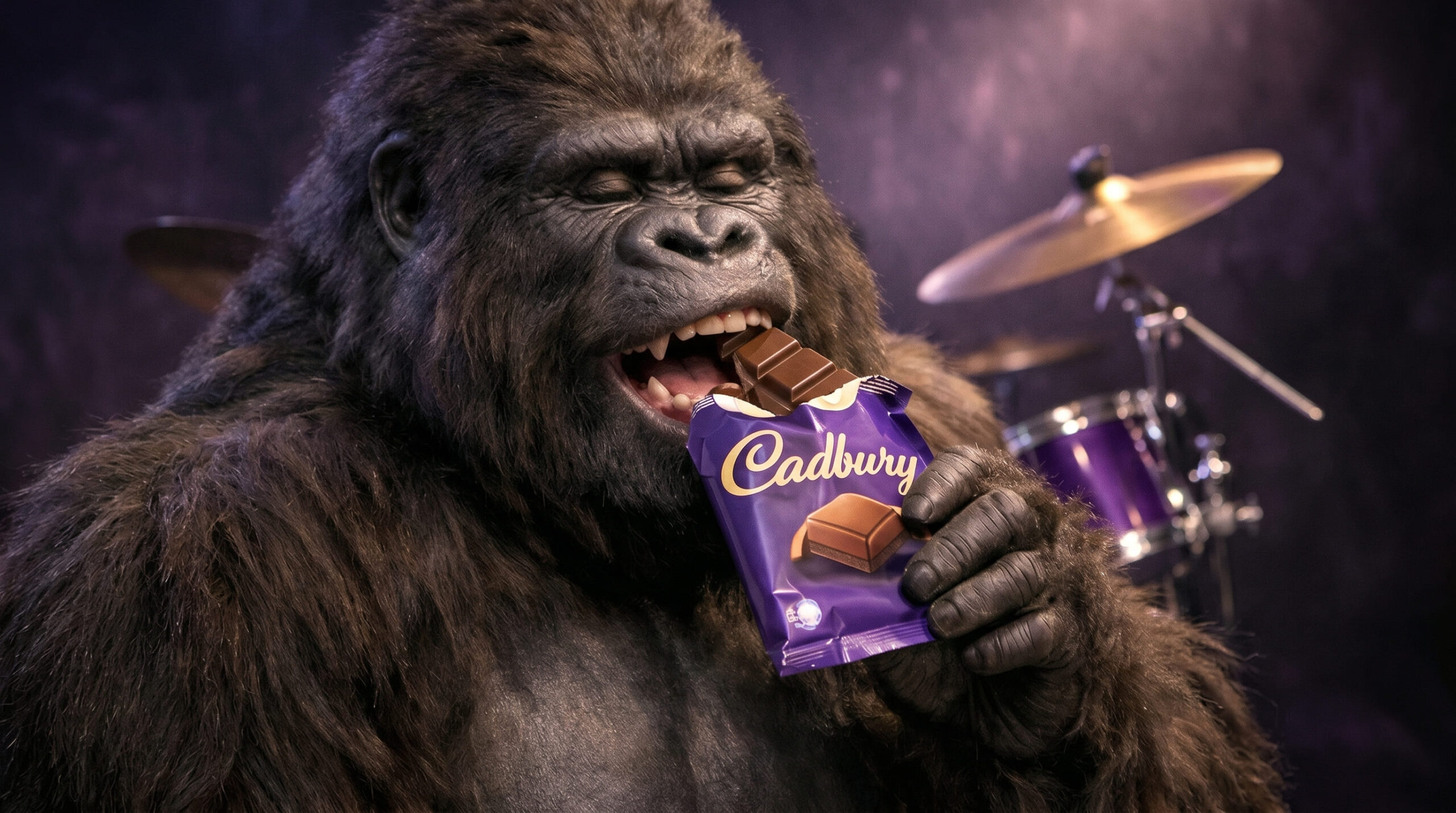
It was 90 seconds of silence, a man in a gorilla suit, and a Phil Collins drum solo, with no chocolate shown until the final frame.
“Gorilla” went on to win the Cannes Lions Film Grand Prix, lift Cadbury Dairy Milk sales by roughly 10%, and become one of the most studied pieces of advertising of the 2000s.
This case study covers the full story: the internal fight to get the ad made, what happened when Cadbury tried to repeat the formula, and where the brand’s marketing stands in 2026, nearly two decades and one 200th-anniversary later.
| Quick Answer: What Was the Cadbury Gorilla Campaign?
• Launched in the UK on August 31, 2007 by agency Fallon London, created by Juan Cabral for Cadbury Dairy Milk. • Lifted Cadbury Dairy Milk sales by roughly 9-10% and won both the Cannes Film Grand Prix and the IPA Effectiveness Grand Prix. • Direct sequels (Trucks, Eyebrows) followed in 2008-2009 but didn’t repeat the impact, prompting a strategic pivot. • Cadbury’s marketing today runs on the ‘Glass and a Half Full’ generosity platform that grew out of Gorilla’s aftermath, still active in 2026. |
The 2006 Crisis That Set the Stage
Cadbury’s 2006 salmonella recall wasn’t just a product-safety problem — it was a trust problem.
Phil Rumbol, Cadbury’s newly appointed UK marketing director at the time, was brought in with a specific brief: rebuild an emotional connection with a “lost generation” of consumers who had grown wary of the brand.
Rumbol later described his instruction to agency Fallon London plainly: he wanted an ad “as enjoyable to consume as a bar of Cadbury’s chocolate.”
That brief — vague on execution, specific on feeling — is what opened the door to an idea that had nothing to do with chocolate at all.
Where the Gorilla Idea Actually Came From
The idea itself didn’t start as an ad pitch. Fallon creative Juan Cabral has said it began as an off-hand argument among colleagues about who performed the greatest drum solo of all time.
When Cabral argued for Phil Collins’s “In the Air Tonight,” he described Collins as “animalistic… like a gorilla drumming,” and the image stuck with him overnight.
A week later, when Cadbury came to Fallon for a pitch, Cabral brought the gorilla concept with him.
Cabral has called the internal pitch meeting “the best meeting of all time” — but getting it approved inside Cadbury was a different story.
Rumbol has said it was “the hardest thing” he ever had to sell internally, given the ask: a 90-second ad, three times the length of a normal spot, with no dialogue, no product shot until the final second, and no explicit sales message.
Making the Ad: Stan Winston Studio and a Blind Drummer
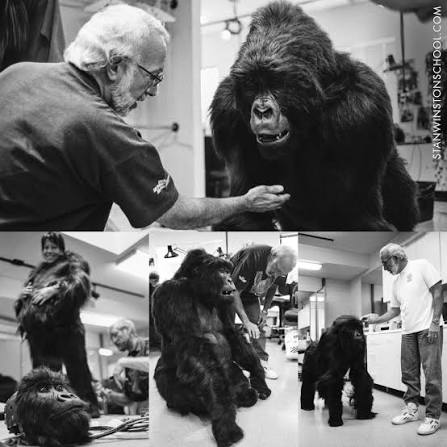
Fallon commissioned Stan Winston Studio — the Hollywood effects house behind creature work in films like Jurassic Park — to provide a realistic gorilla suit; the specific suit used had originally been built for the 1995 film Congo.
Veteran suit performer Garon Michael wore it, playing the drum kit essentially blind, watching a hidden monitor fed by a camera inside the suit’s head while an off-camera team operated remote controls for the gorilla’s eyes and eyebrows to sell the emotional close-ups.
Cabral has described the choreography of that remote-control performance in granular detail — calling out “eyebrow, left eyebrow, ear” in real time to a technician during filming, essentially directing a puppet show layered on top of a live drum performance.
Cabral has since admitted that even he wasn’t initially sold on the finished edit, and that Rumbol’s first reaction to a rough cut was blunt: “a three out of ten.”
The ad was shelved for months — Cabral assumed it was dead — until consumer research came back with what Rumbol called an “overwhelming” positive response, at which point Cadbury committed to air it.
Rumbol has since reflected that the internal pressure of championing an idea nobody else initially understood was, in his words, almost as hard as the production itself: he had spent so long convincing colleagues it would be great that he began doubting whether it could possibly live up to the expectations he’d set.
Launch: August 31, 2007
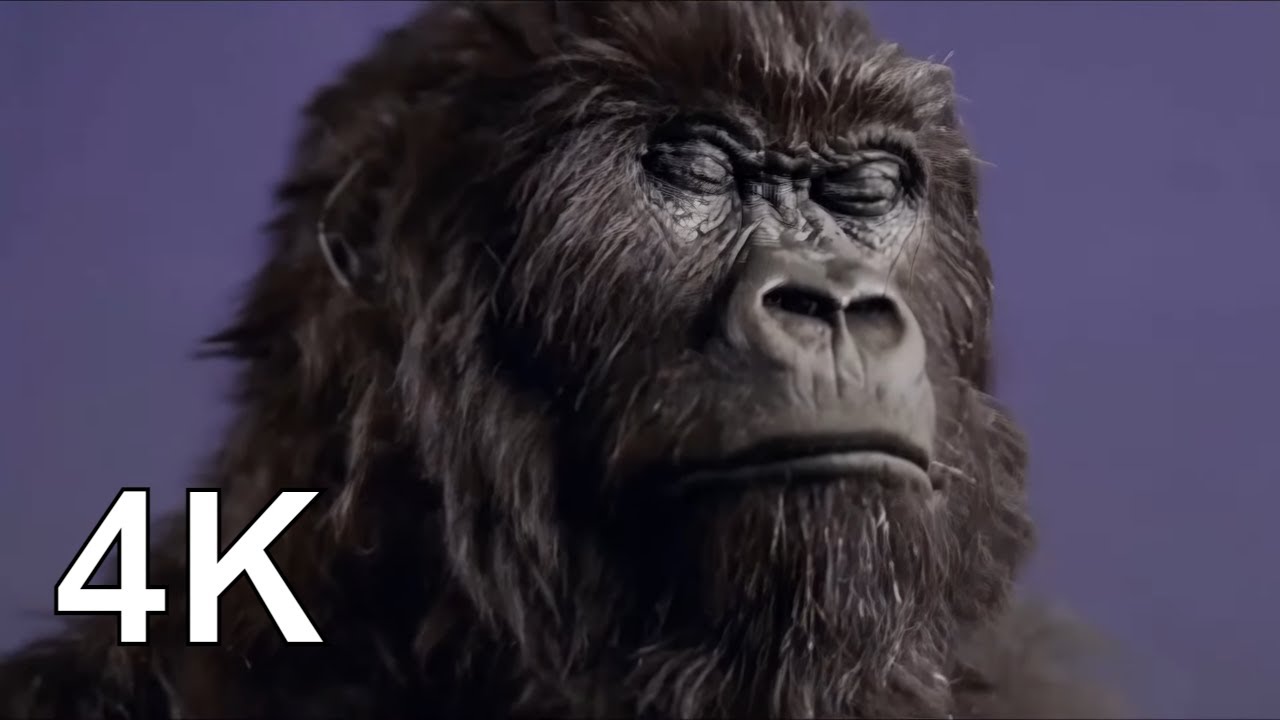
“Gorilla” made its television debut in the UK on August 31, 2007, airing during the live final of Big Brother to maximize a captive prime-time audience, before rolling out across cinemas and, critically, online.
Cadbury uploaded it to the still-young YouTube platform, where it drew roughly 250,000 views within its first weekend and passed 500,000 within its first week — an early example of a TV-first ad campaign deliberately engineered for online sharing before “going viral” was a standard marketing goal.
The Results: Sales, Cannes, and the IPA Effectiveness Grand Prix
The commercial impact was immediate and well documented.
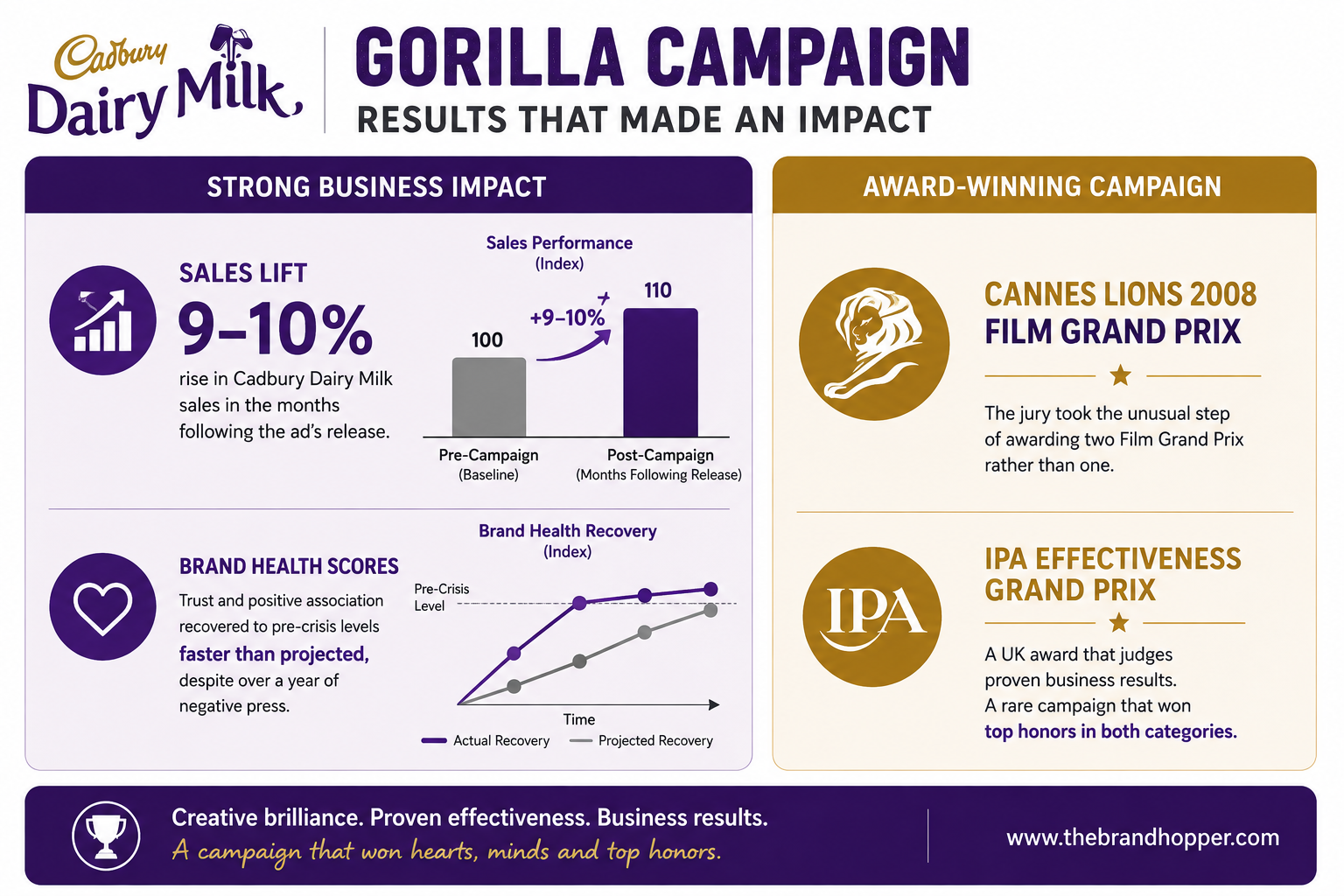
Cadbury Dairy Milk sales rose by approximately 9-10% in the months following the ad’s release, and brand health scores — tracking metrics like trust and positive association — recovered to pre-salmonella-crisis levels faster than Cadbury had projected, a notable result given the contamination story had been in the press for over a year by that point.
“Gorilla” won the Film Grand Prix at Cannes Lions in 2008 (the jury that year took the unusual step of awarding two Film Grand Prix rather than one) and later won the IPA Effectiveness Grand Prix, a UK award specifically judging proven business results rather than creative merit alone — a rare campaign that won top honors in both categories.
Phil Collins benefited too: “In the Air Tonight” returned to the singles charts and hit number one in several markets where the ad aired, reportedly prompting Collins to send Rumbol a personal thank-you letter.
A decade later, when Marketing Week and YouGov surveyed the British public on their all-time favorite ads, Gorilla placed narrowly behind only Comparethemarket.com’s meerkats — remarkable considering the meerkat characters had an ongoing, multi-year campaign supporting them, while Gorilla was a single 90-second spot with no dedicated mascot campaign behind it at all.
The Sequels That Couldn’t Repeat the Magic
Fallon and Cadbury tried to repeat the formula twice.
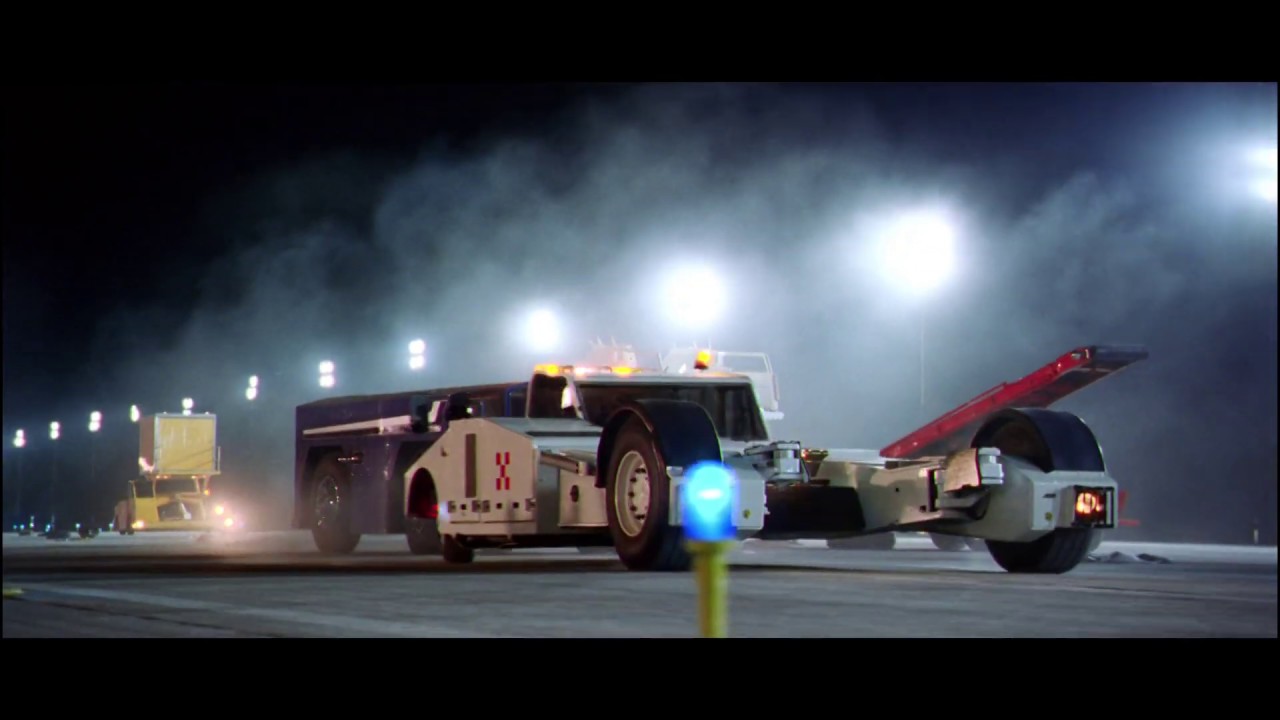
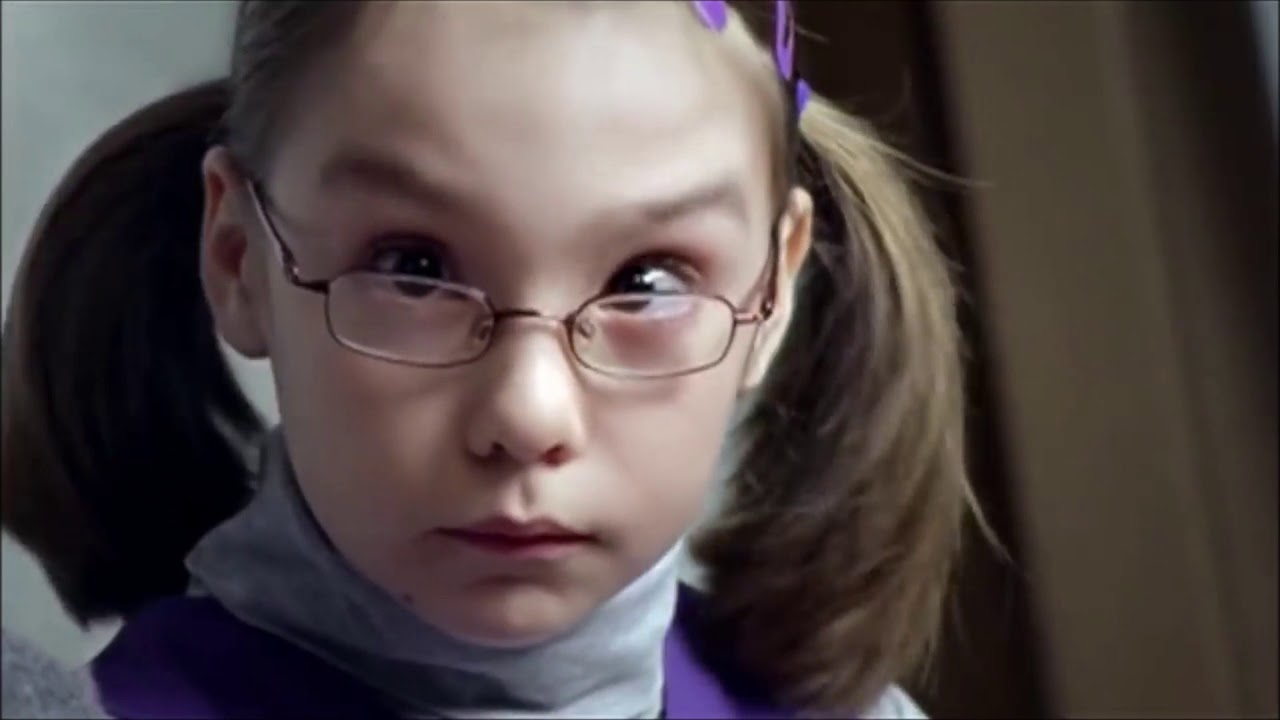
“Trucks” (2008) recreated the same drumming-along structure using airport vehicles set to Queen’s “Don’t Stop Me Now.” “Eyebrows” (2009) featured two children mouthing along to Cyndi Lauper’s “Girls Just Want to Have Fun” using only their eyebrows and facial expressions.
Both were well-produced and reasonably well received, but neither matched Gorilla’s cultural or commercial impact — a well-documented pattern in advertising where a genuinely novel breakthrough idea is, almost by definition, difficult to repeat using the same structural formula a second time.
Part of the problem was structural: audiences had already been trained by Gorilla to expect a twist, so the surprise that made the original land — a full minute of unexplained, deadpan spectacle before any brand reveal — could no longer function as a surprise the second or third time the same studio used it.
Cadbury also experimented with remixing the original film itself in later years, re-cutting the gorilla’s drumming to different songs for promotional moments, but these remixes traded on nostalgia for the original rather than attempting to generate a new breakthrough of their own.
Cadbury and Fallon eventually stopped chasing a second Gorilla and pivoted strategy entirely.
The Real Strategic Shift: From Viral Hit to Content Platform
Rather than keep hunting for another viral fluke, Cadbury restructured how it made content.
It set up an in-house unit called Glass and a Half Full Productions to develop a steadier stream of shorter, cheaper, emotionally warm content rather than betting everything on single blockbuster ads.
By the late 2010s this evolved into Cadbury’s long-running “generosity” brand platform, built around the line “There’s a Glass and a Half in Everyone” — a strategic shift from chasing viral spectacle toward consistent, values-led storytelling about kindness and connection, which remains the backbone of Cadbury’s global marketing today.
Cadbury’s Marketing Today: 2024-2026
That generosity platform is still active in 2026, now in its seventh-plus year.
In January 2025, Cadbury extended its multi-year partnership with Alzheimer’s Research UK for a campaign called “Memory,” using chocolate-gifting as a way to talk about the emotional weight of shared memories and dementia — a deliberately more vulnerable, less spectacle-driven tone than Gorilla, aimed at an audience that has grown up alongside the brand rather than one discovering it for the first time.
In May 2025, Cadbury Dairy Milk launched “It could only be… Cadbury Dairy Milk,” a global integrated campaign anchored by a 15-second film of a chocolate chunk melting in slow motion, running across nine markets alongside the long-standing generosity platform rather than replacing it, and supported by out-of-home, radio, print, and a Piccadilly Lights takeover in London.
And in January 2024, marking Cadbury’s 200th anniversary as a company, the brand revived its 2018 “Mum’s Birthday” ad — the first spot from the Glass and a Half platform — rather than reviving the Gorilla, a deliberate signal that Cadbury’s current brand identity is built on generosity, not on trying to recapture 2007’s lightning in a bottle.
Cadbury and Mondelez by the Numbers
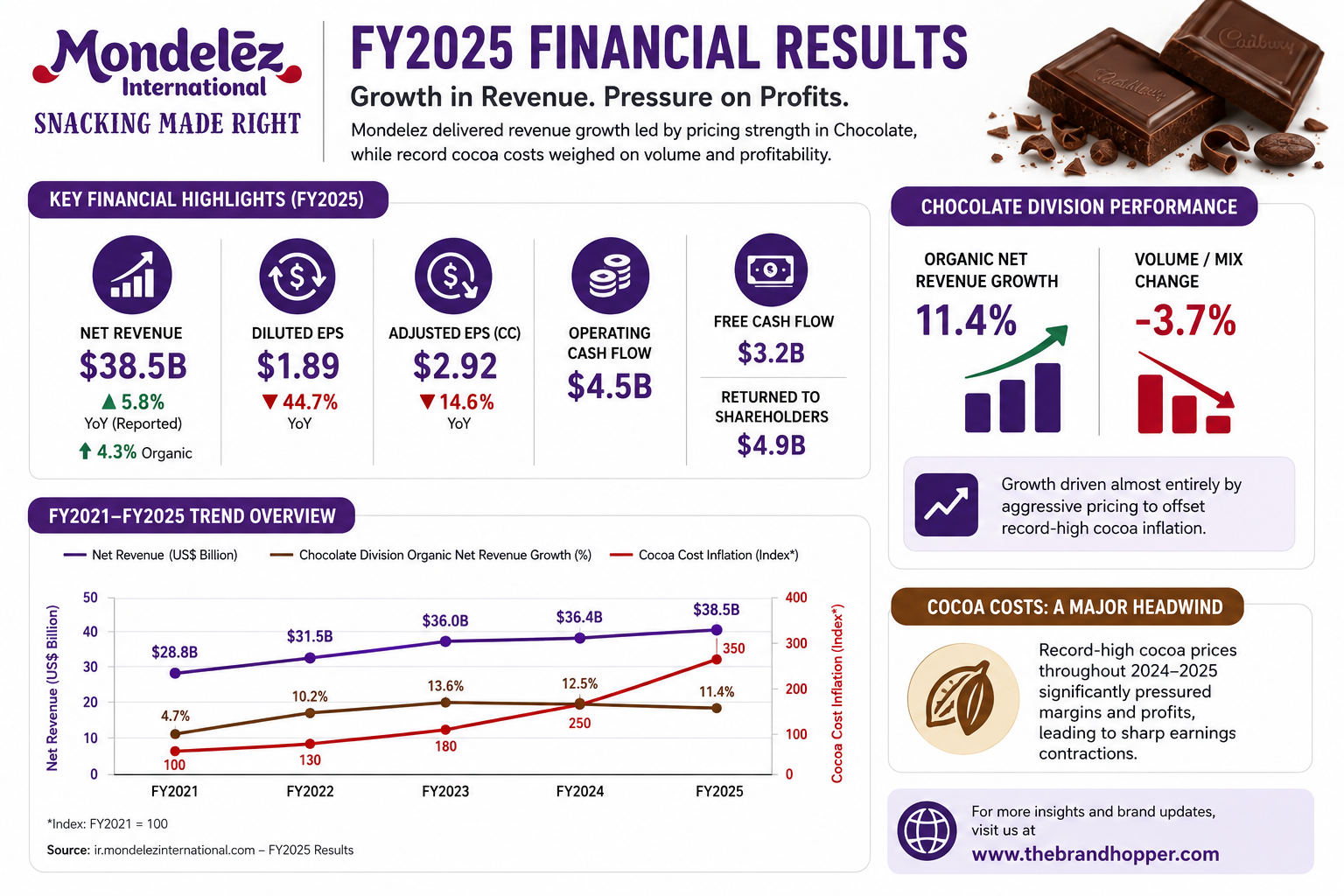
Cadbury’s parent company, Mondelez International, reported full-year 2025 net revenue of approximately $38.5 billion, up 5.8%, with organic net revenue growth of 4.3%.
Mondelez’s chocolate division — which includes Cadbury, Milka, Toblerone and Marabou — grew organic net revenue 8.2% for the year, even as record cocoa prices (which hit $10.75/kg in January 2025) squeezed profitability across the category, with gross margin falling more than 10 percentage points industry-wide.
That cocoa-cost pressure is the defining commercial backdrop for chocolate marketing in 2025-2026: brands are leaning harder on brand equity and emotional loyalty — the exact asset Gorilla and the generosity platform were built to create — precisely because sharp price increases make functional, price-based advertising a much harder sell.
Why the Campaign Still Gets Cited Nearly 20 Years Later
Nearly two decades on, Gorilla is still routinely cited in marketing case studies and effectiveness award submissions as one of the clearest examples of a campaign that ignored its own product category’s conventions entirely and won anyway.
Marketing Week and YouGov polling found 24% of respondents named it their favorite ad of its era, ahead of nearly every other UK ad from the 2000s, and — despite showing no chocolate for 89 of its 90 seconds — 76% of viewers correctly recalled it as a Cadbury advertisement, evidence that emotional storytelling can build brand attribution just as effectively as conventional product-forward advertising, if not more so.
Both Cabral and Rumbol have said the ad has followed them for the rest of their careers, in ways neither fully anticipated.
Cabral has joked that he can’t go a week without someone bringing it up — even, by his own account, a bank teller helping him open an account years later — and Rumbol has said he still regularly hears agencies being asked by prospective clients to simply “give me a Gorilla,” using the ad’s name as shorthand for a specific kind of creative ambition that’s become almost impossible to separate from the ad itself.
Lessons for Marketers
1. An emotionally resonant idea can outperform message-driven advertising, even with zero product visibility for nearly the entire ad — Gorilla proved brand recall doesn’t require showing the product repeatedly.
2. A genuine creative breakthrough is difficult to formulaically repeat. Both direct sequels (Trucks, Eyebrows) were competently made and still underperformed the original, which is why Cadbury eventually stopped trying to recreate Gorilla’s exact structure and built a broader platform instead.
3. A single viral hit is not a brand strategy. Cadbury’s real long-term win wasn’t Gorilla itself, but converting a one-off success into Glass and a Half Full Productions and, eventually, a sustained multi-year generosity platform that still drives Cadbury’s marketing in 2026.
4. Internal conviction matters as much as external testing. Both Cabral and Rumbol have said their first instincts were closer to doubt than confidence; the ad only aired because research overrode initial internal hesitation.
5. Brand crises can be answered indirectly. Cadbury never mentioned the 2006 salmonella scare in the Gorilla ad — it rebuilt trust by demonstrating brand personality rather than issuing reassurance, a lesson relevant to any brand recovering from a trust-damaging event today.
Frequently Asked Questions
Q: When did Cadbury’s Gorilla ad launch?
The 90-second commercial debuted on UK television on August 31, 2007, airing during the live final of Big Brother, before expanding to cinemas and online platforms including YouTube.
Q: Who created the Cadbury Gorilla ad?
The ad was created by Juan Cabral at agency Fallon London, commissioned by Cadbury’s then-marketing director Phil Rumbol. The gorilla suit was built by Hollywood effects house Stan Winston Studio and worn by performer Garon Michael.
Q: Did the Gorilla ad actually increase Cadbury’s sales?
Yes. Cadbury Dairy Milk sales rose approximately 9-10% in the months following the ad’s release, and the brand’s health and trust scores recovered to pre-salmonella-crisis levels faster than projected.
Q: What awards did the Cadbury Gorilla ad win?
It won the Film Grand Prix at the 2008 Cannes Lions International Festival of Creativity and the IPA Effectiveness Grand Prix in the UK — a rare campaign recognized for both creative excellence and proven business results.
Q: Did Cadbury make more ads like Gorilla?
Yes — “Trucks” (2008, set to Queen’s “Don’t Stop Me Now”) and “Eyebrows” (2009, set to Cyndi Lauper) followed the same structural formula, but neither matched Gorilla’s cultural or commercial impact, leading Cadbury to shift strategy toward a broader content platform instead.
Q: What is Cadbury’s marketing strategy today, in 2026?
Cadbury runs its long-standing “There’s a Glass and a Half in Everyone” generosity platform, supported in 2025 by campaigns including “Memory” (with Alzheimer’s Research UK) and “It could only be… Cadbury Dairy Milk,” rather than attempting to revive the Gorilla concept directly.
Q: Is the Cadbury Gorilla ad still remembered today?
Yes — polling by Marketing Week and YouGov found 24% of respondents named it their favorite UK ad of its era, and 76% correctly identified it as a Cadbury advertisement despite showing no chocolate for almost the entire spot.
Conclusion
“Gorilla” remains one of the most cited case studies in advertising precisely because its success is so hard to formulaically explain: an agency pitch born from an argument about drum solos, a marketing director who initially rated the rough cut a three out of ten, and a brand recovering from a product recall, combining into 90 seconds that won on both creative and effectiveness metrics simultaneously — a rare double.
What makes the case study genuinely useful for marketers today isn’t just the ad itself, but what Cadbury did afterward: rather than chase the same lightning twice, it built lasting infrastructure — first Glass and a Half Full Productions, then the generosity platform still running in 2026 — that turned one unrepeatable hit into nearly two decades of consistent brand equity.
Almost twenty years later, that combination of a single unrepeatable creative risk followed by patient, unglamorous platform-building is arguably the more instructive half of the story — even if it’s the half far fewer people remember.
Related Case Studies
- Airbnb’s “Belong Anywhere” Campaign: The Untold Case Study
- Case Study Analysis: Nike’s “I Am Not A Role Model” Campaign
- Case Study Analysis: Coca-Cola’s “The Polar Bears” Campaign
- Case Study Analysis: McDonalds “I’m Loving It” Campaign
- A Case Study on Taco Bell’s “Think Outside the Bun” Campaign