Last Updated on June 27, 2026 by Team TBH
Brand strategists love the visible parts of a company: the logo, the tagline, the viral campaign. Yet the brands that hold up over decades win on parts customers never see. A clean checkout flow. A video meeting that does not freeze. Each moment rests on physical infrastructure, and most of it runs through cable.
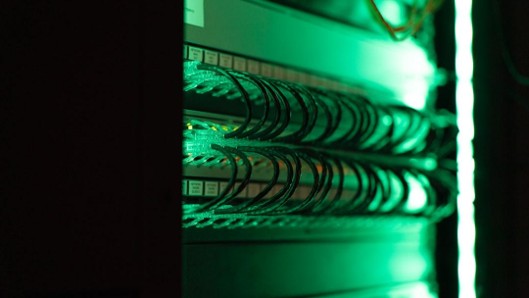
That truth shapes how serious operators think about reliability. A Las Vegas low voltage contractor such as Universal Fiber Optics installs the network cabling, fiber optic links, and security systems that let a business keep its promises. When a brand says it is dependable, the wiring behind the walls has to agree. Strategy sets the promise, but the network decides whether the company keeps it.
Why Physical Infrastructure Still Shapes Digital Brands
Plenty of famous brands built their reputations on equipment, not slogans. Industrial names earned trust by shipping machines that worked in hard conditions. The same logic carries the analysis of how a brand like Caterpillar fends off competitors, where durability and uptime beat any single ad.
Modern brands face the same test, only the machine is now the network. A retailer with 40 stores cannot afford a register that drops offline during a sale. A software firm cannot ship updates if its link keeps stalling. Reliability is the product, and the product runs on wire.
Three pressures push infrastructure to the front of brand planning:
- Customer expectations for instant, always-on service keep rising.
- Remote and hybrid work loads more traffic onto every connection.
- Data growth doubles the volume that cabling has to carry.
What Does Structured Cabling Actually Include?
Structured cabling is a planned wiring system that ties together a building’s phones, computers, cameras, and other devices. Instead of one tangle of random cords, it uses a standard layout that any technician can read. The ANSI/TIA-568 standard defines that layout so work stays consistent across vendors.
The system breaks into clear parts: the entrance where service arrives, the equipment room, the backbone that links floors, and the runs that reach each desk. A common copper choice, Category 6A cable, supports 10 Gbps over the full 100 meter channel at 500 MHz, double the 250 MHz of standard Category 6.
A well-built cabling plan delivers a few concrete wins:
- Faster moves when a team changes desks or floors.
- Easier repairs because every run is labeled and mapped.
- Lower cost over time, since the layout outlasts 2 or 3 hardware refreshes.
How Do Fiber and Copper Differ for Business Networks?
Copper still rules short runs, but fiber owns distance and speed. A single-mode fiber core measures about 9 microns across, while multimode cores run 50 or 62.5 microns, and both share a standardized 125 micron cladding. That tiny glass thread carries light instead of electricity, which is why it resists interference and travels far.
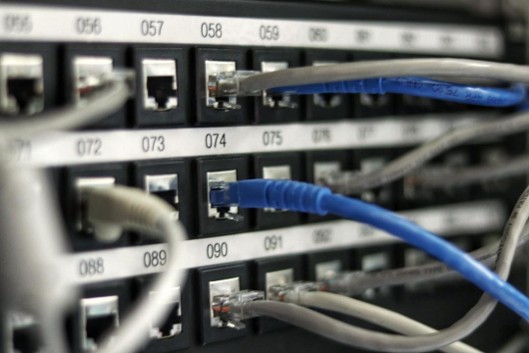
How far? Lab work on optical fiber metrology has pushed signals through 250 km of standard optical fiber, far past copper. Telecom networks lean on light near the 1310 nm and 1550 nm wavelengths, where glass loses the least signal.
This is the same fundamentals-over-flash logic in retail brand studies, including the breakdown of Home Depot’s main competitors, where supply reliability beats marketing noise. For a growing brand, the fiber-or-copper choice is rarely either-or:
- Fiber for backbones, between buildings, and any link over 100 meters.
- Copper for the last stretch to desks, phones, and access points.
- A blend for most offices, sized to the traffic each zone carries.
Why Do Brands Underinvest In Their Networks?
Cabling is easy to ignore because it works until it does not. A finance team approves the budget for laptops and software, then treats the wiring as an afterthought. The bill looks small next to a marketing spend, so it slides down the list.
That habit costs more than it saves. Cheap cabling fails under load, and the failure lands at the worst moment, during a launch or a busy quarter. Security suffers too. Federal guidance on securing network infrastructure devices shows the physical layer is part of the attack surface, not separate from it.
A smarter approach treats the network as a brand asset. The company that wires for the next 5 years, not the last 5, avoids the rip-and-replace cycle that drains both budget and trust.
Building a Network That Scales With the Brand
A network should grow the way the brand grows, in planned steps rather than panic upgrades. Start with a survey of current traffic and a forecast for the next 3 years. That document keeps every later decision honest.
From there, the build follows a simple order. Lay fiber for the backbone, run Category 6A copper to the edge, label everything, and document the map so the next technician is not guessing. Add the security and camera lines in the same pass, since pulling cable twice doubles the disruption.
The payoff is quiet but real. A brand with a documented network ships faster, recovers from outages sooner, and spends less on emergency fixes. The wiring never appears in a campaign, yet it shapes every promise the brand makes.
Frequently Asked Questions
What Is Structured Cabling In Simple Terms?
Structured cabling is a planned wiring system that connects all the devices in a building through a standard layout. It replaces a mess of random cords with organized runs that follow the ANSI/TIA-568 standard. The design includes the entrance, equipment room, backbone, and the cable that reaches each work area. Because it is documented and labeled, technicians can add, move, or repair connections quickly.
Is Fiber Optic Cable Worth the Cost for a Small Office?
It depends on distance and traffic. For runs over 100 meters or a backbone with heavy data, fiber is usually worth it. A single-mode fiber core of about 9 microns resists interference and reaches far past copper. Most small offices use a blend: fiber for the backbone and copper for the final stretch to each desk.
How Long Does Structured Cabling Last?
A quality cabling install often outlasts 2 or 3 rounds of hardware. Category 6A copper and modern fiber can serve a building for 10 to 15 years when installed well. The active gear, such as switches and routers, gets replaced far more often. That long life is why the cabling layer rewards careful planning. Cutting corners forces an early, costly rewire.
Why Should Brand Leaders Care About Network Cabling?
Because reliability is part of the brand promise. A frozen video call, a dropped order, or a slow site all trace back to infrastructure, and customers blame the brand, not the wire. Solid cabling protects the experiences that build trust. It also supports security, since the physical layer is part of the attack surface. Strong brands treat the network as an asset, not a line item to trim.
To read more content like this, explore The Brand Hopper
Subscribe to our newsletter