
Last Updated on July 31, 2026 by Team TBH
On July 28, 2026, marketing production platform Knak published “Marketing Production in the Age of AI,” a survey of 333 enterprise marketing decision-makers, and the headline number cuts against everything the AI-in-marketing sales pitch has promised: 85% of teams missed at least one planned campaign launch date in the past twelve months, and one in ten miss launches more than five times a year. This is happening at companies that have already adopted the technology that was supposed to fix it. Seventy percent of respondents say they’ve deployed AI in production. The launches are still late.
The adoption numbers look great. The output numbers don’t.
Knak’s data shows AI use concentrated in two places: 64% of teams use it for first-draft copy, and 56% for image generation. A quarter apply it to building or coding emails and landing pages. On paper, that’s a real foothold. But 88% of respondents say the AI output still requires moderate to substantial human editing before it can ship. AI is generating drafts, not finished work, and someone still has to take the draft the rest of the way — which turns out to be where the actual time goes.
A second study, fielded independently by ad-ops platform XR in May 2026 and covering more than 400 marketers across brands, agencies, and production companies, landed on nearly identical conclusions: 98% of marketers launch campaigns late, 70% break budget, and 88% of respondents report some level of AI adoption. Two surveys, different methodologies, different vendors with their own products to sell — and they converge on the same story. That convergence is what makes the finding hard to wave away as one vendor’s marketing.
Where the time actually goes
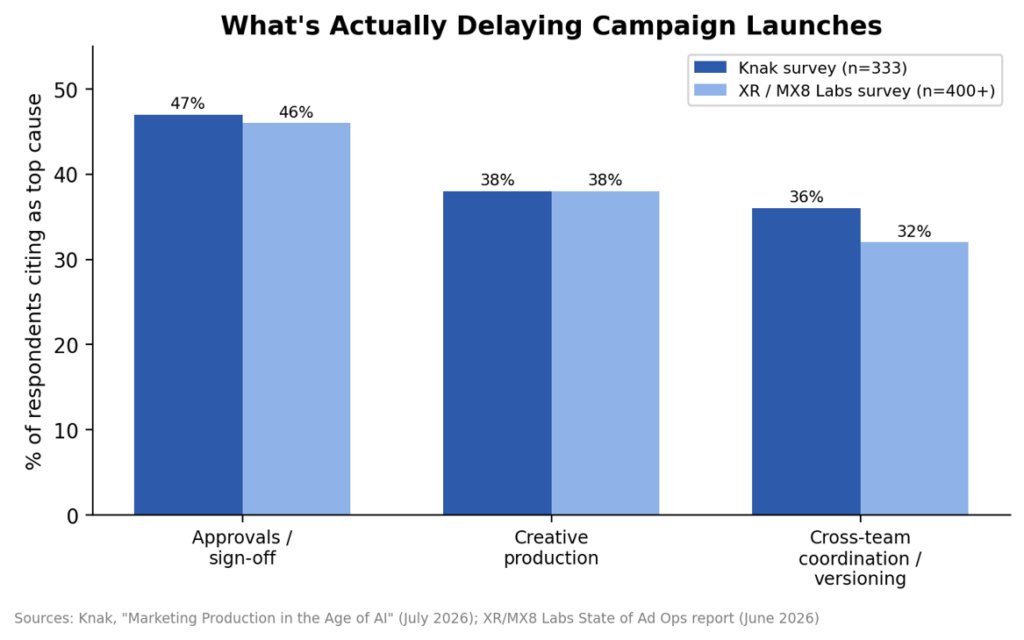
Both studies point away from strategy and creative concepting as the source of delay and toward what happens after an idea is approved. Knak’s respondents named getting approvals and sign-off as the single biggest cause of missed launches (47%), followed by design and creative production (38%) and cross-team coordination (36%). XR’s survey found budget approvals as the top bottleneck (46%), with creative concepting second (38%) and asset versioning third overall (32%) — and asset versioning was the number one complaint specifically among brand-side marketers.
Knak’s report puts a dollar figure on what that looks like for something as basic as a single marketing email: at 60% of companies, producing one email involves four or more people; 69% say it takes two to three rounds of revision before it’s fit to send; and it typically passes through three to five separate tools along the way, adding up to more than $300 in internal labor per send. None of that is a creative problem. It’s a workflow problem, and it’s one AI-generated first drafts don’t touch, because the draft was never the slow part.
Why the industry is still selling AI as a speed play
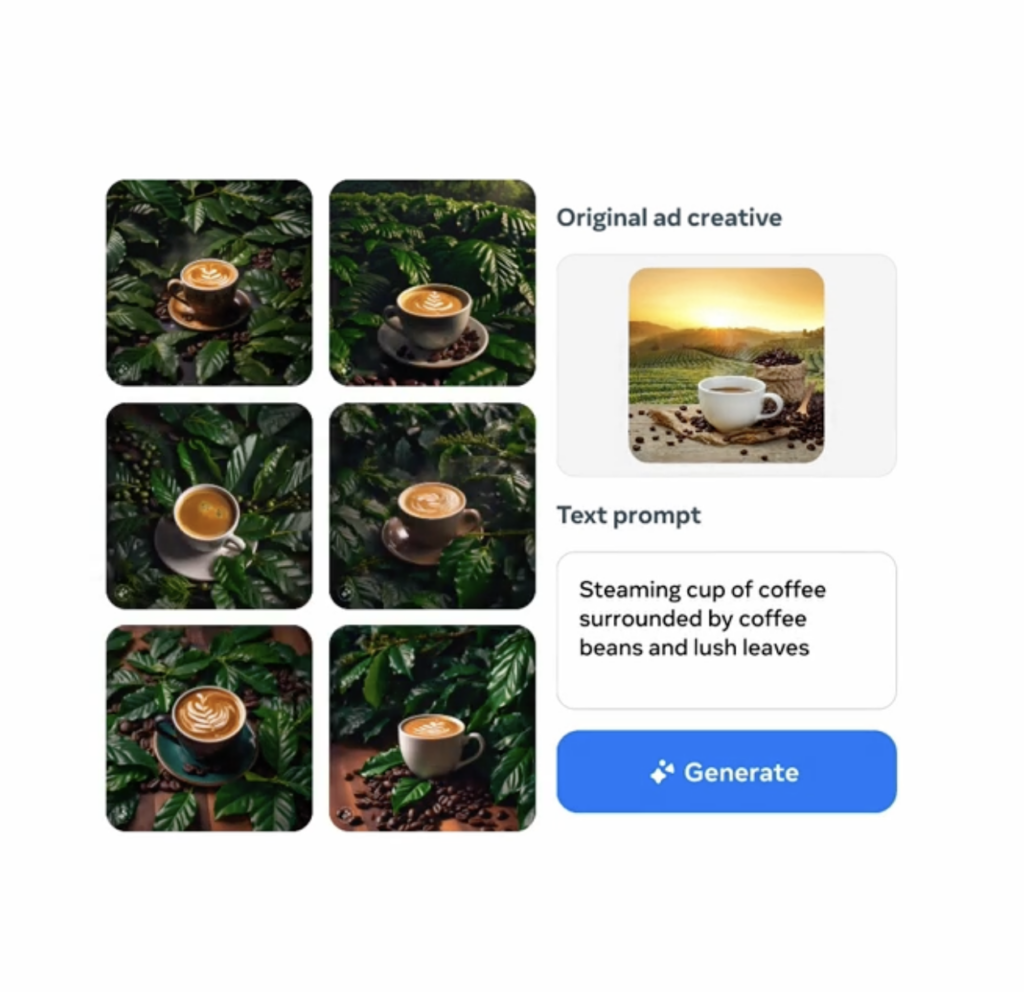
The timing here is pointed. The same week Knak published its findings, Meta unveiled an end-to-end AI creative suite inside Ads Manager at Cannes Lions — generation tools that learn a brand’s identity from its existing ads, an AI testing sandbox, and a built-in approval step — and LinkedIn rolled out its own AI creative tooling aimed at getting on-brand paid campaigns out faster. Both pitches lean on the same premise the survey data complicates: that generative speed at the drafting stage is the lever that gets campaigns out the door on time.
Knak’s own answer, previewed earlier this year with a feature making its production platform “callable by AI agents,” is telling in a different way — it targets the approval and handoff layer directly rather than adding another draft-generation tool to a stack that, per its own survey, already runs three to five tools deep. Co-founder and CEO Pierce Ujjainwalla framed the underlying tension plainly: AI is already embedded in production workflows, but the question enterprises haven’t answered is whether their production infrastructure — the approval chains, the tool handoffs, the people required to sign off — can actually keep pace with what AI now lets teams attempt.
The takeaway
Twelve months of enterprise adoption data suggests AI has been very good at making the first version of something appear quickly, and not yet useful at making the six people and three tools standing between that first version and a live campaign move any faster. Until the approval chain and the tool handoffs get the same attention as the copy generator, “AI-powered” marketing teams look set to keep missing their own launch dates — just with a faster first draft to show for it.
Also Read: Inside OpenAI’s ChatGPT Ad Platform
To read more content like this, subscribe to our newsletter