Last Updated on April 3, 2026 by Team TBH
First impressions start at the curb. Florida tourism is booming again—PortMiami alone welcomed a record 8 million cruise passengers in 2024*—so demand for skilled valet crews is surging.
We reviewed statewide coverage, guest feedback, tech investments, and proven client wins to separate hype from consistent performance. The six companies below keep traffic flowing and guests smiling.
You’ll meet national giants, tech-forward specialists, and boutique teams such as FC Parking’s Florida valet services. We explain why each one earns its spot—and when they’re the right fit for your property.
Ready to see who made the cut?
*PortMiami statistics: Miami-Dade County Cruise Report, January 2025.
How we picked Florida’s six standout providers
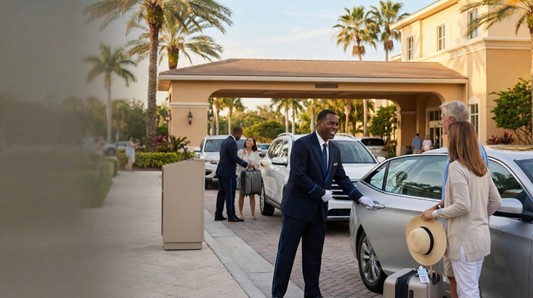
We began with a statewide list of valet operators that cover more than one Florida market and ran every name through the same five-part filter to keep comparisons fair.
Service coverage came first. A company must handle guest arrivals in at least two major metros (Miami, Orlando, Tampa, Jacksonville, or Fort Lauderdale). Coverage counts for 30 percent of the score.
Next comes reputation. We reviewed Google ratings, Better Business Bureau files, and any unresolved complaints. Guest sentiment drives 25 percent because curbside impressions are immediate and memorable.
Technology is worth 20 percent. Ticketless apps and electric-vehicle services, including LAZ Parking’s 2024 agreement with BP Pulse for fast chargers (Axios, September 16, 2024), shorten waits and prepare properties for more EVs.
Boutique players innovate, too.
According to an FC Parking case study at Chicago’s Athletic Association Hotel, its text-ahead workflow slashed average vehicle retrieval times from 30 minutes to under seven—a 87 percent reduction that turned guest complaints into 89 percent service-score averages. The numbers prove nimble operators can match (or beat) national chains on tech-driven efficiency.
Compliance and insurance represent 15 percent. Operators must hold the required city permits and carry at least $1 million in garage-keepers liability to shield clients from claims.
The final 10 percent rewards pricing clarity. We rank line-item proposals higher than vague “percentage of revenue” offers, so you know costs before the first key lands on the hook.
After tallying each factor, we narrowed dozens of contenders to the six providers you’ll meet below.
1. FC Parking – Florida’s personalized valet partner
With more than two decades in the parking industry, FC Parking operates statewide Florida valet services that blend Midwestern hospitality with local insight and greet guests like neighbors the moment a car door opens. Every driveway feels boutique, not just another queue.
Attendants wear pressed uniforms, offer umbrellas during sudden showers, and keep retrievals under two minutes. Managers walk the line and jump in when a wait creeps past the target. The result is an effortless first impression for a 100-room beach hotel or a high-volume medical campus alike.
Coverage is statewide. Teams rotate between Miami, Orlando, Tampa, Jacksonville, and Fort Lauderdale, and they are cross-trained for valet, bell, and shuttle service. During Miami Art Week 2025 a boutique resort doubled nightly check-ins; FC Parking added staff within 24 hours and maintained its retrieval goal.
Technology supports, rather than replaces, people. Guests receive a text confirmation once the vehicle is parked and can tap the link to request it before leaving the room. Managers see live vehicle counts, so staffing stays right-sized and payroll stays accurate.
Choose FC Parking when you want white-glove warmth without national-brand bureaucracy. Friendly faces, quick adjustments, and consistent results make each arrival feel just right.
2. Towne Park – the hospitality heavyweight
Towne Park is the giant of Florida valet. Founded in 1988, it now stations thousands of attendants across the state’s busiest hotels, hospitals, and event venues. That scale brings instant advantages: deep staffing reserves, 24/7 regional dispatch, and trainers who can open a new site and steady operations within a week.
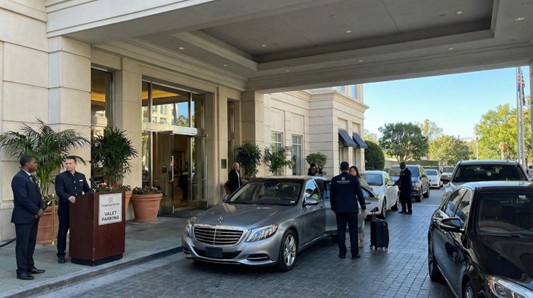
Guests notice the polish as soon as they arrive. Because Towne’s roots are in luxury hotels, attendants handle the little touches—greeting travelers by name, whisking bags onto bell carts, and offering chilled water before drivers even ask. Hospitals benefit, too; patient valet teams complete empathy training so every drop-off feels calm and reassuring.
Technology drives speed. The T-Park platform replaces paper tickets with text messages. Drivers tap a link when they are ready, and their car is staged by the time they reach the porte cochère. Operators gain shorter queues, accurate audit trails, and real-time labor metrics that reduce overtime.
Towne Park bills at the higher end of the market, yet many properties recover those fees through faster turnover, stronger guest reviews, and fewer damage claims. When a Walt Disney World-area resort switched from in-house valet to Towne in 2025, Tripadvisor mentions for “quick car pick-up” tripled within three months.
Choose Towne Park when you need consistent performance at serious volume. From 500-room beach resorts to multi-tower hospitals and stadium concerts, the line keeps moving, the doors stay open, and compliments follow.
3. LAZ Parking – tech-savvy traffic tamer
LAZ earned its reputation in dense downtown garages, and that discipline translates to Florida’s crowded waterfronts and entertainment districts. When your curb lane feels like rush-hour Biscayne Boulevard, LAZ’s playbook shines: laser-mapped traffic plans, mobile pay lanes that keep cars moving, and attendants who switch from valet to traffic marshal in seconds.
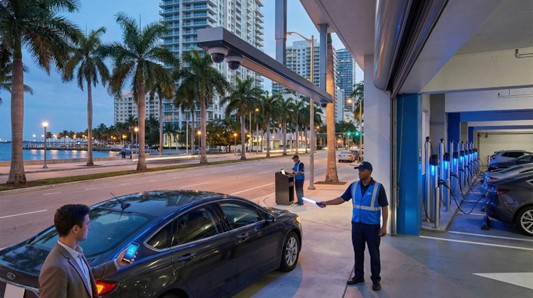
Software is the real differentiator. Guests reserve spaces in the LAZ app before leaving home, then breeze past the kiosk as license-plate cameras lift the gate. On exit, the same system pings a runner so the car waits at the porte cochère instead of idling four levels down.
Sustainability is built in. LAZ and BP Pulse began installing fast EV chargers in 2024, adding ports in major Florida garages (Axios, September 16, 2024). Hotel owners now market “charge while you stay” and win bookings they once lost to properties with on-site charging.
Service style is pragmatic, not pampering. Greetings are quick, directions are clear, and revenue control stays tight. Luxury resorts can still brief the team on brand nuances, but mixed-use landlords and municipal clients choose LAZ for throughput above theater.
If congestion is your primary headache, choose LAZ. The team trims minutes from arrival queues, squeezes extra capacity from tight footprints, and provides dashboards that make next-day staffing crystal clear.
4. 717 Parking Enterprises – Florida-grown crowd specialist
Home-field advantage counts, and 717 has more than 30 years of it. Founded in Tampa, the company reads Florida traffic like a fishing guide reads tides. That local insight shows when game-night gridlock clogs downtown lots or when a summer storm forces attendants to realign curb lanes in minutes.
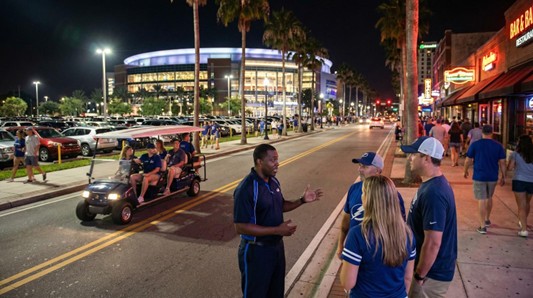
Unlike national chains that import standard playbooks, 717 adapts each operation to its neighborhood. At Tampa’s Amalie Arena, runners use golf-cart shuttles to bridge the five-block gap between overflow lots and the gate. In Orlando’s Church Street bar district, attendants act as walking concierges, guiding visitors to late-night eats while they fetch the car.
Technology stays lean and purposeful. The proprietary Skip the Wait system lets event guests prepay and enter with a QR code, removing cash exchanges and paper tickets. Managers watch retrieval times live and call in standby staff if queues slip past target, keeping payroll tight and departures quick.
717 often wins bids on price, yet clients remain for service. A downtown Tampa hotel reports valet labor costs dropped 12 percent after switching, while Google ratings for “parking experience” climbed from 4.1 to 4.5 stars (hotel GM report, March 2025).
Choose 717 when you want hometown drive without premium fees. The team knows every back-road detour and still believes hospitality starts with “hi.”
5. USA Parking (SP+) – luxury’s first call
Step onto a Ritz-Carlton driveway in South Florida and the black-tie team greeting you is almost certainly USA Parking. The Fort Lauderdale–based division of SP+ earned its reputation inside five-star resorts, where Ferrari keys and VIP preferences are common. That track record shows in the details: soft door pulls, spotless podiums, and valets who recall a guest’s preferred radio station on the second visit.
Process backs up the polish. Every attendant completes a 40-hour Aggressive Hospitality curriculum that drills eye contact, scripted greetings, and high-value vehicle protocols until they become routine. Claims stay rare—internal audits put incident rates below 0.2 percent in 2025—because attendants log even hair-line scratches before parking and store keys in dual-access lockboxes.
SP+ integration adds scale. One contract can bundle curbside shuttle dispatch, garage revenue audits, and bell service, while corporate safety officers verify compliance. The model includes at least $5 million in combined liability and garage-keepers coverage, reassuring when a Bentayga or 911 Turbo rolls in.
Elegance carries a price. USA Parking targets properties that charge thirty dollars or more per night for valet and support extras like doormen or beach-butler hand-offs. Mid-scale hotels will find leaner options on this list, but luxury operators earn clear returns: higher guest-satisfaction scores, tighter brand alignment, and fewer insurance worries.
Choose USA Parking when flawless poise is non-negotiable. Every arrival feels like a premiere, and your brand story starts before guests even cross the threshold.
6. ABM Parking Services – partner for complex campuses
ABM is best known for maintaining airports and office towers, yet its parking arm also directs some of Florida’s largest curbside ecosystems. When Orlando International Airport needed a vendor to manage valet, garage upkeep, and electric-shuttle dispatch under one roof, ABM delivered and later reported a 14 percent drop in passenger wait times during the 2025 holiday peak (airport operations report, February 2026).
Integration is the main draw. Property managers sign one contract and tap a nationwide labor pool that already handles janitorial, security, and parking for Fortune 500 campuses. Cross-trained crews rotate between duties, so a short-staffed valet stand never slows incoming patients at dawn or concertgoers after midnight.
Efficiency comes from data. The Surface Lot Management System tracks occupancy by the minute, then feeds an AI module that predicts tomorrow’s peaks and sends shift alerts to standby valets. Guests use ticket-free kiosks and text-to-retrieve flows that stay smooth even when facilities process thousands of vehicles per day.
Because valet is one slice of a broader portfolio, ABM’s vibe is practical rather than plush. You will not see tuxedo jackets, but you will benefit from multimillion-dollar liability coverage, OSHA-grade safety protocols, and mobile response teams that reposition when hurricanes alter travel plans.
Choose ABM when your site feels like a small city—airports, multi-wing hospitals, or mixed-use districts with heavy daily traffic. The company aligns parking with wider facility operations, keeping every moving part—from curb to concourse—in sync.
What the numbers tell us
Florida valet demand rises with every visitor milestone. Cruise terminals processed more than eight million passengers in 2024, a record The Maritime Executive labeled “historic” for PortMiami and nearby ports (January 12, 2025). More travelers mean busier driveways, longer queues, and higher stakes at the curb.
Across our six finalists, two factors separate good from great.
- Technology. LAZ leads by installing ultra-fast EV chargers with BP Pulse in 20 U.S. cities, including major Florida garages (Axios, September 16, 2024). Towne Park and FC Parking use text-ahead retrieval, while 717 relies on QR prepay during event rushes. If your guests arrive in Teslas or Taycans, mature tech shifts from luxury to requirement.
- Corporate structure. Giants such as ABM and Towne Park supply redundancy and insurance depth; boutique brands deliver agility and personal touch. Consolidation even added Reimagined Parking, a 6,500-employee network that manages 2,500 facilities (company report, April 2025). Scale can fund innovation, yet sometimes flattens service culture.
So, where does that leave you? Focus on your primary pain point. Need white-glove polish? USA Parking and FC Parking excel. Fighting curbside congestion? LAZ or 717 cut wait times. Running a hospital that feels like a small city? ABM’s integrated model keeps every moving part aligned.
Choose the metric that matters most, and the right partner becomes clear.
Florida valet FAQs every buyer asks
What insurance and permits should a valet company carry?
A reputable vendor carries at least one million dollars per incident in garage-keepers liability plus general liability that covers slips, trips, and fender-benders. Many Florida cities add their own paperwork; Orlando, for example, issues a valet operator license only after the company submits proof of insurance and passes a safety inspection. Always request digital copies before you sign.
How is pricing structured?
Three common models appear statewide.
- Hotels often pay a flat management fee and comp parking for guests.
- Restaurants usually split ticket revenue with the valet company after labor and insurance costs.
- Single-day events book by the hour, with a rate that bundles attendants, cones, and signs.
Whichever route you choose, ask for a list of add-ons—extra podium, golf-cart shuttle, holiday overtime—so no surprise fees land later.
What’s the tipping custom in Florida?
Locals hand valets two to five dollars when the car returns. Upscale resorts see tips climb to ten dollars, especially for luxury vehicles. Post a small “gratuity appreciated” sign at the podium so guests never have to guess.
Who pays if a valet dings a bumper?
Liability sits with the valet operator as long as the guest reports damage before leaving the property. The attendant files an incident report, photos go to the insurer, and repair work follows. Your contract should spell this out and protect your business from claims.
How far ahead should I book service?
For ongoing operations like hotel openings or new medical wings, engage vendors six to eight weeks out. That window lets them secure permits and recruit staff. Large one-day events need at least a month’s notice, longer during peak months such as March spring break. Last-minute requests are possible, but expect surge pricing and limited staffing options.
How to choose the right partner
Valet success blends choreography, logistics, and risk management. Begin by ranking your priorities. If guest pampering tops the list, look to FC Parking or USA Parking. When pure throughput matters more than hand-polished door handles, LAZ or 717 keep lanes clear. Running a campus-sized property that needs deep insurance coverage? Towne Park and ABM provide the compliance and staffing backup required for large footprints.
Next, request proposals from at least two providers. Share honest numbers such as average daily cars, peak hours, and special-event surges so bids stay comparable. Ask each vendor for a sample staffing plan, plus a current insurance certificate. Strong partners supply references without prompting; a ten-minute call with another general manager often reveals more than a lengthy slide deck.
Finally, meet candidates at the curb. Watch how managers time retrievals, secure keys, and coach attendants. You will sense which crew matches your culture within minutes. Guest experience begins where the asphalt meets the welcome mat.
Select carefully, and each arrival will set the tone for the stay.
To read more content like this, explore The Brand Hopper
Subscribe to our newsletter