
Last Updated on June 20, 2026 by Team TBH
The verdict, up front: While Coca-Cola, Adidas, and Budweiser fight over stadium signage and TV spots, Unilever turned the FIFA World Cup 2026™ into a 50,000-person content engine — and bet the activation on a stick of deodorant instead of a superstar. It’s the most quietly radical sponsorship strategy of the tournament. Our score: 8.5/10. Here’s what it gets right, where it’s exposed, and why your brand probably won’t be brave enough to steal it.
The play everyone reported — and the angle everyone missed
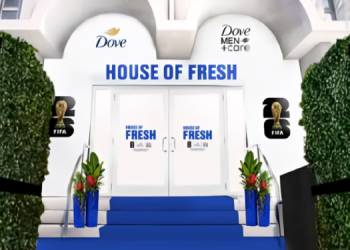
Open any trade publication this month and you’ll read the same Unilever World Cup story: 50,000 creators, 120-plus markets, 35-plus brands, 180-plus limited-edition products, an invite-only “House of Fresh” content hub in Manhattan, Mexico City, and Miami, all wrapped in a campaign called “Fresh for Every Stage.” It is, by any measure, enormous.
But “Unilever is doing a big influencer campaign” is the press release, not the insight. The interesting question isn’t what Unilever is doing. It’s why this particular shape — and why almost no other sponsor at this World Cup has the nerve to copy it.
Because strip away the scale and you find two genuinely contrarian bets buried inside the activation. First, Unilever is treating creators as a media channel, not a campaign tactic. Second — and this is the one nobody is saying out loud — it built the whole thing around deodorant, arguably the least glamorous product category in the building. Both bets are smarter than they look. Let’s take them apart.
Bet #1: Creators as media, not as “influencer marketing”
Most brands still file influencers under “social media.” You brief a handful of big names, you get a handful of posts, you screenshot the engagement for the wrap deck. It’s a line item.
Unilever inverted that. By activating tens of thousands of creators across markets — and, crucially, not requiring paid deliverables from all of them — it is using creators the way a previous generation of CPG marketers used television: as distribution. The House of Fresh hubs reportedly cycle 200–250 creators through per day, many of them with no contract at all. They show up, the space is engineered to be “immediately shareable” (an indoor LED soccer pitch, custom jerseys, Panini-style trading cards, manicurists, foosball, a cameo from a three-time NBA champion), and the content makes itself.
This is the part worth stealing: Unilever is paying for the set, not the post. Build an environment so content-worthy that attendance is the deliverable, and your cost-per-asset collapses while your volume explodes. The reported numbers hint at the payoff — by the tournament’s opening day, brand videos already accounted for 7.5% of 58 billion-plus World Cup YouTube views, with Axe Mexico alone clocking 241 million views and Rexona 172 million, per Tubular Labs.
The other tell is the deliberate mix of mega- and nano-creators. The VIP names supply reach; the nanos supply what Unilever’s own team calls “credibility online.” That’s not a hedge — it’s the actual strategy. In a feed where audiences are exhausted by polish, a thousand small, believable voices can out-convert one celebrity. The mega-creators get you seen. The nanos get you trusted. Running both at once is how you buy reach and authenticity in the same breath.
My verdict on Bet #1: 9/10. This is the most replicable, most underrated idea in the entire activation. It works for a deodorant brand at the World Cup, and it works for a D2C skincare label at a regional food festival. The logic scales down.
Bet #2: Deodorant was the genius product choice (yes, really)
Here’s where I’ll plant a flag the other coverage tiptoes around: the product fit is the actual masterstroke, and it’s almost accidental-looking.
A World Cup played across North American cities in June and July is a tournament played in the heat. The single most contextually relevant product you could possibly hand a sweating fan in a stadium concourse is not a soft drink, not a sneaker, not a beer — it’s deodorant. Unilever’s stadium activation literally includes misting showerheads to cool fans down, next to free Rexona and Axe samples. The product solves the exact problem the moment creates.
Call it the context premium: when your product is the natural answer to the situation the audience is already in, you don’t have to manufacture relevance with a celebrity or a clever film. The relevance is structural. Coca-Cola has to associate itself with the joy of football. Unilever’s Rexona is just… useful, right there, in the heat. That’s a far cheaper and far stickier form of fit, and it’s why leading the campaign with Degree/Rexona rather than the more “premium” Dove was the correct call for the stadium moment.
Most sponsors would have buried deodorant behind the prettier brand. Unilever made it the headliner for the opening days. That takes conviction.
My verdict on Bet #2: 9/10. Brilliant product-to-moment matching. The only reason it isn’t a 10 is that the insight is hard to transfer — most brands don’t have a product whose relevance is this structurally baked into the event.
Where the strategy is genuinely exposed
A teardown that only praises is a press release with extra steps. Here’s where Unilever’s play is vulnerable — and where a copycat brand could get burned.
1. Thirty-five brands is a focus problem disguised as a flex. Activating 35-plus brands across 120-plus markets sounds powerful, but attention is finite. The risk is that “Fresh for Every Stage” becomes a logo buffet where no single brand owns a clear memory in the fan’s head. Reach without a sharp brand-to-benefit hook is just expensive noise. The activation is betting that volume compensates for dilution. It might not.
2. “Invite-only” authenticity is a contradiction in terms. The House of Fresh is gated to creators. That’s smart for production control, but it sits awkwardly against the credibility story. Audiences are increasingly fluent at spotting the gifted-trip, branded-hub aesthetic. The nano-creator content earns trust precisely because it looks unpaid — and the moment that machinery becomes visible, the authenticity premium evaporates. Unilever is one cynical TikTok edit away from “they were all flown in and handed scripts.”
3. Measuring 50,000 creators is a black box. Unilever says it tracks sales and ROI “religiously.” I believe the intent. But attribution across tens of thousands of nano-creators, many without paid deliverables, is genuinely hard. View counts (the Tubular Labs numbers) are reach, not outcomes. The honest answer is that the true incrementality of this model won’t be knowable for a while — and any brand copying it should not pretend otherwise.
4. It depends on a category most brands don’t have. The context premium that makes deodorant sing at a summer World Cup is not available to a software company or a bank. Borrow the creators-as-media mechanic, by all means. But don’t assume your product will slot into the moment as cleanly as a stick of Rexona does.
The scorecard
| Dimension | Score | Why |
|---|---|---|
| Strategic clarity (creators as media) | 9/10 | A genuine channel shift, not a tactic |
| Product-to-moment fit | 9/10 | Deodorant at a summer World Cup is near-perfect context |
| Creativity of activation | 8/10 | The “build the set, not the post” hub is clever and shareable |
| Brand focus / memorability | 6/10 | 35 brands risks a diluted, ownerless impression |
| Measurability of ROI | 6/10 | Reach is clear; true incrementality is a black box |
| Replicability for other brands | 7/10 | The mechanic transfers; the product fit usually won’t |
| Overall | 8.5/10 | The boldest, most modern sponsorship logic at WC 2026 — held back only by sprawl and fuzzy attribution |
What your brand should actually steal from this
You are not Unilever. You don’t have 35 brands, a FIFA deal through 2027, or House of Fresh hubs in three cities. Good — you don’t need any of that to use the underlying ideas. Three takeaways that scale to any budget:
- Pay for the environment, not the post. Engineer one genuinely content-worthy moment, space, or product drop, then invite creators in and let attendance be the deliverable. One great set beats fifty briefed captions.
- Run mega and nano in the same campaign, on purpose. Big names for reach, small believable voices for trust. Budget for both; brief them differently.
- Find your context premium before you find your celebrity. Ask what problem your audience already has in the exact moment you’re showing up — and whether your product is the natural answer. If it is, lead with that. It’s cheaper and stickier than borrowed fame.
The bottom line
Unilever’s World Cup 2026 strategy will be remembered in trade press as “the big creator campaign.” That undersells it. The real story is a quiet rewiring of what a sponsorship is: less logo-on-a-banner, more distributed content factory, anchored by a product that actually solves the moment. It is not flawless — the 35-brand sprawl and the attribution fog are real — but it is the most forward-looking bet any major sponsor placed on this tournament.
The uncomfortable truth for everyone else? Most brands have the budget to copy it and won’t, because it requires giving up control of the message to 50,000 strangers and trusting that the math works out. Unilever did. That nerve, more than the spend, is the strategy.
Final verdict: 8.5/10 — the smartest play at the World Cup that almost nobody will be brave enough to repeat.
FAQ
What is Unilever’s World Cup 2026 marketing strategy? Unilever, the official personal care sponsor of the FIFA World Cup 2026™, is running a creator-first campaign called “Fresh for Every Stage,” activating 35+ brands (including Dove, Rexona/Degree, and Axe/Lynx) across 120+ markets with more than 50,000 creators, invite-only “House of Fresh” content hubs, and stadium activations.
Why is Unilever using influencers instead of traditional ads? Unilever treats creators as a distribution channel rather than a single tactic, combining mega-creators for reach with nano-creators for credibility — a model designed to generate high volumes of shareable, trusted content more efficiently than traditional TV or static sponsorship.
Which Unilever brands are part of the World Cup campaign? Key brands include Dove, Dove Men+Care, Rexona (Degree in the US), and Axe (Lynx in some markets), plus emerging brands like Grüns, with Rexona/Degree leading the early stadium activations.
What can small brands learn from Unilever’s World Cup campaign? Three transferable lessons: pay for content-worthy environments rather than individual posts, blend mega- and nano-creators deliberately, and lead with “context premium” — products that naturally solve a problem the audience already has in the moment.
Also Read: Marketing Strategies and Marketing Mix of Unilever Plc
To read more content like this, subscribe to our newsletter
