Last Updated on July 17, 2026 by Team TBH
Snapshot
| Brand | Gap |
| Partner | Hailey Bieber (model, entrepreneur, founder of Rhode) |
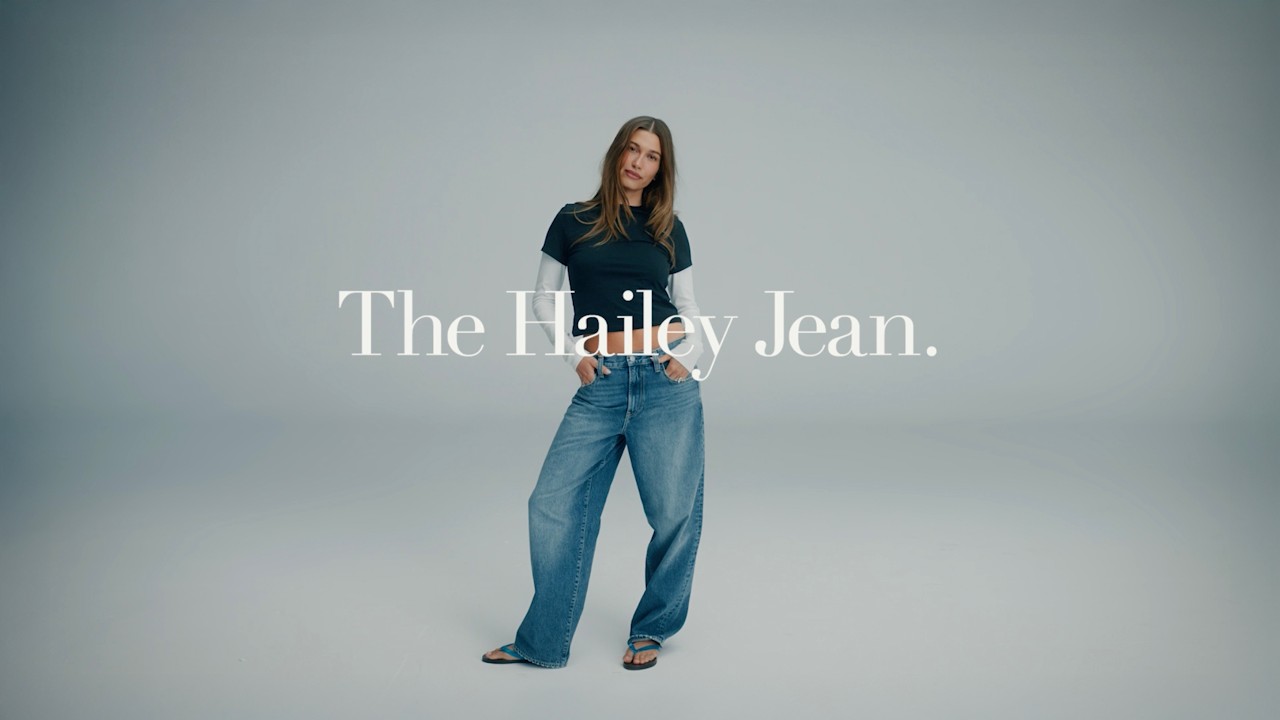
| Campaign | “The Hailey Jean” |
| Launch date | July 16, 2026, 12 p.m. ET |
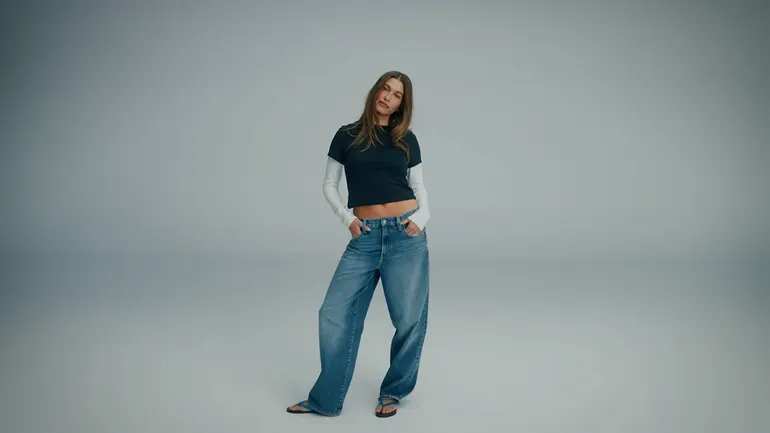
| Product | Limited-edition denim capsule — Extra Baggy Jean and ’90s Low-Rise Loose Jean, six washes, $89 |
| Markets | US, Canada, UK, France, Japan, China and select international markets |
| Agency / Production | Bolded (OBB Media’s branded content studio); media by OMD |
| Creative team | Director Charlie Di Placido; photographer Mario Sorrenti; stylist Alastair McKimm |
The Backstory: Why Gap Needed This Win
Gap spent much of the 2010s losing cultural relevance, but that has been reversing since 2023, when former Mattel executive Richard Dickson took over as CEO of Gap Inc. and began a deliberate turnaround built on nostalgia, celebrity casting, and denim. Creative director Zac Posen and CMO Fabiola Torres joined in 2024, sharpening the brand’s return to its 1990s and early-2000s advertising DNA — the era of Gap’s famous dance ads and khaki-and-denim uniformity that made it a cultural fixture.
That strategy has been paying off. Gap’s comparable sales rose 10% in Q1 fiscal 2026 to $796 million, marking the brand’s tenth consecutive quarter of positive comps, with denim repeatedly cited as the key growth driver — even as sister brands Old Navy and Athleta dragged down parent company Gap Inc.’s overall results. Recent proof points include:
- “Better in Denim” (2025), starring girl group Katseye dancing to a remix of Kelis’s “Milkshake,” generated more than 8 billion impressions and 500 million views while driving double-digit growth in denim sales.
- A spring 2026 campaign with singer Young Miko outperformed internal benchmarks, generating nearly 1.5 billion press and social impressions, according to Gap Inc.’s earnings call commentary.
- A Victoria Beckham collaboration earlier in 2026 sold out rapidly.
- Gap has also enlisted Troye Sivan, Katseye, and Gwyneth Paltrow with daughter Apple Martin as part of the same playbook: pair recognizable talent with a “dance ad” or nostalgic visual language, and let denim carry the story.
The Hailey Jean is the next chapter in that formula — and arguably the most personal one yet, because it’s built around a single collaborator’s biography rather than a needle-drop or ensemble cast.
The Strategic Idea
Rather than simply putting a celebrity in a Gap ad, Gap and Hailey Bieber built the entire concept — product and campaign — around one coincidence: Bieber was born in 1996, a year that also happens to sit at the center of Gap’s most nostalgically potent denim era. That single fact became the campaign’s organizing device.
“1996 was the year I was born and I get a lot of style inspiration from the ’90s because there was something so effortless about that era and the way people wore denim,” Bieber said in Gap’s announcement. “We wanted the campaign and the collection to capture that same feeling in a way that felt modern, nostalgic, and personal.”
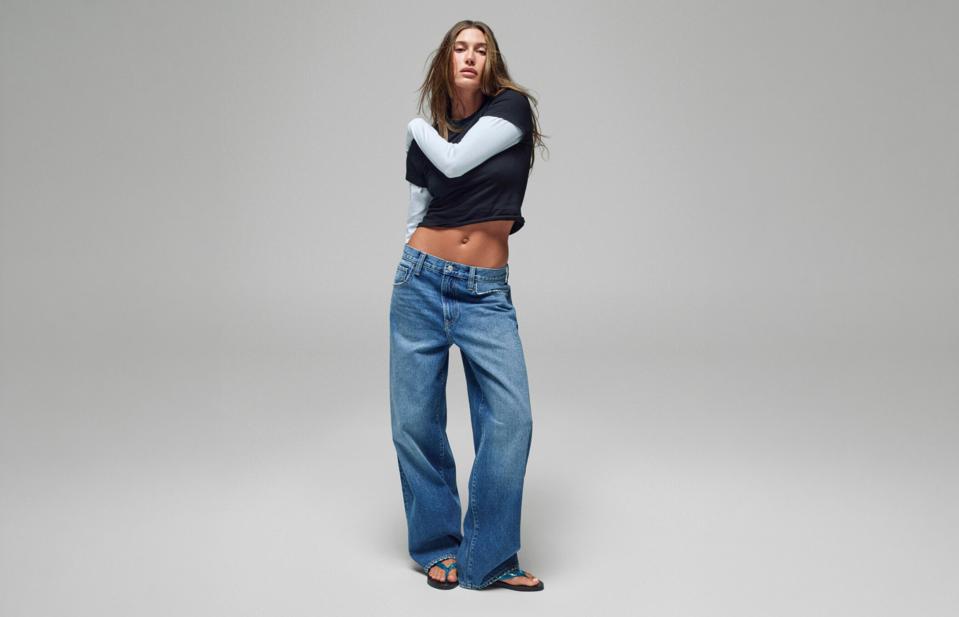
Jane Pattinson, Gap’s SVP and Global Head of Design, framed the collaboration as design-led rather than purely promotional: “Hailey understands denim in a very instinctive way — from proportion and fit to how it actually moves and wears on the body. Together, we built the collection around the relaxed silhouettes she naturally gravitates toward and the effortless way she styles them in her everyday wardrobe.”
This positions the collection as co-created rather than licensed talent, a meaningful distinction for a celebrity, like Bieber, whose personal brand (via Rhode) is built on curatorial authority and “your skin but better”-style authenticity rather than overt glamour.
The Product
The capsule is deliberately narrow — two silhouettes, six washes, one price point — which reinforces the “personal edit” positioning rather than a sprawling merchandise drop:
- Extra Baggy Jean — three washes, based on the men’s Gap ’90s Loose fit Bieber wears in her own wardrobe, tailored to her proportions.
- ’90s Low-Rise Loose Jean — three washes, available exclusively on Gap.com.
- “1996” detailing — integrated into hardware and the back patch, a subtle nod to Bieber’s birth year rather than a loud logo play.
- Bieber’s signature — printed inside the pocket lining, a hidden, discoverable detail rather than an outward brand mark.
- 100% cotton rigid denim — designed to break in and age over time, signaling durability and authenticity over fast-fashion disposability.
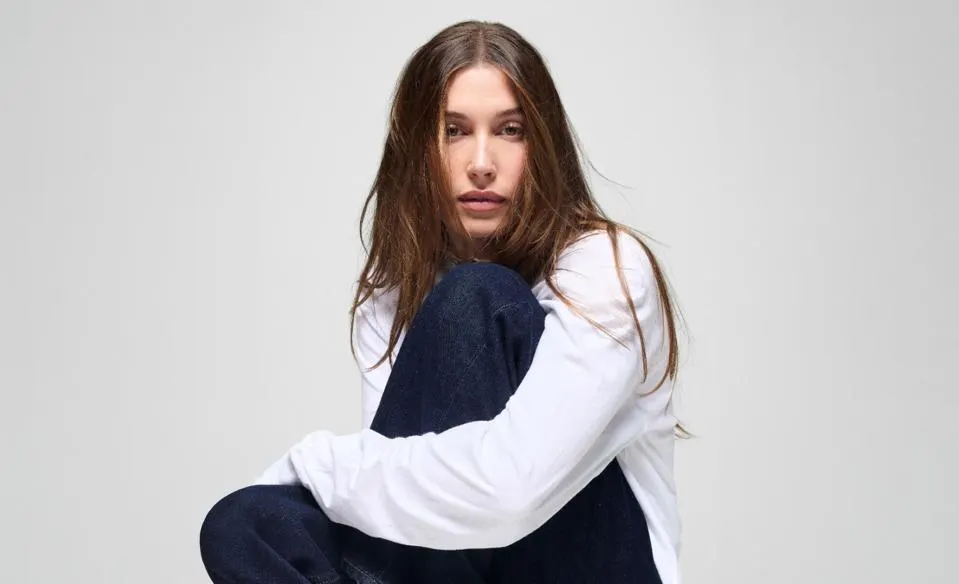
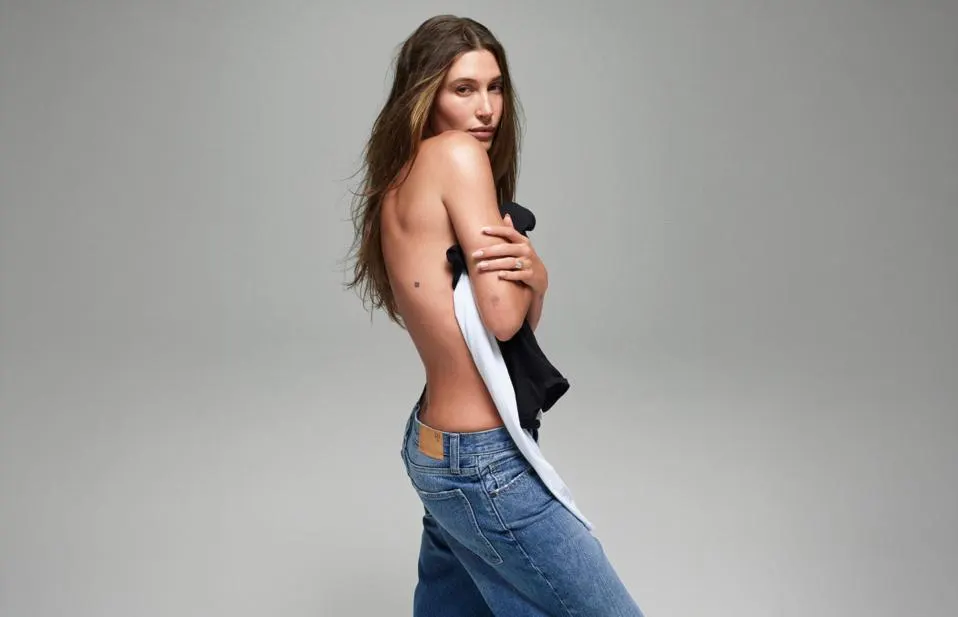
Each piece retails at $89 — priced above Gap’s core denim but well below premium or designer denim, keeping the collection accessible to Bieber’s Gen Z and millennial audience while still reading as “elevated.”
The Creative Execution
The campaign film drops the viewer into a meticulously art-directed 1996 bedroom: a boombox, a CRT television, a corded phone, a boxy desktop computer. A voiceover leans into the nostalgia with knowing, slightly wry lines — noting that in 1996, “your bedroom was your world” and “going online meant getting off your phone” — before Bieber delivers the punchline that reframes the whole spot: “It’s also the year I was born.” That line does double duty, landing as both a joke for millennial viewers in on the reference and a direct explanation of the collection’s concept for younger shoppers who weren’t alive for it.
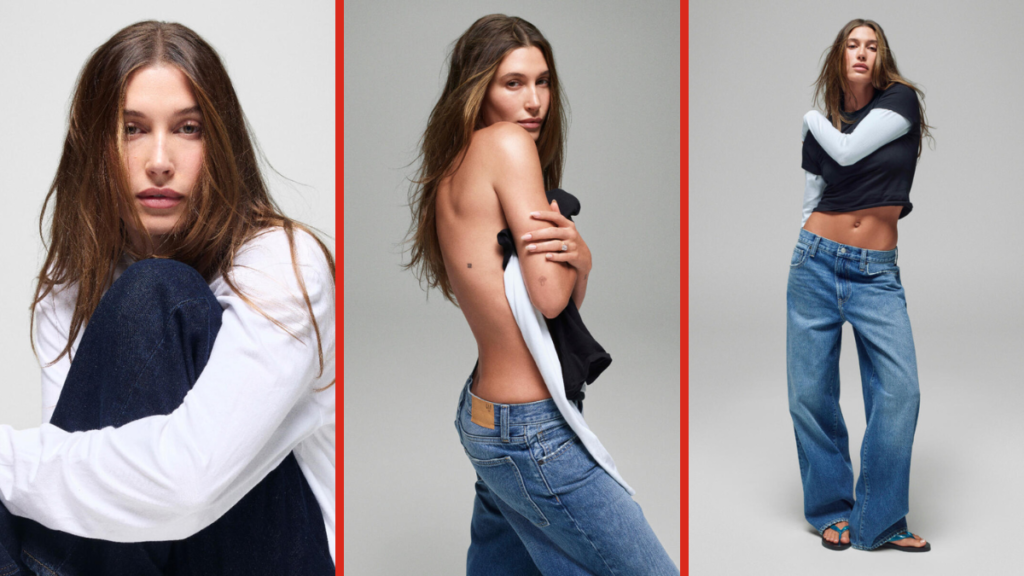
The soundtrack is The Cranberries’ 1993 hit “Linger,” an instantly recognizable alt-rock anthem that signals authenticity over manufactured pop nostalgia. The film was directed by Charlie Di Placido; still photography — styled with classic Gap tees against clean studio backdrops that echo Gap’s iconic ’90s print campaigns — was shot by Mario Sorrenti and styled by Alastair McKimm, both established fashion-image names that lend the work editorial credibility rather than a purely commercial gloss.
Production ran through Bolded, OBB Media’s branded content studio and a longtime Bieber collaborator, which suggests continuity with the visual language Bieber has cultivated in her personal and Rhode marketing rather than a one-off agency treatment.
Media & Distribution Strategy
Gap and its media agency OMD built a full-funnel rollout rather than relying on a single hero asset:
- Owned and social teasing began several days before launch across Gap’s Instagram and TikTok channels, building anticipation.
- A minute-long hero film anchors the campaign across YouTube, TikTok, Meta, and Pinterest.
- Creator partnerships extend the campaign into influencer-native content beyond Bieber herself.
- Out-of-home placements, including Times Square and Sunset Boulevard billboards, ground the digital-first campaign in high-visibility physical culture — both locations chosen for their symbolic weight in fashion and entertainment.
- Retail and e-commerce: the collection launched simultaneously on Gap.com and in select North American stores, with staggered international availability across the UK, France, Japan, China and other markets — a global simultaneous-plus-rolling structure that maximizes press-cycle impact while accommodating regional retail logistics.
Why It Works: Strategic Takeaways for Marketers
Anchor a celebrity partnership in a real personal narrative, not just star power. The “1996” concept only works because it’s true of Bieber and coincides with a moment Gap already owns culturally. Manufactured coincidences read as manufactured; this one reads as found.
Keep the product edit narrow and let scarcity do the work. Two silhouettes and six washes is a deliberately small assortment for a mass retailer. It mimics the discipline of a designer capsule, which signals curation and creates urgency without requiring genuine luxury pricing.
Let nostalgia carry a wink, not just wistfulness. The “getting off your phone” line is the campaign’s smartest moment — it acknowledges the audience’s ironic distance from ’90s nostalgia content instead of playing it completely straight, which keeps the tone from tipping into pastiche.
Multi-sensory casting elevates a retail campaign into a cultural moment. Pairing a fashion-editorial director and photographer (Di Placido, Sorrenti, McKimm) with a needle-drop from a beloved alt-rock track does more reputational work than product photography alone — it borrows credibility from music and fashion media, not just advertising.
Repetition of a working formula is a legitimate strategy, not a lack of imagination. Gap has now run essentially the same playbook — nostalgic era + recognizable talent + denim + a distinctive needle-drop — across Troye Sivan, Katseye, Young Miko, Victoria Beckham, and now Bieber. Each execution varies the specific cultural reference points while reinforcing one consistent brand idea: Gap denim as a piece of shared American cultural memory. For challenger and legacy brands alike, the lesson is that a repeatable campaign architecture, refreshed with new faces and eras, can compound brand equity faster than reinventing the wheel each season.
Full-funnel media, not just a viral video, is what turns a campaign into a sales driver. OOH in two of the most culturally symbolic outdoor-media markets in the US, paired with paid social, creator content, and simultaneous global retail availability, shows that even a culturally-driven, nostalgia-led campaign is built on conventional, disciplined media planning underneath.
Early Signals and Context (as of launch)
Because The Hailey Jean launched on July 16, 2026, hard performance data — sales lift, impressions, earned media value — was not yet available at the time of writing. However, the campaign launched into a strong base rate: Gap’s prior culturally-led denim campaigns have consistently outperformed, with “Better in Denim” generating over 8 billion impressions and 500 million views, and the Young Miko campaign generating nearly 1.5 billion impressions against internal benchmarks. Trade coverage from Adweek, Marketing Dive, WWD, Variety, Forbes, and eMarketer within 48 hours of launch — largely framing it as one of the buzzier fashion drops of the summer — suggests the campaign is tracking toward similar earned-media performance.
The Bottom Line
The Hailey Jean isn’t a radical departure for Gap; it’s a refinement of a formula the brand has now run successfully several times since 2023 — pairing denim, a culturally resonant era, and a well-cast collaborator to generate outsized cultural attention relative to media spend. What makes this iteration notable is how tightly the product story and the marketing story are fused: the “1996” detail isn’t a tagline bolted onto a generic jean, it’s the product’s entire reason for being. For brands trying to make celebrity collaborations feel authentic rather than transactional, that’s the real takeaway — the story has to be true before it can be told well.
Also Read: Inside GAP: Marketing Strategies & Marketing Mix of GAP Inc.
To read more content like, subscribe to our newsletter